
V9N1: Gaming Art
By Michael Fleisch, Matthew Thomas Payne | June 20, 2013
 Playing Games with Art
Famed Dadaist Marcel Duchamp opined once that: “… while not all artists are chess players, all chess players are artists.”1 Although this curious assertion likely speaks more to Duchamp’s love of chess and his signature style of provocation than it does to any systematic assessment of art’s ontology, it nevertheless gestures that a relationship exists between what we understand to be games, and what we understand to be art. This claim signals that artistry and artistic practice lie nascent in all manner of things or events that are not customarily thought to be “art” or “artistic” – including video games and acts of gameplay.
The essays in this issue explore topics connected to the digitization of art and the practices of digital artists operating in the late twentieth and early twenty-first centuries. This has been an exciting and tumultuous era for the creative arts and for its practitioners. We are, of course, familiar with the general contours of today’s interconnected and digitized mediascapes, including the rapid and radical remediation of content across forms, formats, and platforms; the proliferation of user-created content – from viral videos, to modified video game levels, to internet memes – that is dispersed and distributed across social networking sites; and the persistent struggles between the copyright and copyleft movements where one side leverages the legal regime to maintain a grip on its lucrative intellectual properties, while the other side – fueled by a participatory spirit and aided by a suite of digital tools – deconstructs and reassembles popular culture for innumerable ends (many of which are not monetized). We also know that digital technologies have, for decades now, functioned as a collective fountainhead for innovative collaborations and expressive acts. It is thus not terribly surprising that age-old questions about what constitutes “art” would reemerge in this environment. Indeed, the cautionary quotes that hover in seeming perpetuity around “art” like defensive shoulder pads are a striking visual and grammatical reminder of our collective anxiety with the term. During this time, the digital form that has attracted the most public scrutiny and vexed hand wringing over its contested status as a new media objet d’art has been the video game.
Instead of entering into well-traversed debates about whether video games’ textual machinations, narrative indeterminacy, and digital code automatically foreclose them from artistic standing, and in lieu of wading into even broader but no less murky definitional waters over what constitutes art – we propose alternative paths for approaching the video game-as-art question. First we explore the problematic assumptions that have thus far inadequately served as a discursive foundation; next we survey and contextualize the cultural pursuits generated in video gaming’s wake. But why this approach? Why study the debate and gaming’s paratexts, and not video games proper? Why examine the effect and not the cause – the proverbial pond ripples and not the pebble? (Wasn’t the lesson of Plato’s cave allegory, after all, that we are better served to liberate ourselves from the flickering wall of shadows and investigate what real truth looks like in the cleansing light of the sun?). What revelatory power does this exhausting and tiresome debate about artistic legitimacy and gaming’s associated epiphenomena wield that its base phenomena does not or cannot disclose?
Spoiler alert: this piece will not answer the question: “are video games art?” The decision to sidestep the very query that motivated this essay’s writing – while recognizing full well its seeming irony – should neither surprise nor disappoint anyone who has followed the games-as-art “debates” (yet another term that demands cautionary quotes). The reasons for taking this tack are numerous. First, others have addressed this thorny question head-on from multiple angles. Some scholars have examined the artistic merits of the medium’s core, interactive nature, while others have detailed those external and contextual factors that situate and frame games as art.2 Second, fixing and bounding what constitutes art at this moment – or any other for that matter – is ultimately untenable because it reductively distills contingent values to some formalistic and ahistorical set of prerequisites (i.e., for exhibit A to be art, it must have the following elements…), as well as eliding and denigrating all those public struggles over 35 meaning-making that go into understanding something called art. Critical media studies and cultural studies endeavors have shown us time and time again how social regimes and actors work to fix meanings that serve their own ideological ends. Thus, any litmus test that would adjudicate between what is and what is not an artistic video game would be complicit in the reification of the ever unfolding and always historically situated negotiation of popular meaning.
We believe that there is a better way forward. The first step involves deconstructing the games-as-art debate to uncover instructive lessons that lurk in its contested terrain. Next, we consider a wide variety of art projects that are inspired by video games and by gaming culture. Our hope is that by carefully analyzing the nature of the debate, and by examining works that testify to the power of video games as an expressive medium, we can short-circuit this viciously constricting and unproductive argument and reframe it as yet one more indicator of video games’ power as an engine for creativity and innovation across media and the arts.
The Hidden Lesson of Beating a Dead Horse (or, Making a Game of Discourse)
The is-it-art debate is comparatively new to video games. But such questions are certainly not new for moving image media. In1932, film critic and theorist Rudolph Arnheim covered similar territory for what would become cinema studies in his influential Film as Art.3 Decades later, television historian and critic Horace Newcomb revisited this topic for his object of study in TV: The Most Popular Art.4 Yet the divisive point of departure for video gamers, at least in recent years, has been none other than famed film reviewer Roger Ebert.
Ebert’s offhanded and repeated dismissal of video games as an artistic medium might itself be easily dismissed as uninformed commentary were he not a syndicated columnist with a considerable audience. It’s difficult to estimate which domain’s definition Ebert more egregiously truncates: art or games. Putting aside the quaint (and occasionally endearing) quality of his gruff opining, the raucous exchange instigated by Ebert’s pronouncements speak to the values that we assign to certain cultural categories, and to the personal investments bound up in creating and defending those hierarchical strata and complex divisions among art and commerce.
Let’s quickly review the critic’s curt commentary on games. Roger Ebert’s suspicion of video games’ artistic merit appears sporadically in his columns over the years, usually as asides and afterthoughts. Most point to his 2005 review of the video game-inspired movie Doom, and a follow-up response to a reader’s question as being his earliest and most widely circulated comments on the subject.5 During this time, Ebert’s contention that video games by their very nature cannot achieve art status, shifts in focus, but a few central points remain consistent:
- Art preconditionally requires an auteur, with an artist’s soul, vision, and taste, guiding passive appreciators to an inevitable, enlightened conclusion.
- Games necessarily include winners and losers, objectives, rules, points, and some control over the outcome.
- No video games to date may be considered art.
All of Ebert’s previous comments were, in effect, the opening act to his now infamous April 16, 2010 piece: “Video games can never be art,” which addresses, point by point, game designer Kellee Santiago’s popular TEDx talk, itself a response to Ebert’s earlier claims.6 As one might imagine, this singular column incited a public avalanche of popular and scholarly responses, as well as Ebert’s own eventual mea culpa, appropriately if somewhat sarcastically titled, “Okay, kids, play on my lawn.” Here, Ebert relented on a key point, finally agreeing with video game apologists that he should refrain from making blanket statements like “video games can never be art,” at least until he’s “more familiar with the actual experience of video games.” Ebert’s admission, “I may be wrong, but if I’m not willing to play a video game to find that out, I should say so,” sapped some measure of the debate’s intensity.
Yet as games journalist Rich Stanton observes in his column on the debate, “…the problem was never [Ebert’s] opinion, or indeed any other ad hominem attack on video games. The problem is that in engaging with the question we put art on a pedestal – and ‘art’ just doesn’t exist.”7 This is partly correct, as art is unquestionably a wily target. But just because it is a multifarious and elusive category does not mean that art doesn’t exist. Art exists powerfully as discourse, as an idea. And art reflects a host of material connections to people’s everyday lives. It is precisely art’s aura of remove that leads some to claim that it doesn’t exist, and prompts some dubious gamers to lament that such concerns are largely irrelevant to them since “all they’re playing is a game.”
Summarizing the wide-ranging “Ebert vs. Gamers” exchanges in a word is surprisingly easy – they are frustrating. On both sides the public harangues have been frustrating for a variety of reasons. First, the “debate” is often reductively framed. It assumes that there exists some final judgment to be made concerning video gaming’s artistic capabilities. The debate seemingly presumes that if and only if the right game were to be considered, this would end the debate (ignoring, for instance that like all techno-social media, the form changes shape over time – as a delivery system and as a system of communication). Second, the debate is too often treated like a zero-sum equation where an illegitimate medium’s gain is a wellrespected art form’s loss. (We can certainly appreciate this concern. Remember how much less you thought of Da Vinci’s Mona Lisa after seeing Welles’ Citizen Kane? Or the way that Tchaikovsky’s compositions suffer under the weight of Warhol’s silent experimental films?). This formulation denies the meaningful connections and influences that exist across different modes of creative expression, and more insidiously (and ironically), limits examinations of game experiences to a framework of established ideologies and norms at work in other modes of creative expression. In the relatively narrow present debate the battleground has thus frequently become whether games engender responses similar to the greatest hits of western culture.
Others meanwhile stress the need for finer evaluative gradations to appreciate video games’ still evolving formal elements (e.g., narrative complexity, elegant game design, immersive sound effects) so that the medium might gain incremental footholds in artistic circles. This is, for example, the position that Kellee Santiago takes in her TEDx talk: one day, so the logic goes, games might gain entry into the official pantheon of the arts. Interesting points of fact: games are already considered for achievement by the British Academy of Film and Television Arts (BAFTAs); there is a 2012 exhibit showcasing gaming history at the Smithsonian Institute8; the U.S. Library of Congress has been working for years to archive canonical game titles on a variety of platforms; and even the U.S. Supreme Court’s Justice Antonin Scalia, along with the majority of the court, understands games as art, and thus deserving of First Amendment protection.9 Huzzah.
Welcome as these external signs of institutional legitimacy might be to gaming’s apologists, they may still underwhelm those who have given this debate serious scrutiny. Invariably, it seems, frustration gives way to fatigue. After all, any consideration of video games as art begs no less difficult questions about the nature of art writ large. It bears underscoring that such questions are not necessarily unproductive or even unanswerable; rather, the public harangues amongst taste brokers and fans themselves are, in the end analysis, more illuminating and revealing than simple “yes” or “no” answers concerning games’ artistic status. Moreover, there is an unappreciated upside to these tired and bitter exchanges. What emerges from this fierce conflagration over cultural worth and artistic quality is the realization that defining art is itself a kind of game – though (unless you’re Banksy) perhaps not a ter- 37 ribly fun one. And maybe it is this realization that inspired Duchamp’s observation linking chess players and artists.
Art Parties Vs. Art Gambits
Instead of arguing on behalf of those aesthetic elements that games have successfully appropriated from established artistic forms, constituting in effect some artistically palatable Frankenstein’s monster (a solid musical score for legs, beautifully animated narrative sequences for a torso, Oscar-caliber voice acting for arms, etc.), it is worth exploring the ways in which games have influenced other artistic forms, opening them up to new practices. Game-inspired creative projects and happenings are often offered up as one piece of para-textual or extra-textual evidence of video gaming inherent or, at the very least, increasingly evident artistic bona fides. The few examples that follow are proffered not as objets d’art, but as interventions that have impacted different communities of artistic practice in lasting ways.
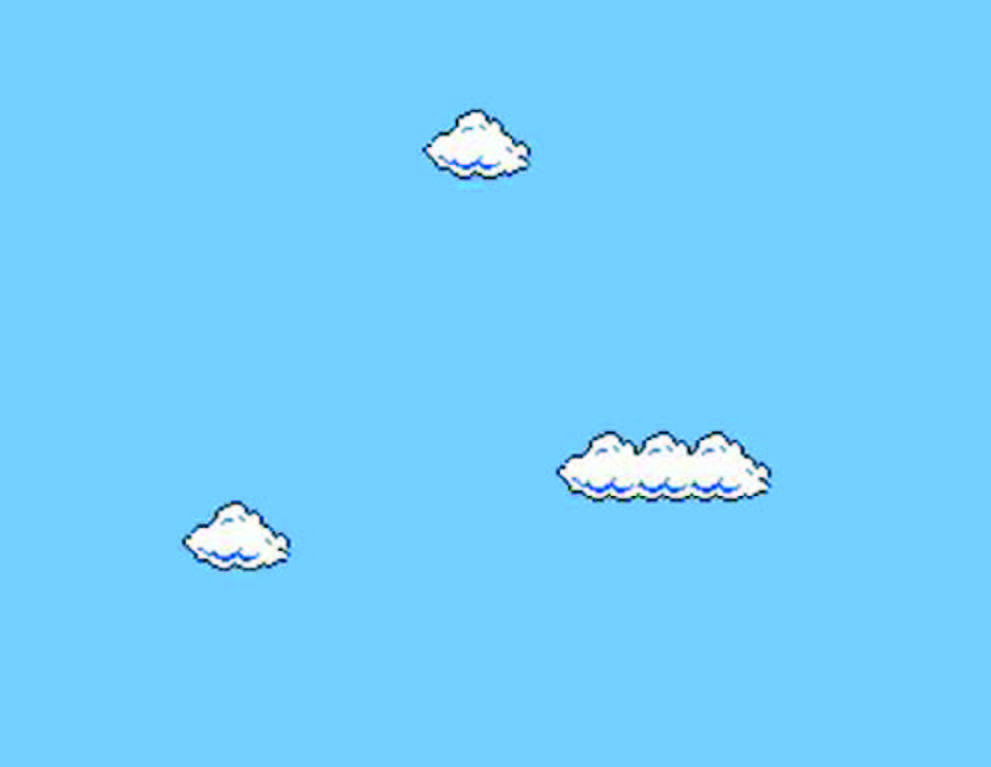 Given the thoroughness with which high, low, and middlebrow taste distinctions permeate creative practices of all stripes, it is not surprising that the following game-inspired non-game projects occupy different rungs of our shared cultural hierarchy.10 Let’s begin at the top of that proverbial ladder with what has been called “Game Art.” These examples include pieces where artists use “the creative technologies and content of video games to artistic ends … Game Art is then a designation derived from the mode of production and the content developed with these tools.”11 According to John Sharp, Game Art should neither be confused with “artgames” — those projects that assume the computational or procedural shape of a game to some expressive end — nor with art that has games as its primary subject matter.12 Game Art never quite caught on in the art community for some of the reasons evident in Ebert’s scattershot critique (e.g., the malleability and indeterminacy of game narrative, seeming lack of an auteur, etc.). Sharp also attributes Game Art’s lack of traction to the art establishment’s unfamiliarity with gaming culture and the difficulty of meshing traditional artistic critique with interactivity and play, among other factors (again, points evident in Ebert’s posts). Popular examples of Game Art include Cory Arcangel’s Super Mario Clouds (2002–),13 where the iconic Nintendo game Super Mario Bros. (1985) has been hacked to remove all but the scrolling white clouds on a blue background; Velvet Strike Team’s “counter military graffiti” created for the popular first-person shooter Counter-Strike, which injects anti-war sentiment into a virtual warzone14; and Joseph DeLappe’s performances where he would type in multiplayer chat boxes the names of real soldiers killed in action while playing the U.S. military’s recruitment game, America’s Army (2002)15. It is important to remember that although Game Art may not have been well-received by the contemporary art scene, museum and gallery doors such as those at the Whitney Museum of American Art were nevertheless opened to these works, and non-gaming attendees exposed to these challenging pieces.
Machinima — a convergent media practice where digital movies are crafted using game content — is a decidedly more mainstream and middlebrow example of gameinspired mash-ups. A portmanteau of the words “machine” and “cinema,” machinima videos are choreographed gameplay performances that are recorded and edited into original narratives or experimental videos. Game franchises like Halo and The Sims are especially popular among machinima-makers because of their broad popularity as games and their built-in image capturing tools.16 The majority of machinima shorts playfully and parodically reference gaming and media culture. This is not the form’s stylistic or expressive limit, however. For instance, Jon Griggs’ Deviation (2006), which was created using the first-person shooter Counter-Strike (1999), critiques the repetitive militarized violence that characterizes the genre. This film was also the first of its kind to debut at the Tribeca Film Festival.17 Machinima has since gained acceptance at other film festivals; there is also a commercial site dedicated to the craft (Machinima.com), including a highly trafficked YouTube channel; and machinima is the subject of a recent scholarly anthology, The Machinima Reader.18 In addition to its potential for political commentary and critique, the form also holds promise for educators wishing to teach students about media literacy by having them deconstruct and reassemble games into original stories.19

Finally, there are all those “lower” forms of cultural production that manifest themselves across a variety of media, and which fly under the broader heading of game art — be it commissioned by private game firms or by “outsider” artists. From inside the industry, there is a wealth of concept art that is sometimes packaged with limited editions of certain titles, or is later compiled in anthologies. There are also art shows that showcase the influence of gaming characters and their virtual worlds — what Sharp calls “game-inspired imagery” — in shows like the annual “i am 8-bit” exhibition in Los Angeles (which now has its own book series).20 Game-inspired handiwork of a more fleeting and public nature is available as street art and graffiti. One such practitioner who has received widespread attention is the French urban artist “Invader.” Beginning in the mid-1990’s, Invader pasted square mosaic tiles on Paris facades to form characters from the 1978 arcade classic Space Invaders. The artist carefully documents placement of the abstract aliens, and classifies installations as “Invasions.” Invader’s creations now grace the walls of cities all over the world, and his work is featured prominently in Banksy’s documentary film, Exit Through the Gift Shop (2010)21. Finally, more modest but no less eclectic fan-created wares are available on the popular arts and crafts website, Etsy.com. Here, one can find no shortage of video game knickknacks in the form of handmade purses, dresses, assorted furniture, dolls, ashtrays, needlework, etc.
The point of this brief list, to reiterate, is not to trot out these pieces as evidence of games’ inherent and a priori artistic worthiness. Rather, the hope is that by recognizing how deeply video games and game culture have permeated a range of creative endeavors, we will see the advantages in assuming an open stance towards the idea of art as an ongoing process, rather than as some inflexible set of either/or cultural categories that get mapped over “acceptable” media objects. There is no reason that the one and zero binary that beats at the heart of all-things digital should replicate the false dichotomy of having to label something as artistic or not. It is more useful and productive to frame the “game of art discourse” as constituting an ever widening public forum, instead of a winner-take-all contest between two sides, where game-inspired projects and interventions make Ebert-like arguments appear myopic and petulant.
The idea of art as a process and as a nexus for meaning- making is reminiscent of Paul Hirsch and Horace Newcomb’s essay, “Television as a Cultural Forum.”22 As noted by Matthew Thomas Payne, Hirsch and Newcomb argue for a focus “on the manifold ways audiences talk about television to one another. In doing so, the authors design a hermeneutic for understanding television culture as an engaged community-centric dialogue, not as a oneway, analyst-centric monologue about that audience.”23 Games likewise function as a site of popular reflection, contestation, and play. But games are not only a forum; as systems of interactive procedures, games are also a catalyst for action. That their internal processes, changing narratives, dynamic characters, etc. would be reimagined for a host of creative expressions is not terribly surprising. What is more surprising is the reluctance by some to deem this activity worthy of artistic consideration.
Again, this is a relatively new struggle for video games, not for the art world. The Ebert-centered online war of words was only the most recent battlefront in a longer conflict over cultural worth. Let us not forget that Duchamp’s own “readymades,” found art objects so called purely by virtue of the artist repurposing and designating them as such, infamously exposed art’s contingent claims of legitimacy decades ago. The digitization of art does not alter fundamentally the relationship between the categories we understand as “games” and “art” so much as it magnifies and complicates their imbricated relationships.
If this is the case, the question that follows is not “are games art,” but rather “what kind of game is the ‘are video games art’ debate”? Certainly Ebert’s line of attack sees the question as a winner-take-all affair, a zero-sum game reminiscent of chess or the U.S. government’s countless “red versus blue” military simulations conducted during the Cold War. But we know that this is not the only available gaming paradigm. There are cooperative games. There are open-world “sandbox” games. And there are virtual worlds that lack top-down goal structures but which nevertheless elicit a wealth of user-created content that is crafted to be shared with fellow gamers. Perhaps, then, the real foundational question is not “are video games art” or even “what kind of game is this debate,” but “what kind of games are the experience of art and artistic practice?”
Examples of ludic dispositions in artistic practice abound. Collaborative Surrealist “exquisite corpse” games sought creative results beyond what any individual artist-player could ever conceive. In the Exquisite Corpse, collaborators sequentially contribute to a creative whole, with little or no knowledge of what others are contributing. The result is expansive artistic inquiry and quality achieved via the game construct, and perhaps more importantly, focused on it. Creative explorations frequently owe their existence and character to an ethos and aesthetic of play bounded by rigorous limitations of process, materials, or other elements. The results of such experimentation and response may be observed in the street dance-games of Brazilian Capoeira, or in the hushed halls of metropolitan art galleries. One example of such an exhibit in Berlin inspired a reviewer to write, “Exciting art, for me, is… Art that envisions other, impossible or very distantly possible, dimensions; art that has its original sketch in a dream.” It’s a passage that could easily have been describing a video game. Indeed, the exhibition statement describes art as a “pure game” that is “played very seriously.”24
All games — digital or otherwise — are creative canvases that facilitate and encourage acts of virtual performance and play. We should not ignore the aspirational questions that rest tacitly here, too. In no particular order: what kind of game do we wish art to be; what kind of player-artists (or artist-players) do we wish to become; and, why do we create what we create? Is it to win? Or is it to play? In his response to Ebert, game producer and former games journalist Jim Preston argues that gamers should ignore the “is-it-art” debate because of the sheer diversity of games available. Time is ultimately on their side, Preston contends. He believes that gamers should refuse to adopt any unbending aesthetic or philosophical stance that replicates Ebert’s essentializing position, and should instead focus their energies on “creating the conditions in which video games can be viewed as art.”25 This position is evident in the playful title of Preston’s piece, “The Arty Party,” which refers to the imagined scene that a great many gamers share: there exists a great club somewhere where legitimate creators enjoy one another’s company while the hoi polloi (gamers, comic book folks, etc.) remain exiled outside to gaze in over one another’s hunched shoulders through a steamy window. Indeed, it is this dichotomy of the haves and have-nots, the shared image of a velvet rope separating forms of cultural production that perpetuates these reductive debates over meaning and value. Ebert’s bold proclamation that “games will never be art” told gamers that if he were in change, they would never have a seat at the proverbial table. There are only winners and losers at Ebert’s Arty Party. Fortunately, a creative spirit has long been thriving outside of the metaphorical Arty Party, as fans and artists have chosen to pursue all manner of creative ventures with little regard for what the party’s bouncers or its hosts might think.
Returning to Marcel Duchamp, it’s fortuitous for our purposes that the word gambit refers to both (1) an opening move in chess where one sacrifices a pawn for a better position, and (2) an initial remark intended to open a conversation. Again Duchamp: “The creative act is not performed by the artist alone; the spectator brings the work in contact with the external world by deciphering and interpreting its inner qualifications and thus adds his contribution to the creative act.”26 Duchamp would remind us all, and Ebert especially, that the point of arguing about art, is not to win – it is not to say “checkmate” – rather, the point is to say, “your move.”
Footnotes:
- Jesse Schell quoted in Samantha Murphy’s “Can Video Games be Art?,” New Scientist, September 20, 2010, accessed February 15, 2012. http://www.newscientist.com/blogs/culturelab/2010/09/can-video-games-be-art.html
- For example, see: Ian Bogost, How to do Things with Videogames (Minneapolis: University of Minnesota Press, 2011), 9-17; Phillip D. Deen, “Interactivity, Inhabitation, and Pragmatist Aesthetics,” Game Studies, 11(2) (May 2011), accessed February 15, 2012. http://gamestudies.org/1102/articles/deen; Grant Tavinor, “Video Games as Mass Art,” Contemporary Aesthetics, 9 (2011), accessed February 15, 2012. http://www.contempaesthetics.org/newvolume/pages/article.php?articleID=616; Aaron Smuts, “Are Video Games Art?,” Contemporary Aesthetics, 3 (2005), accessed February 15, 2012. http://www.contempaesthetics.org/ newvolume/pages/article.php?articleID=299
- Rudolph Arnheim, Film as Art (Film als Kunst, 1932), (Berkeley and Los Angeles: University of California Press, 1957).
- Henry Jenkins. “Video Games: The New Lively Art,” in Handbook for Video Game Studies, edited by Jeffery Goldstein (Cambridge, MA: MIT Press, 2005), accessed February 15, 2012. http://web.mit.edu/cms/People/henry3/GamesNewLively. html
- See, Ebert, “Doom,” (2005) accessed February 15, 2012. http://rogerebert.suntimes.com/apps/pbcs.dll/ article?AID=/20051020/REVIEWS/51012003/1023; and Ebert, “Answer Man,” (November 27, 2005) accessed February 15, 2012. http://rogerebert.suntimes.com/apps/pbcs.dll/section?category=answerman&date=20051127
- Kellee Santiago’s TEDX presentation addressing Ebert’s claims, the basis for Ebert’s response, “Video games can never be art,” has been widely cited and circulated. Santiago is a game designer from thatgamestudio, and her presentation is available at: http://www.youtube.com/watch?v=K9y6MYDSAww (accessed February 25, 2012). Ebert’s columns “Video games can never be art” and the follow-up piece, “Okay, kids, play on my lawn” are available at: http://blogs.suntimes.com/ebert/2010/04/video_ games_can_never_be_art.html; and http://blogs.suntimes.com/ebert/2010/07/okay_kids_play_on_my_lawn.html, respectfully (accessed February 25, 2012).
- Rich Stanton, “Who Framed Roger Ebert?” Eurogamer.net, January 18, 2012, accessed February 15, 2012. http://www. eurogamer.net/articles/2012-01-16-who-framed-roger-ebert
- For additional information on this exhibit, see: http://americanart.si.edu/exhibitions/archive/2012/games (accessed July 9, 2012).
- John D. Sutter, “Supreme Court sees video games as art,” CNN, accessed February 20, 2012. http://articles.cnn.com/2011-06- 27/tech/supreme.court.video.game.art_1_sale-of-violent-video-video-games-hansel-and-gretel?_s=PM:TECH
- Here, Pierre Bourdieu’s work on the relationship between artistic legitimacy, taste cultures, and cultural worth is especially illuminating. Bourdieu’s analysis of how cultural productions perpetuate the social and symbolic capital of dominant groups while complicating simplistic understandings of economic exchange has been generative for a range of media scholars, sociologists, and cultural critics. Readers may find the following works to be useful: Pierre Bourdieu, Outline of a Theory of Practice. (Cambridge: Cambridge University Press, 1977); Pierre Bourdieu, “The Production of Belief: Contribution to an Economy of Symbolic Goods.” Media, Culture & Society 2, no. 3 (1980): 261-293; and Pierre Bourdieu, “The Forms of Capital,” in Handbook of Theory and Research for the Sociology of Education, ed. J.G. Richardson, 241‐258. (New York: Greenwood Press, 1986).
- John Sharp, “A Curiously Short History of Game Art,” paper presented at the 2012 Foundations of Digital Games Conference. Accessed July 9, 2012. http://dl.acm.org/citation. cfm?id=2282348
- See for example: Matteo Bittanti, Gamescenes: Art in the Age of Videogames. M. Battanti and D. Quaranta Ed. (Johan & Levi Editore, 2009).
- See Cory Arcangel’s Super Mario Clouds at: http://www.coryarcangel.com/things-i-made/supermarioclouds/ (shown at right)
- See Velvet Strike Force’s Counter-Strike graffiti: http://www.opensorcery.net/velvet-strike
- See Joseph DeLappe’s work at: http://delappe.net/
- That said, with the right equipment, any game can be recorded and edited like a found footage film.
- Griggs’ Deviation (2006) can be seen at: http://hardlightfilms.com/deviation/
- Henry Lowood & Michael Nitsche (Eds.), The Machinima Reader (Cambridge, MA: MIT Press, 2011).
- Matthew Thomas Payne, “Everything I Need to Know about Filmmaking I Learned from Playing The Sims: The Educational Promise of Machinima.” In Henry Lowood & Michael Nitsche (Eds.) The Machinima Reader (Cambridge, MA: MIT Press, 2011).
- More information about this annual event is available at: http://iam8bit.com/
- For more examples of Invader’s work see: http://www.space-invaders.com/
- Paul Hirsch and Horace Newcomb, “Television as a Cultural Forum: Implications for Research.” In Horace Newcomb’s (Ed.) Television: The Critical View. (New York: Oxford, 1994).
- Matthew Thomas Payne, “Online Gaming as a Cultural Forum,” Proceedings of DiGRA 2005 Conference: Changing Views – Worlds in Play. http://www.digra.org/dl/db/06276.31564.pdf
- Mara Goldwyn, “Art as Pure Play: Play it Seriously,” Art Slant, September 24, 2011, accessed July 13, 2012. http://www.artslant. com/ber/articles/show/28104
- Jim Preston, “The Arty Party,” Gamasutra, February 11, 2008, accessed February 20, 2012. http://www.gamasutra.com/view/ feature/3536/the_arty_party.php
- Marcel Duchamp, “The Creative Act,” Session on the Creative Act, Convention of the American Federation of Arts, Houston, Texas (April, 1957). Accessed March 1, 2012. http://iaaa.nl/cursusAA&AI/duchamp.html