
V9N1: Debate 2012
By Daniel Cooper, Suzy Smith, Brandon Cordell Waite | June 19, 2013
Second screen design and interactive political content delivery for television viewers
Introduction
The era of the television’s prominence in the living room is long over. Once considered the household center for news, entertainment and video games, television no longer commands the full attention it once held due to the widespread proliferation of mobile media. Today, television viewers are more likely to watch their favorite program while also using their smartphone or tablet. In 2012 Google reported that viewers are watching television with another device in hand 77% of the time.1
Instead of warring over viewers’ fragmented attention, broadcasters and content creators have embraced the arrival of mobile media as a means of transforming the passive TV viewing experience into an enriching, interactive social platform. Rather than being a competing act, interactive television content providers are utilizing mobile media as companion devices or “second screens” to deliver rich interactive content such as statistics, character bios, or even alternative camera angles.
Just as compelling is the influx of social media into the interactive viewing experience. Through second screens, viewers can chat with friends or the larger Internet community even if they are watching from home alone. Viewers can share content, make comments or tweet in real-time about their favorite shows.
Second-screen apps offer compelling user experiences for live televised events as well. Some of the most popular interactive television apps have been made exclusively for sporting events and award shows. There is great potential in news and politics for second-screen applications. Events like the presidential debates cover a wide-variety of questions and answers that would drive audiences to their mobile devices to fact check, find relevant news coverage and analysis as well as use social media to share their own commentary with their friends.
This paper reports on a project that involved the design, development and user experience testing of a second screen application called Debate 2012, a companion app for the iPad that delivers relevant news and social media content for presidential debate viewers. An interdisciplinary team of faculty, graduate, and undergraduate students from Ball State University employed a research-informed design process and focus groups to develop and evaluate their work. This paper reports on the results and explore the outcomes, and assesses the implications of this study.
Literature Review
We are a society that consumes media. As technology improves so does the variety of ways in which the public uses it and interacts with it. Just over 90 percent of U.S. television households pay for a subscription service, whether it be cable, satellite or telephone company. 2
More than 75% of American adults own a laptop or a desktop computer.3 In addition, more than 50% of the people in the U.S. own a smartphone, and about 20% of homes own a tablet. 4, 5 Of those people who own a smartphone or a tablet, nearly 40% of them use it while watching television at least once a day, and 84% say they do it at least once a month. 6
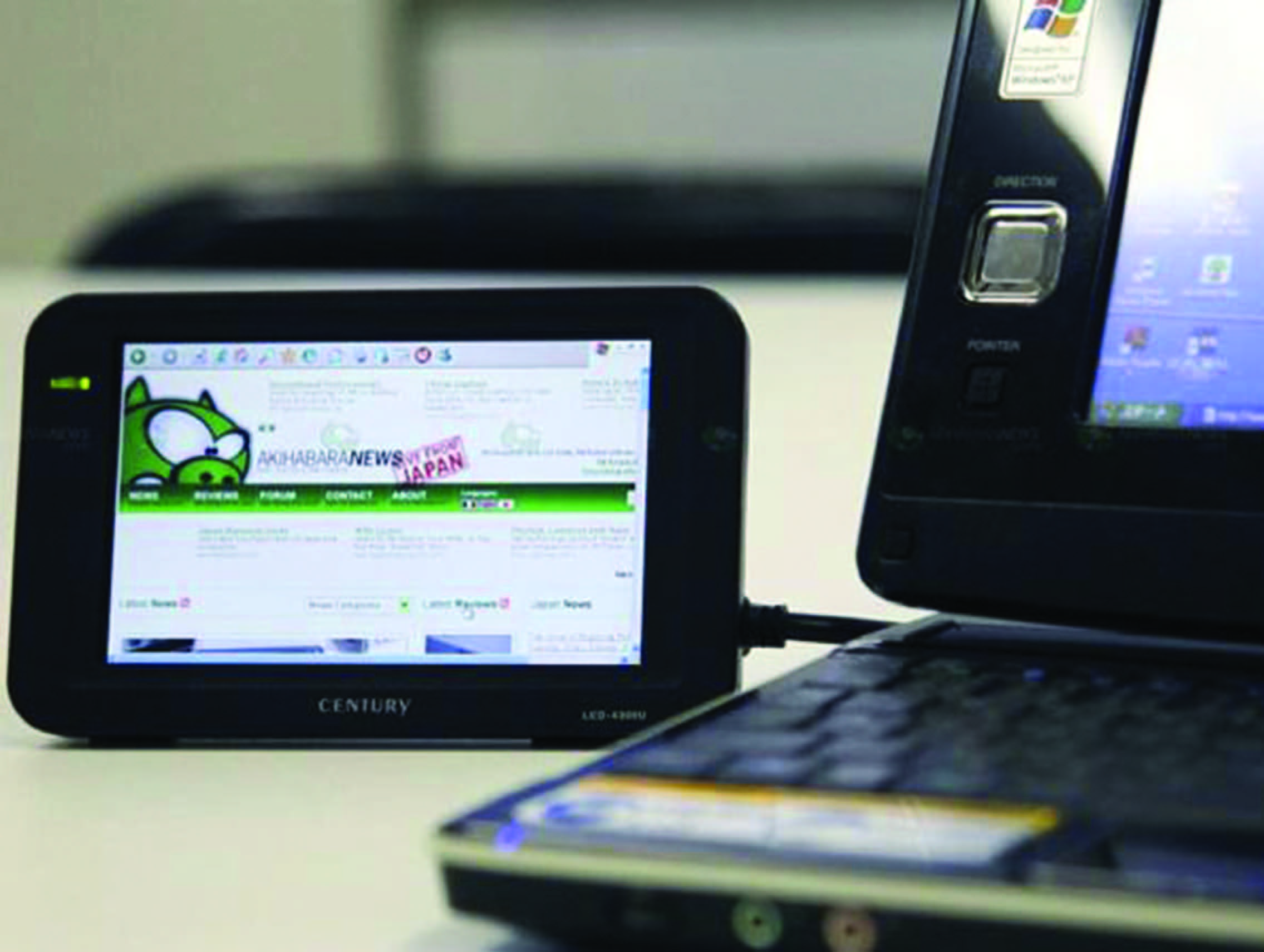
This recent trend of employing mobile platforms to consume media while watching TV has come to be known as using second screens. Little is known about how the consumer interacts with multiple devices at once. However, the simple act of using two devices at once is not enough to constitute a second screen usage. Rather, a connection of some type between the two devices is the goal.
Second-screen applications are designed to work with the content of the first screen, and push related content to the second screen. According to Russ Stanton in a White paper for TATA consultancy services, Second Screen Revolutionizing the Television Experience, Stanton says:
“The ultimate goal is to bring the audience focus back to the program they are watching, rather than an unrelated distraction like Facebook.” 7
Second-screen apps are primarily divided into two types: 1) Synced apps that run on a tablet or smart phone, and integrate some type of interaction between the audience and the program with either additional content about the program, or with quizzes or polls that engage the audience with what is happening on the television screen, or, 2) Social apps, sometimes called companion apps,8 that encourage the use of social media between viewers of the program.9
Another way to maintain some type of synchronization is by focusing on social media. When Barack Obama campaigned for President in 2008 the public found his constant use of social media fascinating. Fastforward four years and the growth in the use of social media in presidential politics has grown exponentially. Candidates have twitter handles, Facebook pages, YouTube channels and a variety of additional tools and techniques to spread their message and to raise the millions of dollars that it takes to run a campaign. Shamma, Kennedy and Churchill examined Twitter activity during one 2008 presidential debate between Barack Obama and John McCain. They found that nearly 91 percent of the time, the topic being tweeted about aligned with the topic begin discussed in the debate.13 This in a sense offers the potential to serve as a way to synchronize the experience between the two screens.
While there are currently a number of second screen applications that are either content-based or socialmedia based, there are not currently many available that combine both. Creating a second-screen experience that combines both pushing related content to the viewer while at the same time using social media as a way to synchronize the user experience, appears to be the ideal focus for future second screen applications.
Project Goals
The goals for this project were: 1) Design and develop a fully functional and interactive iPad application that offered relevant news and social media conversation streams relating to the presidential debates, and 2) deliver content in real-time and in a contextually relevant fashion. Faculty and students were divided into two teams: One focusing on the collection and aggregation of news content, the other on the design and development of the application’s user interface.
Project Outcomes
In four months, our team had a fully functioning iPad application that was successfully deployed through the iTunes app store. Over 4000 users downloaded an application that delivered relevant news stories and videos relating to the topics being discussed during each of the presidential debates. This content was delivered in real-time through an easy to use interface. In addition to viewing related news content, users could also follow the concurrent social conversation through an integrated twitter feed that followed the #debate2012 hashtag.
In order to devise a synchronous second screen viewing experience for the audience, the design and development team had to solve a few unique challenges. Unlike other second screen apps deployed relating to scripted television programing or live events when the content and formats are predetermined, the presidential debates are unscripted and based on a loosely defined format. While other apps are able to employ audio content recognition or internet protocol delivery systems that push content to mobile devices based on predetermined times or events, we did not have that luxury 19 due to the limitations as discussed above.
Instead of relying on predetermined event triggers, the content team devised a list of topics ranging from health care to national security that would serve to categorize the likely discussion points to occur during each debate. News stories and video content from a variety of mainstream media outlets were aggregated and tagged in advance based on this predetermined list. During the debate itself, whenever the moderator posed a question to the candidates, a member of our team would post the question at the top of the application screen along with a signal to display content relevant to the currently discussed topic. The idea behind this delivery system was to always display content relevant to the debate occurring on television as well as reinforce that the mobile app was updating live. A countdown clock was also deployed to further reinforce that paradigm.
The in-app Twitter stream also took advantage of the categorization system used to filter news stories and videos. By filtering #debate2012 by topic, we made the long stream of tweets more manageable and more contextually relevant to the currently selected topic. Additionally, based on prior second screen-design research completed by the team, the decision was made to also filter out retweets since it is often common to see large numbers of duplicate quotes that flood the stream and hamper the end-user experience.
Findings
Thirteen users were brought together to interact with the Debate 2012 second screen application while watching the final two 2012 presidential debates. These debates were held on Tuesday, October 16, 2012 and Monday, October 22, 2012. After using the application for the hour and a half duration of each debate, focus groups were held to assess the level and type by the users.
The focus groups for the most part acknowledged the importance and the potential usability of this type of application. For the most part users felt that related content giving more context and more detailed information about the candidates and their views was good. They were also engaged with the social media aspect of the app; many suggesting that it made watching a debate more enjoyable and that tweeting during the debate made them feel more engaged in the political process, or at least in the conversation surrounding the political process. Users also found the debate-related content informational and useful. However without commercials during the debate they found little time to consume the information, indicating that using and consuming the information before or after the debate would have been a better use of the application. Without commercials, the related content served as more of a distraction, pulling viewers’ attention away from the first screen (television) instead of serving as a companion screen to the first screen.
While engagement with the related content was limited, almost all of the participants were engaged with the social media aspect of the application. All were tweeting or reading tweets during the debate. Twitter was definitely the driving force of the application, however it is unclear whether that is because social media is often a driving force in an application like this, or because the related content provided to the users appears to have been too much of a distraction.
There is some indication that unfamiliarity with the application may have impacted the level of comfort with the application. Many of the participants indicated that it took a little bit of time for them to understand exactly how the application worked, but that once it became familiar, it was easy to navigate.
Future Applications
Observations and feedback from the focus groups suggest that not only is the design of a second screen application important for a better user experience, but so too is the type of content. Examining which features as well as what types of content should be added, deleted or changed is at the core of research-informed design.
The level of attention that media outlets are giving to the development and the promotion of these types of user devices is growing and suggests that audiences are primed to engage with applications like this.14 It is clear from the findings of this study that it’s not enough to just provide the user the content and format on which to view it, the application must provide the user content that creates a symbiotic relationship between the first and second screen, strengthens the user experience on the second screen and does not distract in any way from the first screen. Therefore, great care must be taken in identifying appropriate opportunities and then providing the correct type of content on the second screen device, content that works well with the first screen in every way. This means providing the user with appropriate time to identify and then consume the related content they are interested in and to choose the correct way to push that content to them.
Future incarnations of this application must take into account that without commercial breaks, long form content like newspaper articles and news videos are hard to consume on secondary screens. Therefore shorter, information summaries would provide a much needed additional layer of content that can be consumed quickly and server as an entry-point to longer forms. Additionally, a bookmarking mechanism would serve as a valuable tool to highlight interesting content for later viewing after the live event.
As this technology matures, second screens will offer profoundly innovative methods for delivering interactive media, and will continue to shape the future of television programming. To meet this challenge, the content producers will need to evolve content production in relation to this new blended media experience.
Footnotes:
- Dai Pham, “Navigating the new multi-screen world: Insights show how consumers use different devices together,” Google Mobile Ads Blog, http://googlemobileads.blogspot.co.uk/2012/08/navigating-new-multi-screen-world.html.
- Jimmy Schaeffler, “U.S. Pay TV Infrastructure: Is It Up To The Mobile + Internet Video Challenge?,” Multichannel News, July 24, 2012, http://www.multichannel.com/blogs/us-pay-tv-infrastructure-it-mobile-internet-video-challenge.
- Amy Mitchell et al., “Mobile Devices and News Consumption: Some Good Signs for Journalism,” The Pew Research Center’s Project for Excellence in Journalism: The State of the News Media 2012, http://stateofthemedia.org/2012/mobile-devices-andnews- consumption-some-good-signs-for-journalism/.
- nielsenwire, “Watching TV? Don’t Forget Your Smartphone, Tablet, Consumer blog, http://blog.nielsen.com/nielsenwire/ consumer/watching-tv-dont-forget-your-smartphone-tablet/.
- nielsenwire, “The Cross-Platform Report: A New Connected Community,” Consumer blog, http://blog.nielsen.com/nielsenwire/ consumer/the-cross-platform-report-a-new-connected-community/.
- Ibid
- Russ Stanton, “Second Screen Revolutionizing the Television Experience,” White Paper, http://www.tcs.com/resources/white_ papers/Pages/Second-Screen-Revolutionizing-Television-Experience-Part-1.aspx.
- George Winslow, “Broadcasters Sync Up Second-Screen Efforts,” Broadcasting & Cable, November 19, 2012, 20, http://www. broadcastingcable.com/article/490467-Broadcasters_Sync_Up_Second_Screen_Efforts.php.
- Jonathan Weitz, “Second Screen Opportunities for Advertisers,” Online Media Daily commentary blog, http://www.mediapost. com/publications/article/154286/second-screen-opportunities-for-advertisers.html#axzz2Ifg1tase
- Michael E. Holmes, Sheree Josephson, Ryan E. Carney, Visual Attention to Television Programs With a Second-screen Application: ETRA ‘12 Proceedings of the Symposium on Eye Tracking Research and Applications, Santa Barbara, CA, March 28-30, 2012.
- Alexis Santos, “The State of the Second Screen: Will TV Companion Apps Proliferate or Dwindle?” Engadget, January 11, 2012, http://www.engadget.com/2013/01/11/the-state-of-the-second-screen/.
- Mike Proulx and Stacey Shepatin, Social TV, How Marketers Can Reach and Engage Audiences by Connecting Television to the Web, Social Media, and Mobile (Hoboken, New Jersey: John Wiley & Sons Inc., 2012).
- David A. Shamma, Lyndon Kennedy, and Elizabeth F. Churchill, Tweet the Debates: uUnderstanding Community Annotation of Uncollected Sources: Proceedings of the First SIGMM Workshop on Social Media, Beijing, China, October 23, 2009.
- Alexis Santos, “The State of the Second Screen: Will TV Companion Apps Proliferate or Dwindle?” Engadget, 1/11/2013.
Bibliography:
Holmes, Michael E., Sheree Josephson and Ryan E. Carney. Visual Attention to Television Programs With a Second-Screen Application: ETRA ‘12 Proceedings of the Symposium on Eye Tracking Research and Applications. Santa Barbara, CA, March 28–30, 2012.
Mitchell, Amy, Tom Rosentiel and Leah Christian. “Mobile Devices and News Consumption: Some Good Signs for Journalism.” The Pew Research Center’s Project for Excellence in Journalism: The State of the News Media 2012. http://stateofthemedia.org/2012/mobile-devices-and-newsconsumption- some-good-signs-for-journalism/.
nielsenwire. “Watching TV? Don’t Forget Your Smartphone, Tablet.” Consumer blog. http://blog.nielsen.com/ nielsenwire/consumer/watching-tv-dont-forget-yoursmartphone- tablet/.
nielsenwire. “The Cross-Platform Report: A New Connected Community.” Consumer blog. http://blog.nielsen.com/ nielsenwire/consumer/the-cross-platform-report-a-newconnected- community/.
nielsenwire. “The Cross-Platform Report: A New Connected Community.” Consumer blog. http://blog.nielsen.com/ nielsenwire/consumer/the-cross-platform-report-a-newconnected- community/.
Pham, Dai. “Navigating the New Multi-Screen World: Insights Show How Consumers Use Different Devices Together.” Google Mobile Ads Blog. http://googlemobileads.blogspot. co.uk/2012/08/navigating-new-multi-screen-world.html.
Proulx, Mikeand Stacey Shepatin, Social TV: How Marketers Can Reach and Engage Audiences by Connecting Television to the Web, Social Media, and Mobile. Hoboken, NJ: John Wiley & Sons Inc., 2012.
Santos, Alexis. “The state of the second screen: Will TV companion apps proliferate or dwindle?” Engadget, January 11, 2012, http://www.engadget.com/2013/01/11/thestate- of-the-second-screen/.
Schaeffler, Jimmy. “U.S. Pay TV Infrastructure: Is It Up To The Mobile + Internet Video Challenge?” Multichannel News. July 24, 2012. http://www.multichannel.com/blogs/us-paytv- infrastructure-it-mobile-internet-video-challenge.
Shamma, David A., Lyndon Kennedyand Elizabeth F. Churchill. Tweet the Debates: Understanding Community Annotation of Uncollected Sources: Proceedings of the First SIGMM Workshop on Social Media. Beijing, China. October 23, 2009.
Stanton, Russ. “Second Screen Revolutionizing the Television Experience.”
White Paper. http://www.tcs.com/resources/ white_papers/Pages/Second-Screen-Revoutionizing- Television-Experience-Part-1.aspx. Weitz, Jonathan. “Second Screen Opportunities for Advertisers.” Online Media Daily commentary blog. http://www. mediapost.com/publications/article/154286/secondscreen- opportunities-for-advertisers.html#axzz2lfg1tase.
Winslow, George. “Broadcasters Sync Up Second-Screen Efforts.” Broadcasting & Cable, Nov. 19, 2012, 20. http://www.broadcastingcable.com/article/490467/ Broadcasters_Sync_Up_Second_Screen_Efforts.php.