
V8N3: Teaching Digital Media: A Hybrid Approach
By Angela Diamos | April 9, 2011
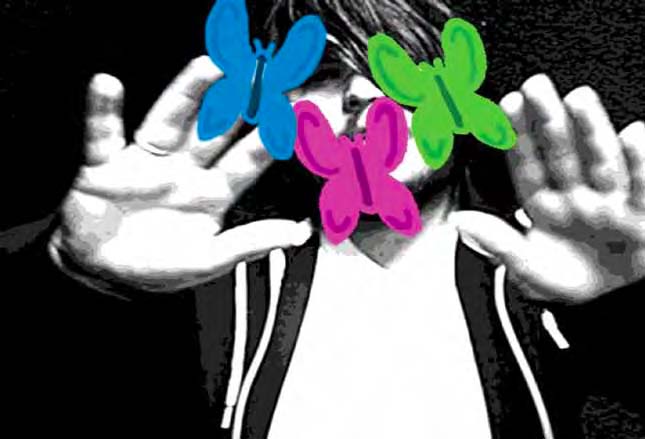


Digital media is by definition a technology based investigation and as digital media’s relevance grows in contemporary culture the tool, computer software and hardware, needs to be taught as part of a foundation of skills in the creation of a student’s visual language, art making. The computer is a valuable tool for selfexpression. The creation of digital media production has essential technical components. It is not enough simply to conceive; one must also be able to execute. Normally, artists throughout their careers pursue technical ability and helping the digital artist achieve eventual virtuosity is a major purpose of arts programs in higher education. My continual investigation of various teaching methods for digital media has allowed me to refine my approach of curriculum creation and arrive at learning outcomes that motivate, inspire and encourage the creation of a self-organized learning environment. These outcomes promote active learning to extend beyond the University.
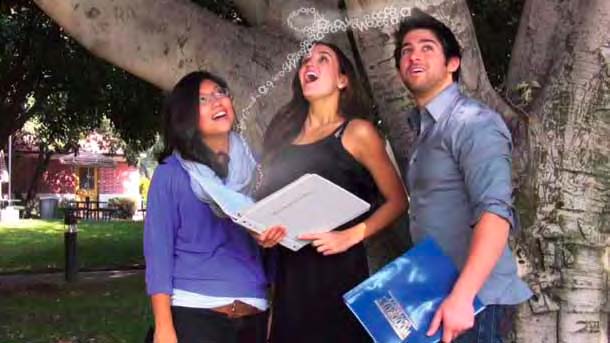
Woodbury, by Amos Sussigan
Malcolm S. Knowles introduced the term andragogy as specific to describing adult directed learning. “Pedagogy-andragogy represents a continuum ranging from teacher-directed to student-directed learning and that both approaches to teaching technology based courses are appropriate with children and adults, depending on the situation.”1 The diversity of today’s students, coupled with the continual updates and additions to software and platforms, present a situation that calls for this broader approach to teaching digital media courses.
I find the most productive approach to educating students about digital media artistry is one that straddles the techniques of traditional pedagogy—teacher-driven learning— and andragogy—student-driven learning. Allowing for teacher expertise as but a starting point leads ultimately to students teaching themselves and each other. In short, a more holistic classroom strategy encourages the student artist to produce their own best methods for learning, and to see constant re-learning as central to the digital media artistic process.
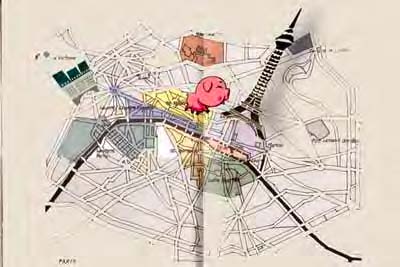
My Piggy In Paris, by Lilit Atshemyan
The course introduction into digital tools starts with a teacher directed introduction and, with the first assignment, becomes student directed. Although the first assignment allows for students to access their creativity, the assignment is structured in such a way as to limit the software choice, format and rendering of the final form of the first assignment. As the course progresses the assignments, while still promoting conceptual freedom, leave the digital tools more to the discretion of the student. As the students become more familiar with the capacities of various software applications, the idea of using digital tools in more creative and unique ways is encouraged. Students are engaged by seeing their colleagues’ work and become inspired to explore different techniques and applications for their self directed inquiries as they develop their creative visual language. The precepts of andragogy — active learning — set forth by Knowles2 are then enlisted to construct courses to enhance creativity through digital and time-based media.
- Adults need to know the reason for learning something. The adult learner asks: What can I do? What is possible? What have others created using this technology? Examples and demonstrations are utilized to assist students in answering these questions. Knowing what is possible by seeing what practiced professionals are creating in the field of digital media inspires the student as to the many ways that digital media can be used to answer a student’s creative questions. Creative processes are encouraged and the student is increasingly active in discovering new skills.
- Experience, including error, provides the basis for learning activities. Problem solving in a way that is fault tolerant encourages students to explore the capabilities of the various technologies. I employ tutorials for direct experience of various software packages. If the students are not concerned with perfection in the tutorial project (I do not ask to see the tutorial results) they are more inclined to make mistakes or to try an application that may not be a direct result of the tutorial given. Exploration is encouraged; “coloring outside the lines” is a valuable asset. This allows the process to inform the final product — discovery through trial and error, iteration is a valuable tool in active learning. Students are engaged with this process and explore on their own and with each other new techniques they have discovered.
- Adults need to be responsible for their decisions on education and be involved in the planning and evaluation of their instruction (self-concept, critique). The concept of each particular piece is influenced by the choices the student makes and need to fall within the parameters established by the unique goal of a particular work. It is important that students identify their concept and the choices they make need to be articulated in relation to their concept. Understanding how the visual can communicate the essential is a valuable tool. This enhances accountability, as they are responsible for the creative content of each piece that they produce. They receive immediate feedback from group critiques and are also involved in higher order thinking (analysis, synthesis and evaluation).
- Adults are most interested in learning subjects that have immediate relevance to their work and/or personal lives. While it is useful for students to explore and experience business applications in technology, we do not want to limit our students to specific applications or job categories, as is the case with for profit institutions or trade schools. Reinforcing the idea that technology itself is an ongoing, ever-evolving tool and that creativity in application is what is valued promotes the idea that learning resources and opportunities are ongoing. To remain viable over their lifetime careers, students will need to maintain their ongoing knowledge as digital media content creators.

Abstract, three details from a series by Ka Yan Ho

Abstract, three details from a series by Ka Yan Ho

Abstract, three details from a series by Ka Yan Ho
- Adult learning is problem-centered rather than contentoriented. Students become engaged by developing the creative voice, and a unique idea as a problem to solve. Problem-creation is asking a really interesting question and then seeing how one goes about answering that question visually through a digital media practice. The student demonstrates “habits of mind that foster integrative thinking and the ability to transfer skills and knowledge from one setting to another — achieved and demonstrated through advanced research and/or creative projects in which students take the primary responsibility for framing questions, carrying out an analysis, and producing work of substantial complexity and quality.”3 This method engages not only the student but also the rest of the class as they relate to each other’s visual statements (questions). Multiple levels of knowing and analysis are reinforced through the group critique process.
- Adults respond better to internal versus external motivators. Self-motivation encourages exploration. The student learns by doing — exploring, integrating and sharing knowledge. The computer lab is a laboratory for learning and students sitting next to each other often ask, “How did you do that? Show me how!” The student is the innovator and achieves confidence and success through their exploration of various software to facilitate their problem solving strategies. Learning how to learn is acquiring the skills of self-directed inquiry.



The holistic pedagogy promotes a self-organized learning environment that is focused on the student as the innovator. Digital media culture encourages selfexploration and creates a learning environment that promotes students who are oriented towards a future of continued learning. The student draws from experience to develop concepts that are engaging and self-realized. Student projects are focused more on expression than technology so that meaning is never compromised. A community of learning is formed; the students exist not in a vacuum but are fostered by the relationships and shared learning experiences of the classroom.
This hybrid approach to teaching digital media reinforces the idea that the tutorial is a means, not an end. The self-directed projects introduced from the start of the course become progressively independent of teacher input and encourage explorations into applications not directly taught in the classroom. The outcome of employing this method for teaching digital media has allowed me to hone my classes so that students develop life-long learning tools and culminates in final projects that stimulate student’s creativity and motivation to explore further the digital realm beyond the classroom.
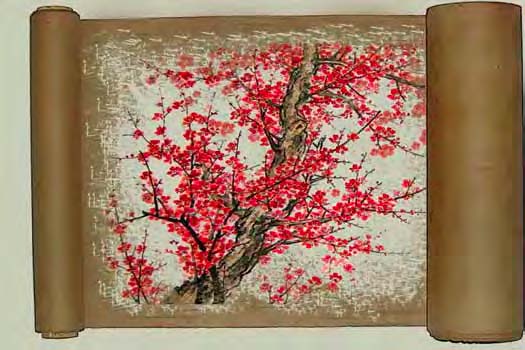
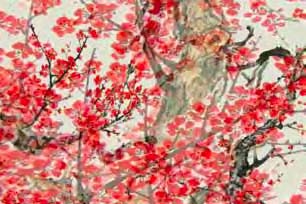
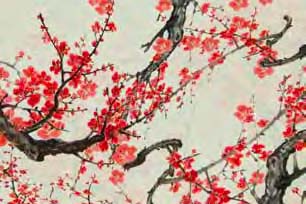
Ang Huai, three details from a series by Aileen Ung
Notes:
- Sharran B. Merriam, Rosemary Caffarella, and Lisa Baumgartner, Learning in Adulthood: A Comprehensive Guide, 3rd Ed. (San Francisco: Jossey-Bass, 2007), 87.
- Malcolm S. Knowles, The Adult Learner: A Neglected Species, 3rd Ed. (Houston, Gulf Publishing: 1984), Appendix D.
- Barbara D. Wright, Our Students’ Best Work: A Framework for Accountability Worthy of Our Mission,2nd Ed. ( Association of American Colleges and Universities, 2008).
Bibliography:
Knowles, M. S. The Adult Learner: A Neglected Species, 3rd ed., Houston Texas: Gulf Publishing, 1984.
Merriam, Sharran B., Rosemary Caffarella, and Lisa Baumgartner. Learning in Adulthood: A Comprehensive Guide, 3rd ed., San Francisco: Jossey-Bass, 2007.
Wright, Barbara D., Our Students’ Best Work: A Framework for Accountability Worthy of Our Mission, 2nd ed., Association of American Colleges and Universities, 2008.