
V8N2: Digital Narratology: Rethinking Narrative Competence in Interactive Media
By Jennifer Smith | February 28, 2013
In industrialized nations, there is a vast expanse of everyday communication, educational exploration, and pleasure reading occurring in digital spaces. This trend is not likely to lessen as people continue to rely on technological devices to conduct their lives in the twenty-first century. A 2009 study concluded that most Americans, across varying age groups, spend at least eight and a half hours per day viewing a digital screen such as a television, computer monitor, or cell phone, and frequently use two or three of these devices concurrently. (1) These users of digital culture, far from needing to recall an owner’s manual every time that they turn on their digital devices, are often quite well-versed in the methods and strategies of reading digital texts—from Google maps to Amazon search results. In this same vein, one can assume that many of these non-narrative electronic reading and searching strategies that have become ingrained in users’ everyday practices might well apply to reading digital narratives, indicating that a simple transfer of general digital navigation skills to digital narrative spaces would yield satisfactorily useful results. Some may question, then, a need to engage in sustained study of the ways that digital narratives reflect a trend toward dynamically narrated elements different than those utilized in traditional texts. Yet, as Peter Rabinowitz writes, “the ability to read is usually construed … to involve something more than phonetics and memory. It is, rather, somehow involved with ‘understanding.’” (2) While many of us read and comprehend digital texts on a daily and even hourly basis, this type of reading falls under the relatively simplified context of cognitively understanding the digital communication and being able to reproduce it. Yet to read digital, interactive narratives and achieve a threshold of literary understanding is to employ a different approach to the task of interpretation. Reading electronic literature requires some skills associated with traditional narrative competence as well as some other habits that, at this point, remain unique to digital narrative formats. The shifts in these skills are important to note. Although readers may have internalized certain changes in narrative presentation as both natural and non-restrictive in digital formats, without fully exploring the implications of these changes we cannot achieve comprehensive understanding of routes to narrative competence in contemporary narrative forms.
Defining the term “narrative” is a complex task, as an overview of some attempts reveals. Gerald Prince defines the terms as “the representation… of one or more real or fictive events communicated by one, two, or several … narrators to one, two, or several… narrates.” (3) Michael Toolan describes narrative as “a perceived sequence of non-randomly connected events, typically involving, as the experiencing agonist, humans or quasi-humans, or other sentient beings, from whose experience we humans can ‘learn.’” (4) Seymour Chatman emphasizes the structured nature of narrative, while for E.M. Forster narrative is a series of events linked in a causal way. (5) For the purposes of this research, I borrow heavily from Marie-Laure Ryan’s striking discussion of this problem in Avatars of Story. Ryan’s definition of the terms starts with a loosely conceived understanding of H. Porter Abbott’s general classification of narrative as a combination of story (as action) and discourse (as the action represented), and then moves on to regard “the set of all narrative as fuzzy, and narrativity (or ‘storiness’) as a scalar property rather than as a rigidly binary feature that divides mental representations into stories and nonstories.” (6) Each narrative, then, can be rated according to the ways in which it aligns with certain macroand microelements of a larger narrative definition; i.e.texts can have varying degrees of narrativity inherent to them. Another complex matter of nomenclature is the question of what constitutes a “digital narrative” proper. Some might be inclined to consider texts read on digital devices or those scanned with OCR (optical character recognition) for online database storage and access to be included in this category of digital narratives. Borrowing from Raine Koskimaa’s discussion of this type of work, I term these pieces as digitally-published texts, and include in this category recent phenomena such as eBooks and scholarly hypertext editions of classic books, including texts that do not seem to require the use of the digital medium to achieve their ultimate reading goals. (7) Within this study, the focus remains on narrative texts that have been born-digital—i.e. texts created using digital technologies at some level of production, and meant to be experienced via digital systems that make use of technological effects or techniques otherwise not possible in traditional print or codex-based media. In “A [s]creed for Digital Fiction,” digital scholars compellingly argue for a definition of digital fiction as “fiction written for and read on a computer screen that pursues its verbal, discursive and/or conceptual complexity through the digital medium, and would lose something of its aesthetic and semiotic function if it were removed from that medium.” (8) These texts are digitally native in a way that is uniquely different from codex-based texts created using word processing systems and then printed into tangible, static objects, or those created using digital technologies that register little marked differences from film or video technologies. Digital narratives, in other words, must remain digital in order to retain their sense of “self,” and, if exported or translated out of their digital display formats, no longer exist as the same narrative product.
Narrative competence, the means by which we comprehend narrative texts, is an area that yields compelling results in terms of digital narrative. Defined as “the ability to produce and understand narratives,” (9) the concept is particularly applicable to interactions with digital narratives that often challenge our preconceived notions regarding the traditional construction of narrative. Heta Pyrhönen writes that, when considering texts from various genres, “competence enables readers to decode a narrative, cocreating the story as a meaningful and coherent whole.” (10) Yet the interactive qualities of digital media must complicate our understanding of the learned characteristics of the given narrative genre. Gerald Prince suggests, “that not only do we all have certain intuitions (or know certain rules) about the nature of narratives and what they mean, but also, to a certain extent at least, we all have the same intuitions and know the same rules. It is this set of rules and intuitions, this narrative competence, that allows us (human beings) to produce and process narratives, to tell, retell, paraphrase, expand, summarize, and understand them in like manner.” (11) My scholarship indicates that potentially illuminating theoretical revisions lie at the intersection of narrative competence and digital media texts, in part because digital narratives consistently break and refashion the rules by which we read them, thus unsettling traditional notions of successful approaches to literature. As digital narratives rely upon unique and multimodal methods of narrative presentation, these works often make the processing and reprocessing of given narratives difficult, adding complexity to what can be an already arduous task. This difficulty in reading and repeating these texts thwarts our capabilities of narrative comprehension so much so that narrative theorists need to reconsider theoretical constructs of narrative competence. Interactivity impacts narrative competence in some ways that, as of yet, have not been fully covered by the small but growing body of scholarship on digital narratology.
In order to achieve a primary level of narrative competence, one must be able to reach a modicum of understanding of the developmental levels of the text—both internally at the level of story and externally at the level of discourse. Fiction succeeds on the means by which it allows an audience to participate in the narrative the author creates on both of these levels. While this is not to say that fiction must be easily accessible in order to succeed with an audience, when a reader is unable to coherently follow the narrative at the level of discourse—that is, unable to move from one unit of telling to the next—it stands to reason that there is a much lower chance of that reader being able to achieve a level of narrative competence in relation to the text. Studies on the development of narrative competence have focused on how and when children learn the skills necessary to understand and create narratives. These studies have revealed that progress in terms of narrative competence depends upon the child’s development of memorization and language skills (in order to construct a meaningful whole from the various parts of stories that they hear). Furthermore, children must also understand the representational systems of the world in which they (and/ or the stories that they respond to) exist. For many children unable to comprehend narratives, “part of what is missing is the schematic world knowledge that facilitates adult comprehension. Children, for example, must have sufficient experience in restaurants before they can make the types of inferences that are routine for adults. In addition, children must learn the norms of different genres and different story structures.” (12) These types of studies make clear that narrative competence is highly dependent upon the reader being able to recognize and participate in the different levels of narrative progression within a text—a skill that, as I will argue below, is often missing when reading digital-born narratives. Without clear understandings of the conventions and techniques of discourse-level narrative progression with the given media of digital systems, it stands to reason that many readers of electronic texts often are unable to achieve a minimal level of narrative competence.

Figure 1: “Start” screen of Deviant: The Possession of Christian Shaw. (13)
Questions surrounding narrative competence are aptly illustrated through a case study of Donna Leishman’s Deviant: The Possession of Christian Shaw (2004), an electronic text that remediates a little-known Scottish folktale concerning the assumed demonic possession of an 11-year-old girl in 1696. From the outset, Deviant is a difficult work to get inside—both mentally and digitally. It is hard to know where to start, or even how to start, as Leishman gives few clear indicators to lead those attempting to “read” this work. Upon visiting the start page of the piece, one is presented only with a fantastically-rendered plant that hangs in the upper left hand corner, without accompanying movement or sound (see Figure 1).
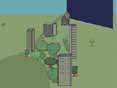
Figure 2: “Begin” screen of “Deviant: The Possession of Christian Shaw. (14)
Clicking the illustrated plant, the reader finds himself situated within a graphically lush landscape that embodies the look of a futuristic cross between a Nintendo world and a child’s coloring book (see Figure 2).
Upon entering the main stage of the work, the reader of this electronic narrative, as an active participant in this digital age, understands and responds to the flickering cursor on the screen. He or she knows that the first step is to move the cursor around and explore the setting, and then be rewarded with the switch from that ubiquitous white arrow to the sought-after white hand that means “click here, and see what happens.” As in other online and digital spaces, the reader enters this project with expectations and established notions of how to work these tools. There is evidence to indicate that our brains become attuned to habitual practices in online environments, so much so as to suggest that our engagement with these environments can effectively “rewire” our neurological spaces. Gary Small conducted an investigation into web use in which he asked twelve Net novices and twelve experienced Web users to surf Google, while monitoring their brain activity via MRI. In part, Small concludes that users new to Internet use had significantly less brain activity than those familiar with online searching techniques, especially in the left-front section of the brain, even while both groups engaged in the same tasks.(15) The study indicates that previous Internet exposure predisposes users to activating specific sections of their brains in anticipation and reaction to specific stimuli in the digital environment, while those unfamiliar with the Internet do not enter the exercise with the same skill set from which to draw. As Small states, “the results of the present study demonstrated overall increases in regional activations that were associated with prior task experience [and that] the net-savvy subjects showed increased activation during the Internet search task.” (16) It is reasonable to consider that readers come

Figure 3: An illustration of cursor reward at the micro level in Deviant: The Possession of Christian Shaw. (17)
to an electronic work with the accumulated knowledge of their prior electronic experiences, and are calling upon these experiences to shape the way that they interact with this new type of text. Therefore, in this case specifically, the reader interacting with Deviant works to find that white hand that appears when a clickable element resides beneath it, and expects a payoff. Let us imagine that, for a given reader, the first object of interest is the looming building in the foreground of the set. The reader runs the cursor over the windows of the building and is rewarded by the appearance of both the white hand and a change in the window color (see Figure 3).
At first glance, this seems to be a satisfactory “start” to the narrative progression. In fact, though, while the reader sees the windows change colors and hears the work emit musical tones that correspond to the cursor movement, he does not experience any “forward movement” in terms of the plot. Taking the idea of habitual practices a step further, one can apply it to how we read and comprehend a narrative itself. As H. Porter Abbott writes about our “propensity to narrativize,” he points to the fact that, “We have many narrative templates in our minds […. We] have narrative formulas stored in our memory that quickly fill in certain elements of the story so far.” (18) It makes sense that we tend towards expecting narrative elements to standout in the text from the outset, and that we read for those elements at the start. The reader of Deviant continues on, thinking that there must be some other gatekeeping element that he or she has not yet found, or some other area on the screen that, when properly noted and visited, will yield narrative coherence later in the text. In order to better understand this interaction in terms of traditional, linear narrative, consider the process that might occur when one reads a good detective novel: as we read, we look closely at certain details, such as the presence of the man in the conspicuous bowling hat, for example, noting particulars that our previous reading experiences suggest could be noteworthy in later scenes. Readers new to crime fiction may work harder to pinpoint these narrative details, while more experienced readers of detective novels may pick them up (or think that they have picked them up) with relative ease. The same occurs in interactive narratives such as Deviant, because our significant current online experiences have trained us in digital reading habits and provided us with skills that we believe to be applicable to most digital spaces. What quickly becomes apparent, though, in the case of Deviant and other similar digital texts, is the extreme degree of examination that must occur for most readers to access these significant moments in the narrative.
Research has already established that as we continue to read an increasing number of digital texts, our reading habits will likewise continue to shift in significant ways. (19) Even now, in a relative cultural infancy regarding our experiences of digital texts, online reading habits already significantly differ from codex-based ones. Weinreich et al. report on our behaviors of web use, indicating that our typical web usage is frequently cursory and immediate. Weinreich writes of web users’ reading behaviors, indicating that research “participants often did not take the time to completely read the page, but they regularly just seemed to glimpse over most of the information offered, before they perform their next navigation action.” (20) This trend towards rapidity of reading and cursory scans of textual materials in technological spaces will not likely surprise many who participate daily in these same online reading activities. How, then, does this material inform our reading of new media narratives? Returning to Deviant, different readers may have very different experiences of the text. Many readers will mouse around on the page, spending several seconds clicking and experiencing no significant change in the narrative material of the text. Readers who move away from the foreground of the piece, and click instead on the small cross atop the church in the background, will find a reward in the presentation of a smaller vignette providing our first glimpse of Reverend Brisbane.
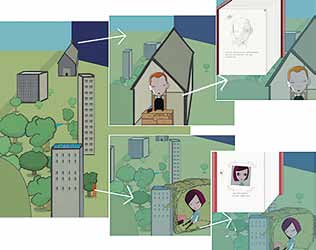
Figure 4: Two potential paths readers may take
from the “Begin” scene of Deviant: The Possession
of Christian Shaw. (21)
Exploring this scene and clicking on the upper left-hand desk drawer reveals the reverend’s journal, which gives us some pertinent details regarding the reverend, the doctor, and their residencies in Balgarran. Other readers, those who remain invested in the foreground of the scene, may instead click on the tree with the ladder in the foreground, and thus find themselves confronted with a growing bush, inside which they will have their first glimpses of the protagonist, Christian. Clicking on this scene then brings into view Christian’s journal, which likewise gives the reader background information about her (see Figure 4).
If, in either of these scenes, one clicks on the digital clocks located beside Christian or Reverend Brisbane, the scene comes to a close and a larger narrative background “resets” and offers slightly different interactive elements for the reader. Interacting with some of these links reveals smaller vignettes that showcase Christian’s odd behaviors, while clicking on the road to the left of the scene brings the reader to Christian’s visit with the doctor, which sparks the official diagnosis of possession and subsequent legal affairs and eventual executions of Christian’s accused tormentors. Of particular interest to this discussion of narrative competence is the digital “short circuiting” that can occur in this and other new media works. Clicking the clock before exploring the seemingly random elements of the desk, tree, or cross causes that narrative opportunity to close before the reader is able to access it. A given reader may click the clock located beside Christian after reading just one of her journal pages, after reading all of them, or after reading none at all. A different reader may click Reverend Brisbane’s clock early or late in the journal reading process as well. Both readers have the very real possibility of clicking the clock well before coming to the conclusion of either character’s journal or even realizing that there is a second journal that continues to provide background information on the other character and motives relevant to the plot. This leads to the possibility for significant narrative confusion, as many readers likely miss some or even all of this highly relevant background information. My own experience was that it was not until the fourth or fifth reading that I realized the dual routes of narrative background and how to access (what I believe to be) the entirety of each.
Gerald Prince writes about the role of narrative competence in our understanding of narrative theory. Asserting that readers across cultures have similar expectations of narratives, Prince determines that these fairly consistent rules and intuitions are what constitute the basis for narrative competence, and this set of shared expectations is what “allows readers to produce and process narratives, to expand, summarize and paraphrase them in like manner.” (22) How can readers, unfamiliar with the conventions of texts such as Deviant, expect to attain some degree of narrative competence with that work? Many readers will miss key information relevant to Christian’s possession and trial, and thus their experiences of the text, and their ability to make sense of the causes and effects within it, will be significantly hampered from the outset. “Reading a text may be said to be grossly equivalent to processing textual data by asking questions of the text and answering them, to some extent at least, on the basis of it,” writes Prince. (23) Yet many readers of this text, after asking questions of it, may not be able to find the evidence to answer these questions in any coherent way. The example above illustrates just one instance in which this might happen, yet this instance is significant because failure to find and comprehend this chronicled background information leads to significant loss of ability to comprehend the narrative as a whole. This seemingly minor detail (clicking or not clicking on one spot or another) establishes the likelihood of a reader’s continued engagement with the text or eventual dismissal of the piece as a whole. While Leishman’s work is only one example of a digital narrative, with unique circumstances and routes to narrative competence, it is important to consider the principles behind the promise of interactivity within narrative texts and how these promises can work to further confound the goals of those reading for the narrative content.

Figure 5: Screenshot of J.R. Carpenter’s Les Huit Quartiers du Sommeil. (24)
Interactivity in digital narratives offers the opportunity to rethink possibilities for narrative competence. Providing new modes of engaging with a text, interactivity can change the ways that readers establish narrative competence. Many new media narratives, making use of their digital environment, allow interactive features to provide another route to understanding and investigating the narrative material presented. For example, J.R. Carpenter frequently makes use of mapping software to provide an interactive interface for her works, such as Les Huit Quartiers du Sommeil and In Absentia (see Figure 5).
Both of these works, through the use of digital interactive spaces, provide a platform upon which narrative competence might be further enhanced through the continued exploration of the visual and metaphoric connections among places, events, and vignettes represented on these maps. In these works, the map interface works as a sort of interactive character and plot map, visually encouraging the reader to consider the relationships among scenes and actors in the various vignettes. For example, in Les Huit Quartiers du Sommeil, small bed icons click open to reveal short stories about the quality of sleep of a young girl as she moves through eight different neighborhoods in Montreal, stories that reveal a surprising locomotion and movement to the process of sleeping (or not sleeping) in the dark of night. As the protagonist’s story relocates, so too must the reader reposition his or her mouse in order to follow along. Carpenter effectively mirrors the growth and progress of her narrative through the use of interactive elements within this text.
Many other pieces, however, have employed interactive elements to achieve surprising and innovative artistic or multi-modal effects, but to the disadvantage of providing routes to allow or improve narrative competence of a given text. Nicholas Carr, writing about levels of personal attention required in hypermedia spaces, questions the compatibility of increased interaction and the possibility for sustained attention. Carr writes,
…the need to evaluate links and make related navigational choices, while also processing a multiplicity of fleeting sensory stimuli, requires constant mental coordination and decision making, distracting the brain from the work of interpreting a text or other information. Whenever we, as readers, come upon a link, we have to pause, for at least a split second, to allow our prefrontal cortex to evaluate whether or not we should click it. The redirection of our mental resources, from reading words to making judgments, may be imperceptible to us—our brains are quick—but it’s been shown to impede comprehension and retention, particularly when it’s repeated frequently. (25)
While he refers specific to hypertext literature here, Carr’s observations remain applicable to other forms of new media literature that rely upon interactive manipulations in order to select text or narrative material to which the user is exposed. Recognizing that attention is fleeting and that comprehension is neither a natural nor cognitively easy task to accomplish, Carr’s statements point to some potential limitations of digital narratives.
This is not to say, however, that hypertext literature and digitally mediated narratives that are not properly considered hypertext literature employ the same models of creation or interaction. Early hypertext literature, when positioned in terms of the longer (though still relatively young) timeline of digital narratives, embodied different navigational structures and goals than many “secondgeneration” digital texts, generally observed to have been created after the spread of Web technologies to a larger audience in the mid 1990s. Many of these earlier hyperlinked pieces were experimenting with novel modes of representation that allowed for a postmodern, rhizomatic approach to narrative using methods that (arguably) expanded traditional connectivity trends in print literature. As Stuart Moulthrop notes, “hypertext is nothing more than an extension of what literature has always been… a temporally extended network of relations which successive generations of readers and writers perpetually make and unmake.” (27) Likewise, hypertext proper was often written with a specific academic goal in mind, as “the first hypertexts were written by North-American literary and media scholars…with the intention to demonstrate hypertext’s potential to implement and thus verify central tenets of post-structuralism (e.g. the death of the author, the decentralization of textual meaning and coherence, the rhizome metaphor, multi-linearity, and the notion of the text chunk, or ‘lexia’).” (28) It is my contention that while foundational hypertext authors worked seriously to respond to these constructs in an academic manner that necessitates scholarly study, many contemporary pieces (hypertext or otherwise) make use of web and action scripting technology to combine text, image, and interactivity in meaningful ways for a wider audience, and, thus, require different modes of study in order to understand and evaluate the narrative techniques that they employ.
Increased interactivity has very real results for the prospects of narrative competence in a digital world. As routes of interaction and new reading paths open up to the user, that user is increasingly able to find him or herself lost in the brambles of narrative incomprehension. We are all participating, every day, in both reading and contributing to the narrative materials available via Internet technologies. Without a clear understanding of how this relatively new mode of communication, and our methods of reading it, contribute to varying degrees of narrative competency, we run the risk of creating art that is neither read by others nor, in some very real senses, even readable to those enmeshed in the reading and comprehension practices we develop in response to our increasingly pervasive digital technologies. It is necessary for narrative scholars to reconsider their current definitions of narrative competence in light of digital texts such as those discussed above. Amendments to current conceptions might include the following three functions: considerations of a given reader’s willingness to continue to ask questions of a text which may not answered in a single reading or consistently across readings, consideration of the reader’s previous involvement (and thus familiarity) with the narrative’s media form and associated digital techniques, and increased attention to the ways in which interactive multimedia texts may require hyper-attention to several different elements of the text’s discourse, including text-based elements but not excluding visual, interactive, and reactive features of the narrative. When these factors become more readily included in evaluations of narrative competence abilities, our approach to narrative theory will continue to apply to and accommodate the range of narrative products that increasing digital advancements allow.
Footnotes:
- Council for Research Excellence,”Video Consumer Mapping Study: Key Findings Report,” Council for Research Excellence. http:// www.researchexcellence.com/VCMFINALREPORT_4_28_09.pdf (accessed September 4, 2010).
- Peter J. Rabinowitz, Before Reading: Narrative Conventions and the Politics of Interpretation (Columbus: Ohio State University Press, 1998), 15.
- Gerald Prince, Dictionary of Narratology (Lincoln: University of Nebraska Press, 2003), 58.
- Michael Toolan, Narrative: A Critical Linguistic Introduction, 2nd ed. (New York: Routledge, 2001), 8.
- H. Porter Abbott, The Cambridge Introduction to Narrative, 2nd ed. (New York: Cambridge University Press, 2008). 42.
- Marie-Laure Ryan, Avatars of Story (Minneapolis: University of Minnesota Press, 2006),
- Raine Koskimaa, “Approaches to Digital Literature: Temporal Dynamics and Cyborg Authors,” Reading Moving Letters: Digital Literature in Research and Teaching. A Handbook, ed. Roberto Simanowski, Jörgen Schäfer, and Peter Gendolla (Piscataway, NJ: Transaction Publishers, 2010), 129.
- Alice Bell et al., “A [S]creed for Digital Fiction,” Electronic Book Review (2010), http://www.electronicbookreview.com/thread/ electropoetics/DFINative. (April 18, 2011).
- Gerald Prince, Dictionary of Narratology (Lincoln: University of Nebraska Press, 2003), 61.
- Heta Pyrhӧnen, “Genre,” The Cambridge Companion to Narrative, ed. David Herman (New York: Cambridge University Press, 2007), 110.
- Gerald Prince, “Narrative Analysis and Narratology,” New Literary History 13, no. 2 (1982). 179-188. 181.
- Richard J. Gerrig, “Psychological Approaches to Narrative,” Routledge Encyclopedia of Narrative Theory, ed. David Herman, Manfred Jahn and Marie-Laure Ryan (New York: Routledge, 2005). 472.
- Donna Leishman, “Deviant: The Possesion of Christian Shaw.” 6amhoover. http://www.6amhoover.com/xxx/start.htm (accessed September 12, 2010).
- Ibid.
- Gary W. Small et. al., “Your Brain on Google: Patterns of Cerebral Activation during Internet Searching,” American Journal of Geriatric Psychiatry 17, no. 2 (2009): 116-126. 121.
- Ibid. 121-122.
- Donna Leishman, “Deviant: The Possesion of Christian Shaw.” 6amhoover. http://www.6amhoover.com/xxx/start.htm (accessed September 12, 2010).
- H. Porter Abbott, The Cambridge Introduction to Narrative, 2nd ed. (New York: Cambridge University Press, 2008). 8.
- Extensive research suggests that there are significant differences in the habits that we utilize for both screen reading and print reading, and that habits used in digital reading spaces are now crossing over into our reading activities when considering non-digital works. To read further about this, see Jay David Bolter, Writing Space: Computers, Hypertext, and the Remediation of Print, (Mahway, NJ: Routledge, 2001); Margeret Mackey, Literacies Across Media: Playing the Text, (New York: RoutledgeFarmer, 2002); and N. Katherine Hayles, Electronic Literature: New Horizons for the Literary,(Notre Dame: University of Notre Dame, 2008).
- Harald Weinreich et al., “Not Quite the Average: An Emperical Study of Web Use,” ACM Transactions on the Web, (2008): 5:1-5:31. 5:20.
- Donna Leishman, “Deviant: The Possesion of Christian Shaw.” 6amhoover. http://www.6amhoover.com/xxx/start.htm (accessed September 12, 2010).
- Gerald Prince, “Reading and Narrative Competence,” L’Esprit Createur 21, no. 2 (Summer 1982): 81-88. 85.
- Ibid.
- J.R. Carpenter, “Les Huit Quartiers du Sommeil.” Lucky Soap, http://luckysoap.com/huitquartiers/index.html (accessed September 18, 2010).
- Nicholas Carr, The Shallows: What the Internet Is Doing to Our Brains (New York: W. W. Norton & Company, 2010), 122.
- N. Katherine Hayles, Writing Machines, (Cambridge: The MIT Press, 2002), 27.
- Stuart Moulthrop, “You Say You Want a Revolution? Hypertext and the Laws of Media,” Postmodern Culture 1, no 3 (1991), http://muse.jhu.edu.proxy.library.vcu.edu/journals/postmodern_culture/v001/1.3moulthrop.html. (May 1, 2011).
- Astrid Ensslin, “From Revisi(tati)on to Retro-Internalization,” Reading Moving Letters: Digital Literature in Research and Teaching. A Handbook, ed. Roberto Simanowski, Jörgen Schäfer, and Peter Gendolla (Piscataway, NJ: Transaction Publishers, 2010), 147.
Bibliography:
Abbott, H. Porter. The Cambridge Introduction to Narrative, 2nd ed. New York: Cambridge University Press, 2008.
Bell, Alice, Astrid Ensslin, Dave Ciccoricco, Hans Rustad, Jess Laccetti and Jessica Pressman. “A [S]creed for Digital Fiction.” Electronic Book Review (March 07, 2010), http://www.electronicbookreview.com/thread/electropoetics/DFINative. (April 18, 2011).
Bolter, Jay David. Writing Space: Computers, Hypertext, and the Remediation of Print. Mahway, NJ: Routledge, 2001.
Carpenter, J. R. Les Huit Quartiers du Sommeil. Lucky Soap. http://luckysoap.com/huitquartiers/index.html (accessed September 18, 2010).
Carr, Nicholas. The Shallows: What the Internet Is Doing to Our Brains. New York: W. W. Norton & Company, 2010. Council for Research Excellence. Video Consumer Mapping Study: Key Findings Report. Council for Research Excellence. http://www.researchexcellence.com/VCMFINALREPORT_4_28_09.pdf. (accessed September 4, 2010).
Ensslin, Astrid. “From Revisi(tati)on to Retro-Internalization.” In Reading Moving Letters: Digital Literature in Research and Teaching. A Handbook. Edited by Roberto Simanowski, Jörgen Schäfer, and Peter Gendolla. Piscataway, NJ: Transaction Publishers, 2010.
Gerrig, Richard J. “Psychological Approaches to Narrative.” In Routledge Encyclopedia of Narrative Theory. Edited by David Herman, Manfred Jahn and Marie-Laure Ryan. New York: Routledge, 2005.
Hayles, N. Katherine. Electronic Literature: New Horizons for the Literary. Notre Dame: University of Notre Dame, 2008. —. Writing Machines. Cambridge: The MIT Press, 2002.
Koskimaa, Raine. “Approaches to Digital Literature: Temporal Dynamics and Cyborg Authors.” In Reading Moving Letters: Digital Literature in Research and Teaching. A Handbook. Edited by Roberto Simanowski, Jörgen Schäfer, and Peter Gendolla. Piscataway, NJ: Transaction Publishers, 2010.
Leishman, Donna. Deviant: The Possession of Christian Shaw. 6amhoover. http://www.6amhoover.com/xxx/start.htm (accessed September 12, 2010).
Mackey, Margeret. Literacies Across Media: Playing the Text. New York: RoutledgeFarmer, 2002.
Moulthrop, Stuart. “You Say You Want a Revolution? Hypertext and the Laws of Media.” Postmodern Culture 1, no 3 (May 1991). http://muse.jhu.edu.proxy.library.vcu.edu/journals/postmodern_culture/v001/1.3moulthrop.html (May 1, 2011).
O’Leary, Noreen. “Welcome to My World.” Adweek. (November 17, 2008), http://www.adweek.com/news/television/ welcome-my-world-97529 (September 1, 2010).
Prince, Gerald. Dictionary of Narratology. Lincoln: University of Nebraska Press, 2003. —. “Narrative Analysis and Narratology.” New Literary History 13, no. 2 (1982): 179-188. —. “Reading and Narrative Competence.” L’Esprit Createur 21, no. 2 (Summer 1982): 81-88. 85.
Pyrhӧnen, Heta. “Genre.” In The Cambridge Companion to Narrative. Edited by David Herman. New York: Cambridge University Press, 2007.
Rabinowitz, Peter J. Before Reading: Narrative Conventions and the Politics of Interpretation. Columbus: Ohio State University Press, 1998.
Ryan, Marie-Laure. Avatars of Story. Minneapolis: University of Minnesota Press, 2006.
Small, Gary W., Teena D. Moody, Prabha Siddarth, and Susan Y. Bookheimer. “Your Brain on Google: Patterns of Cerebral Activation during Internet Searching.” American Journal of Geriatric Psychiatry 17, no. 2 (2009): 116-126.
Toolan, Michael. Narrative: A Critical Linguistic Introduction, 2nd Ed. New York: Routledge, 2001.
Weinreich, Harald, Hartmut Obendorf, Eelco Herder, and Matthias Mayer. “Not Quite the Average: An Emperical Study of Web Use.” ACM Transactions on the Web (2008): 5:1-5:31.