
V8N2: Conventions and Innovations: Narrative Structure and Technique in Heavy Rain
By Huaxin Wei, Dr. Tom Calvert | February 28, 2013
Introduction
Heavy Rain (1) is probably one of the most dramatic games and one of the most engaging interactive narratives that have achieved commercial success. Developed by Francebased Quantic Dream and released by Sony Computer Entertainment solely on PlayStation 3 in February 2010, the game had sold 1.5 million copies worldwide by August 2010 (2) and received universal critical praise. (3) Heavy Rain is not just another adventure game; it is an interactive thriller story waiting for players’ interaction. It can be discussed within the realms of “interactive drama” (4) and “interactive movies,” (5) because of its pronounced emphasis on exploring emotions through giving players real control of how the story develops, but more importantly, it is a rich game text that marks the most recent conception and development of interactive narrative. The plot revolves around finding the Origami Killer who has committed a series of murders of young boys using the same method: kidnapping them and letting them drown in rainwater while trapped. The game takes a third-person point of view and grants players the control of four characters, one at a time: the victim’s father Ethan Mars, the journalist Madison Paige, the FBI profiler Norman Jayden, and the private investigator Scott Shelby.
The setup of the game plot successfully enables a multiperson narration, often seen in films of a mystery genre, which adds to the suspense in the story. The pacing of the plot, on the other hand, clearly follows a three-act structure shaping up a dramatic tension arc, which is a classical technique used by many films. In addition, the game is also visually presented in a highly stylized, cinematic way, bearing a dark tone and evoking the moods of film noir. The adoption and adaptation of film conventions stimulates the innovation of new narrative techniques in the interactive medium of games. Besides the mature and emotionally evocative theme, Heavy Rain introduces into digital games such distinct features as multiple protagonist-playercharacters, player control over both moment-by-moment actions and the overall story arc and ending, as well as the contextual gameplay scheme that supports the tight narrative flow. (6)
Heavy Rain effectively brings the game community’s attention back to the once-heated discussion of interactive narrative, particularly onto how to tell a coherent story with considerable intervention by players. In the following analysis, we will discuss some distinct aspects of the narrative design of Heavy Rain, including its multi-person narrational structure, two-tiered interactive structure, three-act plot structure, realism-driven temporal design and stylized presentation of space. In the analysis, we treat the game as an interactive narrative text through which players construct the story by interacting with the game and enacting the game plot. In this article, we consider story as a series of logically and chronologically related events that are caused or experienced by player characters and non-player characters who perform actions in those events. The plot presents the story in a structured way. (7) The plot of a game can vary from one instance of game play to another thanks to different player actions and corresponding reactions generated by the game. A game plot is the actual experience of a player gained from one round of game play.
Multi-Person Narration and Focalization
The story (fabula) of Heavy Rain is not told in a straightforward way. Despite a conventional chronological order, the game plot organizes the narrative materials in an interwoven fashion by rotating among four different playable characters. When we control a character, we assume not only the optical but also the psychological point of view of that character. The game adjusts its camera based on the player character’s movement so that despite the third-person point of view, we can see what the character sees in general. We can select the dialogue or the inner thought that the player character will speak by pressing one of the button prompts on the screen (see Figure 1). The player character thus becomes the focalizer (who sees) when we
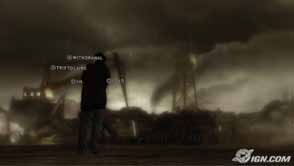
Figure 1: Onscreen prompts for accessing inner thoughts or speaking a line. Source: Sony Computer Entertainment, 2009. Image from IGN.com.
move it around and see what it can see, and the narrator (who speaks) when we make it talk. (8) In this way, the game story is told in a form of multi-person focalization and narration, which induces unreliability of the narration and thus adds to the complexity and mystery of the crime drama. This technique can be seen in film narration with Rashomon being a classic example, where the story of a crime is told four times by three participants and one witness. (9)
In the game, the effect of multi-person focalization is intensified despite a third-person optical point of view thanks to the player determining the player character’s consciousness through choosing the character’s thoughts and dialogues. If we strictly consider the “focalizer” to be the person who sees, then for most of the time the focalizer is the external (i.e., the following camera) because we can see our player avatars at all times. This view is held by Michael Nitsche. (10) On the other hand, if we consider the “focalizer” to be the center of consciousness, we can assume that the focalization is constantly shifted in the game. When the character is acting on its own (i.e.controlled by the program), the focalizer can be seen as an external one, through which narrative information is presented “objectively.” When players are actively controlling the character and making choices for it, the character is the internal focalizer, through which players obtain their subjective information and experience of the narrative. By mixing objective and subjective narrative information, the variable focalization can at times mislead the player and make it difficult to solve the mystery.
The multi-person narration also helps organize the game text. Message in manuscript: Error: Reference source not found??? offers a partial view of the narrational structure of Heavy Rain. The narration rotates among the four main characters following the chronological order on the vertical timelines. This rotation mechanism allows players to take turns to play each of the four main characters; however, the freedom given to players is discounted by the tight regime of whom to control at what time. In addition, juggling between the four plotlines, the game plot struggles in its construction of a tension arc. Having to introduce all four main characters, the game suffers an unusually long setup in its first act.
Two-Tiered Interactive Structure
The structure of interactive narratives is typically classified into several main types: linear, branching, foldback and open (or emergent). (11) These structures describe the possibility space of plot variations that players can experience through different plays; they are the “textual architectures” offered by the game narrative. (12) While a branching structure gives players a lot of agency by allowing them to make more choices that can significantly change the plot trajectory or alter the game ending, a foldback structure is adopted by many games since it is easier to implement. (13) In a foldback game narrative, players enjoy their freedom to alter the plot trajectory locally, i.e., in between key plot points. They cannot, however, change the key plot points or the ending, which means at the global level, the overarching plot is always the same. In contrast, Heavy Rain is considered by many as a game that adopts a branching structure since player choices directly affect the game ending and the plot trajectory. (14) Our in-depth analysis of the interactive structure of Heavy Rain reveals that its plot only branches locally, which is similar to the foldback structure, but the game delivers a complete branching experience, thanks to its strategic two-tiered design.
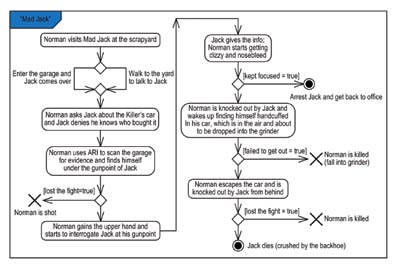
Figure 3: The interactive structure of Heavy Rain at the local level (the “Mad Jack” chapter).
While the narrative of Heavy Rain does not branch out at the global level, there is substantial branching within a chapter. Figure 3 illustrates the details of a relatively complicated chapter in the game “Mad Jack.” Depending on player actions and choices, this particular chapter can end with five outcomes; namely, Norman can die in three different spots, and Jack can be arrested by Norman or die. Multiple decision points and outcomes together create a great number of variations for the plot to be enacted in this interactive sequence. In each chapter, the key character states are stored and updated in global variables, which are constantly consulted by future chapters. (15)
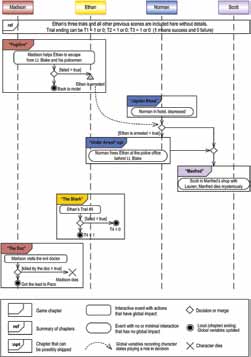
Figure 4: Heavy Rain’s interaction flow (Chapter 29–34, with a summary of previous chapters).
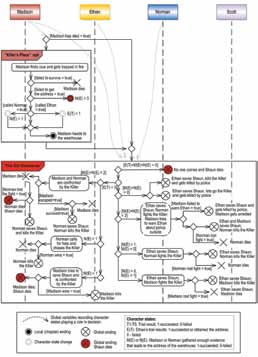
Figure 5: Heavy Rain’s interaction flow (the last phase).
Figures 4 and 5 illustrate the flow of player interactions taking place in two segments of the game. The diagrams focus on the high-level dynamics between chapters. As mentioned above, the outcome of each interactive chapter depends on the character states, which can record a character’s death, Ethan’s trial results and so on (see the legend box in Figure 5). The plot will react to these outcomes on the global level in two ways. First, one or more future chapters will simply be removed under two circumstances. When a character dies, all future chapters that feature this character will be removed. Ethan’s status also causes some of the chapter removals. For instance, when Ethan escapes police for the first time, the following “Under Arrest” chapter will be skipped (see Figure 4). Second, the plot opens the last interactive chapter with a situation, with potentially different characters in different plays, according to the outcomes of previous chapter. (16) As we can see in Figure 5, all the previous outcomes are taken into account in the last chapter “The Old Warehouse,” represented by the curvy arrows.
To strengthen the branching experience of the narrative, the designers add to the main game an epilogue consisting of several cut-scene chapters selected from an inventory of eighteen. This selection is again based on the previously recorded character states. For example, in the chapter “On the Loose,” where Madison helps Ethan in the motel, if Ethan (controlled by the player at this point) kisses Madison, the two will fall in love, which will lead to the epilogue ending “A New Life” (if Shaun is saved) or “The Tears in the Rain” (if Shaun is not saved). Otherwise, the epilogue could include “A New Start” (if Shaun is saved) and others. In this way, the game virtually has a double ending, which makes the number of the ultimate game endings almost uncountable. The mechanisms of adding the epilogue and removing chapters as a plot reaction, intelligently creates the ostensive complexity of the narrative without adding much extra programming work.
Three-Act Plot Structure
The plot of Heavy Rain is structured by chronological sequences that follow a clear dramatic tension arc. Many films and novels shape this dramatic arc with a classical Aristotelian three-act model, consisting of a rising action, a climax and a falling action. Kristin Thompson further finds that many films have a middle point that divides the middle act into two parts and thus makes the entire plot into four parts with roughly equal durations: the setup, the complicating act, the
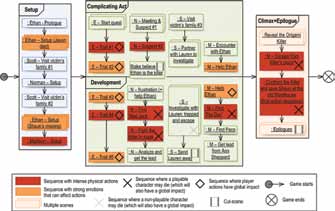
Figure 6: Plot segmentation of Heavy Rain. (18)
development, and the climax typically followed with an epilogue. (17) In drawing the plot diagram for Heavy Rain, we find that the game plot resembles Thompson’s four-part structure with a clear middle point (see Figure 6). We use color coding to indicate the tension level: high physical tension is marked in red, and high emotional tension in orange.
In the first act, the setup, every playable character is introduced. As the overarching plot follows Ethan’s journey to save his son, the setup gives more time to the exposition of his situation. It is notable that in this act Ethan has experienced two devastating events: the loss of his first son and the disappearance of the second. This doubling technique, borrowed from film narration, (19) creates a strong emotional motivation for players to save Shaun.
In the second act, Ethan embarks on his rescuing journey and goes through five trials, while other characters are trying to find out clues to the Origami Killer. Focusing on Ethan’s situation again, we find a key middle point from which Ethan’s situation worsens. It is the cut-scene where Ethan’s separated wife’s account of Ethan’s unstable psychological condition leads the police investigator, Lt. Blake, to suspect Ethan to be the Killer. In the rest of the game, Blake keeps trying to arrest Ethan, which makes Ethan’s quest remarkably more difficult. From the tension color in the diagram, we can also see that the second part (lower half of the middle block in Figure 6) has more emotion and action-charged sequences than the first part of the second act. The tension continues to rise in the third act.
The third act is the climax and epilogue. Depending on who has survived to this point and whether Ethan has been arrested, the climax chapter “The Old Warehouse” can play out very differently (shown in Figure 5). However, no matter which character is there to save Shaun, the last interactive chapter is full of actions and tensions during the fight with the Killer.
By following the classical three-act, four-part structure of film narration, the design of the plot of Heavy Rain successfully creates a dramatic tension arc, through which players obtain a strong emotional experience of the story. However, abiding by the film convention too loyally inevitably makes Heavy Rain contest the game convention. As we have previously discussed, the setup phase takes nearly one fourth of the entire duration, or about 2.5 hours, following the film convention. This appears to be too long for games that often contain a mere thirty minute setup or training phase.
Real Time
While multi-person focalization and the three-act plot structure are driven by the compositional motivation, the use of time in Heavy Rain emphasizes the realistic motivation of the narrative design. The temporal design helps create realism through a clear indication of time and “realtime” pacing as well as dramatic tension through a ticking clock device.
In a realist style, the story unfolds over four days and the plot presents the story in chapters explicitly marked with time. Starting as early as Chapter 4, each chapter begins with a shot that has an indication on screen of time and the precipitation level, reminding players that the more rain falls, the less time Shaun has to live. From the time indication we see that although the plot
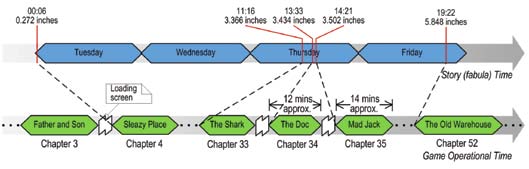
Figure 7: Realistic representation of time in Heavy Rain
juggles among four characters, the timeline remains unified; namely, there are no plot events happening simultaneously. This can be seen in Figure 7. Although the main story (fabula) events take place in four days, the length of the game is typically about 10 hours. How do the designers fit 4 days into 10 hours yet still maintain the realism? In narratology, there are five canonical tempi to describe narrative speed from quick to slow: ellipsis, summary, scene, stretch and pause, denoted by the relation between the story (fabula) and the plot. (20) For most of the chapters with critical continuous actions that have global impact, (21) the events unfold in the scene tempo, roughly forming a one-to-one projection between the game operational time and the story time. (22) Like many films and games, Heavy Rain uses ellipsis, for example in the loading screens, to skip unimportant events such as transportation and sleep for efficiency purposes.
In Heavy Rain, almost all story events are presented singularly, which follows the convention of realist narratives. Repetition after the death of the avatar, which is considered by Barry Atkin as a game routine that can cause the collapse of the linear understanding of games but is also a pleasure of play, is eliminated in Heavy Rain. (23) A death is a death; there is no second chance to make things right. The realistic presentation of time to a great extent facilitates the tight control over plot progression in order to shape the tension arc. To ensure the timing of the progression, the game uses the device of a ticking clock to limit the action time in many sequences. If the player does not act within the set duration in these sequences, the game will proceed with a default scenario.
Cinematic Space
Because the tight control over the plot progression requires a “real-time” presentation of story, Heavy Rain prefers a discontinuous, cinematic game space to a continuous one. (24) As the story takes place in several locations that are naturally scattered around in an American city, the story space is presented through several separated subspaces following the order of events. These subspaces can be distinguished into two groups. One consists of those recurring subspaces where characters constantly go back. The other group of subspaces only appears singularly in the game. There are three recurring places: the motel, the police office, and Scott’s apartment. These recurring subspaces serve as venues of retreat and information exchange for those mobile characters that move from one subspace to another. For players, the scenes taking place in these recurring subspaces also help them digest the information gathered so far, through characters’ discussion.
Singular subspaces appear when characters leave their retreating places to gather information. In fact, the majority of the scenes happen in a singular subspace, e.g., the homes of past victim’s families visited by Scott and the places of the informants visited by Norman and Madison. Each singular subspace features one non-player character that is critical in the process of investigation. This character is attached to the subspace and thus immobile. The designs of the subspace and the character thus manifest for each other. Through immobile characters, players accumulate more information about the Origami Killer, though some of it could be false.
The space in Heavy Rain is highly stylized and cinematic. Applying techniques from detective films, the on-screen and off-screen spaces of some game scenes are carefully composed. In the chapter “Fish Tank,” for example, after Norman enters the Blue Lagoon nightclub, the screen splits into two windows. In the left window, Paco pours himself a drink and a person enters the room. We then vaguely hear their conversations and see Paco is killed by the shadow of the person. Simultaneously in the right window, Norman walks through people and upstairs to Paco’s room. In the soundtrack, the dancing music overlaps with Paco’s conversation. Once we hear the gunshot, the two windows merges into one screen showing Norman opening the door. After he sees the dead Paco and starts looking around, the killer comes out of the dark (i.e.from the offscreen space) and attacks him from the back. The composition of shots in the above sequence creates a highly filmic experience for the narrative. The split screen, the overlapping soundtrack, the camera angle and thoughtful editing, taken together, strategically deliver part of the information and withhold the key information—who is the killer.
The use of a discontinuous, edited cinematic space compromises the navigational freedom of players. While many contemporary 3D games push the boundary to create as much navigational freedom as they can, Heavy Rain retreats to the traditional design using space mostly as a thematic backdrop and container of events. This sacrifice has also created an associated restriction on the player’s viewing angle. Although the scene shifts based on the movement of the player avatar, frequent interventions through editing constantly refocus the player’s attention.
Conclusion
In this paper, we discussed narrative structure and technique used in Heavy Rain from five aspects: narrational structure, interactive structure, plot structure, time and space. From the very beginning, Heavy Rain was designed to be a game different from others in many ways. The motivation for its writer and director David Cage is to explore emotions in a game designed for adults. In this regard, the game is a big success. Applying extensively film narrative techniques, the game creates an immersive, engaging and thrilling narrative experience for its players. As New York Times’s Seth Schiesel describes it: “I have probably spent 10,000 hours playing various sorts of electronic games. But no single-player experience has made me as genuinely nervous, unsettled, surprised, emotionally riven and altogether involved as Heavy Rain, a noir murder mystery inspired by film masters like Hitchcock, Kubrick, and David Lynch.” (25)
Heavy Rain and its precedent Fahrenheit (26) by Quantic Dream have enabled discussions on what qualifies a game as an “interactive movie.” (27) In Perron, et al’s definition of interactive movie—a genre marked “by the abundant use of filmed live-action video sequences (called ‘Full-Motion Video’ or FMV) on which the player can intervene,” Heavy Rain belongs to the subgroup of “movie games.” (28) Perron points out that limited freedom and interactivity is one of the common complaints of interactive movies. (29) A look at the weaknesses of interactive movies leads to the central challenge of game design; granting a satisfactory narrative experience, how does the game give players enough meaningful choices based on a manageable size of narrative materials and interactive mechanisms? Heavy Rain addresses the challenge through the strategically designed two-tier interactive structure, which gives players enough freedom to influence both plot trajectory and the ending, while maintaining a manageable amount of narrative materials.
The game adopts conventions from classic film storytelling and turns them into new schemes for interactive storytelling and gameplay. It successfully rejects the prevalent repetitive gameplay mechanics and tells a story that unfolds according to player actions. However, this reinvention comes at some cost. Despite the efforts to enhance the interactivity of the narrative, the gameplay experience is unavoidably compromised by the strong narrative ambition of the game. Even with the innovative contextual gameplay scheme, players have limited control over the characters, especially their physical movements and viewing angles. The scene-based cinematic narration style enforces a discontinuous and highly edited presentational space, where free navigation is discouraged. The unusually long setup act with no substantial actions also makes some hardcore gamers shy away. Nonetheless, we believe these areas are probably a necessary compromise and are the risks the game designers take consciously to reach their top goal.
Footnotes:
- Quantic Dream, Heavy Rain, 2010.
- Shaun McInnis, “David Cage Opens Up about Heavy Rain,” GameSpot, http://gamescom.gamespot.com/story/6273573/ david-cage-opens-up-about-heavy-rain/ (accessed October 30, 2010).
- At the time of writing, the game has an aggregated critic score of 87% on Metacritic.com and 89.30% on GameRankings.com.
- The game has been occasionally called an “interactive drama” by members of the game community, such as Christian Nutt at Gamasutra. Christian Nutt, “Tense Questions: David Cage on Heavy Rain,” Gamasutra, http://www.gamasutra.com/view/ feature/4309/tense_questions_david_cage_on_.php (accessed May 6, 2011). According to Mateas and Stern, interactive drama is an interactive narrative genre where “the player assumes the role of a first-person character in a dramatic story.” Under this definition, Heavy Rain can be generally cast as interactive drama. However, the game challenges Mateas and Stern’s model in terms of the “unity of action”—a quality of interactive drama that requires all incidents to be causally related to a central action, which naturally opposes the use of an “episodic structure.” Michael Mateas and Andrew Stern, “Interaction and Narrative,” The Game Design Reader: A Rules of Play Anthology, eds. Katie Salen and Eric Zimmerman (Cambridge, MA: MIT Press, 2005), 648. As discussed later in this article, the game employs a multi-person narration structure, where each character’s plotline features a central action, but the narrative is presented in an episodic structure to enable the switch between plotlines.
- Heavy Rain can also be regarded as an interactive movie, which, according to Perron et al., is “defined mostly by the abundant use of filmed live-action video sequences (called ‘Full-Motion Video’ or FMV) on which the player can intervene.” Bernard Perron and others, “Methodological Questions in ‘Interactive Film Studies’,” New Review of Film and Television Studies 6, no. 3 (December, 2008), 233. For example, Guillaume de Fondaumiere, co-CEO of Quantic Dream and executive producer of Heavy Rain, said that it would be proper to call the game an interactive movie. Brandon Sheffield, “Heavy Dreams: Pushing Interactive Narrative,” Gamasutra, http://www.gamasutra.com/view/feature/4203/heavy_dreams_pushing_interactive_.php (accessed May 6, 2011).
- The gameplay mimics real-life situations where characters go through events and actions in chronological order, which is termed “contextual gameplay” by David Cage, the writer and director of the game. David Cage’s blog, March 28, 2010, http://www. quanticdream.com/en/blog/the-heavy-rain-blog-1st-part (accessed May 6, 2011).The primary gameplay modes are talking, including the triggering of thoughts, moving (including walking and all sorts of physical movements), and fighting with other characters. Players get cues regarding what actions to perform from the on-screen prompts that visually show the control buttons when interaction is needed (see Figure 1: ).
- The definitions of game story and game plot are adapted from Mieke Bal’s fabula and story respectively, which corresponds with the fabula and sjuzet dichotomy. Mieke Bal, Narratology: Introduction to the Theory of Narrative, 3rd ed. (Toronto, Canada: University of Toronto Press, 2009).
- Focalization is a narratological concept that helps distinguish “who sees” from “who speaks.” Focalization is the “position or quality of consciousness through which we ‘see’ events in the narrative.” H. Porter Abbott, The Cambridge Introduction to Narrative, 2nd ed. (Cambridge, UK; New York, NY: Cambridge University Press, 2008), 233. The distinction between the “focalizer” (the person who focalizes) and the “narrator” is an important instrument used to study subjectivity in narrative. Focalizers are divided into two types: the external focalizer and the internal (or character-bound) focalizer. In a broader sense, the focalizer can be considered as “who perceives,” or, the centre of consciousness in the narration. Gerald Prince, “A Point of View on Point of View Or Refocusing Focalization,” in New Perspectives on Narrative Perspective, eds. Willie van Peer and Seymour Chatman (Albany, NY: State University of New York Press, 2001), 43-50.
- Akira Kurosawa, Rashomon [motion picture], ed. Jingo MinouraDaiei Co., 1950.
- Michael Nitsche, Video Game Spaces: Image, Play, and Structure in 3D Game Worlds (Cambridge, MA: MIT Press, 2008), 146-147.
- In linear stories, players follow a single trajectory of the plot through a series of fixed plot points; i.e., players cannot change the plot or the ending. In branching stories, the plot line branches off to multiple lines so that the narrative can have different endings. The foldback structure is a modified version of the branching structure. It is a more practical solution because it allows diverging plotlines to converge at certain points to reduce the number of branches. Players will periodically find themselves free to choose their trajectory for some time until they reach a fixed plot point. An open story is set in an open game world where, in a given level, players can choose their tasks to do in their own order. This fourth type is sometimes called emergent narrative, emphasizing that the story is not pre-scripted and completely constructed on-the-fly by players. Ernest Adams, Fundamentals of Game Design, 2nd ed. (Berkeley, CA: New Riders, 2010). Chris Crawford, Chris Crawford on Interactive Storytelling (Berkeley, CA: New Riders, 2005), 366. Ben McIntosh, Randi Cohn, and Lindsay Grace, “Nonlinear Narrative in Games: Theory and Practice,” Game Career Guide, http://www.gamecareerguide.com/ features/882/nonlinear_narrative_in_games_.php (accessed October 30, 2010).
- Marie-Laure Ryan, Avatars of Story (Minneapolis: University of Minnesota Press, 2006), 100-107.
- Ernest Adams, Fundamentals of Game Design, 2nd ed. (Berkeley, CA: New Riders, 2010), 174.
- Cohn and Grace McIntosh, Nonlinear Narrative in Games: Theory and Practice; Barry Lowndes, “Creating a Narrative Environment —Choice and Consequence in Single Player Games,” Enquiry: The ACES Journal of Undergraduate Research 2, no. 1 (2010), http:// research.shu.ac.uk/aces/enquiry/index.php/enquiry/issue/view/5 (accessed October 30, 2010).
- During the execution of a computer program, variables are those storage locations that save data (i.e., values) temporarily. A variable is local when declared within one program block; it is global or external when declared outside any block. While the values of local variables only stay in their storage locations temporarily while the corresponding program block is executed, the values of global variables can stay in their storage location forever. Hence, global variables are used for transmit information between program blocks. K. N. King, C Programming: A Modern Approach (New York, NY: W. W. Norton & Company, Inc., 1996), 661.
- Interestingly, this is also the only chapter where the beginning situation can vary depending on previous gameplay.
- Kristin Thompson, Storytelling in the New Hollywood: Understanding Classical Narrative Technique (Cambridge, MA: MIT Press, 2003).
- The diagram is based on a plot instance where no character dies before “The Old Warehouse” in order to show a complete picture. We consolidated some of the chapters in order to make the key developments stand out.
- David Bordwell, Poetics of Cinema (New York: Routledge, 2008), 106.
- Mieke Bal, Narratology: Introduction to the Theory of Narrative, 3rd ed (Toronto: University of Toronto Press, 2009), pg?.
- This means the outcomes of these chapters will influence the plot in one or more future chapters.
- In a scene, events in plot take the same duration of time as in the story time. For the efficiency of play, almost all games accelerate the events (e.g., it takes less time to walk from point A to B in game than in real life). As long as this acceleration creates a consistent real-time impression for the player, we can consider it as a scene.
- Barry Atkins, “Killing Time: Time Past, Time Present, Time Future in Prince of Persia: The Sands of Time,” in Videogame, Player, Text, eds. Barry Atkins andTanya Krzywinska, e(Manchester, HK: Manchester University Press, 2008), 237-253.
- Cage once said in an interview by Belgium game magazine Chief, “I don’t want to do a big free-roaming city like GTA [Grand Theft Auto], because the flow of the story will then be hard to control.” Mark Wilson, “New Heavy Rain Details Spilled, Lapped Up,” http://kotaku.com/366150/new-heavy-rain-details-spilled-lapped-up (accessed October 30, 2010).
- Seth Schiesel, “Murderer’s Young Prey; A Father’s Torment,” New York Times, sec. C1, Video Game Review, February 27, 2010, http://www.nytimes.com/2010/02/27/arts/television/27heavy.html (accessed October 30, 2010).
- Quantic Dream, Fahrenheit [Indigo Prophecy in North America], 2005.
- Jonathan Lessard, “Fahrenheit and the Premature Burial of Interactive Movies,” Eludamos. Journal for Computer Game Culture 3, no. 2 (2009), http://www.eludamos.org/index.php/eludamos/article/viewArticle/67/129; Ian Bogost, “Persuasive Games: The Picnic Spoils the Rain,” Gamasutra, http://www.gamasutra.com/view/feature/4412/persuasive_games_the_ picnic_.php (accessed October 30, 2010).
- Bernard Perron et al, “Methodological Questions in ‘Interactive Film Studies’,” New Review of Film and Television Studies 6, no. 3 (December 2008), 233.
- Bernard Perron, “Genre Profile: Interactive Movies,” The Video Game Explosion: A History from Pong to PlayStation and Beyond, ed. J. P. Mark Wolf (Wesport, CT: Greenwood Press, 2008), 127-133.
Works Cited:
Abbott, H. Porter. The Cambridge Introduction to Narrative. 2nd ed. Cambridge, UK; New York, NY: Cambridge University Press, 2008.
Adams, Ernest. Fundamentals of Game Design. 2nd ed. Berkeley, CA: New Riders, 2010.
Atkins, Barry. “Killing Time: Time Past, Time Present, Time Future in Prince of Persia: The Sands of Time.” In Videogame, Player, Text. Atkins, Barry; Krzywinska, Tanya ed., 237-253. Manchester, HK: Manchester University Press, 2008.
Bal, Mieke. Narratology: Introduction to the Theory of Narrative. 3rd ed. Toronto, Canada: University of Toronto Press, 2009.
Bogost, Ian. “Persuasive Games: The Picnic Spoils the Rain.” Gamasutra. http://www.gamasutra.com/view/feature/4412/ persuasive_games_the_picnic_.php (accessed October 30, 2010).
Bordwell, David. Poetics of Cinema. New York: Routledge, 2008.
Cage, David. The Heavy Rain Blog. 2010.
Crawford, Chris. Chris Crawford on Interactive Storytelling. Berkeley, CA: New Riders, 2005.
King, K. N. C Programming: A Modern Approach. New York, NY: W. W. Norton & Company, Inc., 1996.
Kurosawa, Akira. Rashomon [Motion Picture], Edited by Jingo Minoura: Daiei Co., 1950.
Lessard, Jonathan. “Fahrenheit and the Premature Burial of Interactive Movies.” In Eludamos. Journal for Computer Game Culture 3, no. 2 (2009): http://www.eludamos.org/index.php/eludamos/article/viewArticle/67/129 (October 30, 2010).
Lowndes, Barry. “Creating a Narrative Environment - Choice and Consequence in Single Player Games.” In Enquiry: The ACES Journal of Undergraduate Research 2, no. 1 (2010): http://research.shu.ac.uk/aces/enquiry/index.php/enquiry/issue/ view/5 (accessed October 30, 2010).
Mateas, Michael and Andrew Stern. “Interaction and Narrative.” In The Game Design Reader: A Rules of Play Anthology. Edited by Katie Salen and Eric Zimmerman, Cambridge, MA: MIT Press, 2005.
McInnis, Shaun. “David Cage Opens Up about Heavy Rain.” GameSpot. http://gamescom.gamespot.com/story/6273573/ david-cage-opens-up-about-heavy-rain/ (accessed October 30, 2010).
McIntosh, Ben,Randi Cohn and Lindsay Grace,. “Nonlinear Narrative in Games: Theory and Practice.” Game Career Guide. http://www.gamecareerguide.com/features/882/nonlinear_narrative_in_games_.php (accessed October 30, 2010).
Nitsche, Michael. Video Game Spaces: Image, Play, and Structure in 3D Game Worlds. Cambridge, MA: MIT Press, 2008.
Nutt, Christian. “Tense Questions: David Cage on Heavy Rain.” Gamasutra. http://www.gamasutra.com/view/feature/4309/ tense_questions_david_cage_on_.php (accessed May 6, 2011).
Perron, Bernard. “Genre Profile: Interactive Movies.” In The Video Game Explosion: A History from Pong to PlayStation and Beyond. Edited by J. P. Mark Wolf, 127-133. Wesport, CT: Greenwood Press, 2008.
Perron, Bernard, Dominic Arsenault, Martin Picard, and Carl Therrien. “Methodological Questions in ‘Interactive Film Studies’.” New Review of Film and Television Studies 6, no. 3 (December, 2008): .
Prince, Gerald. “A Point of View on Point of View Or Refocusing Focalization.” Chap. 2, In New Perspectives on Narrative Perspective, edited by Willie van Peer and Seymour Chatman, 43-50. Albany, NY: State University of New York Press, 2001.
Quantic Dream. Fahrenheit [Indigo Prophecy in North America], 2005. ———. Heavy Rain, 2010.
Ryan, Marie-Laure. Avatars of Story. Minneapolis: University of Minnesota Press, 2006. Schiesel, Seth. “Murderer’s Young Prey; A Father’s Torment.” New York Times, February 27, 2010, sec. C1, Video Game Review.
Sheffield, Brandon. “Heavy Dreams: Pushing Interactive Narrative.” Gamasutra. http://www.gamasutra.com/view/feature/ 4203/heavy_dreams_pushing_interactive_.php. (accessed May 6, 2011).
Thompson, Kristin. Storytelling in the New Hollywood: Understanding Classical Narrative Technique. Cambridge, MA: MIT Press, 2003.
Wilson, Mark. “New Heavy Rain Details Spilled, Lapped Up.” http://kotaku.com/366150/new-heavy-rain-details-spilledlapped- up. (accessed 10/30, 2010). 68