
V8N1: LandeScapes: The Photography of Ellen Jantzen
By Ellen Jantzen | July 10, 2013
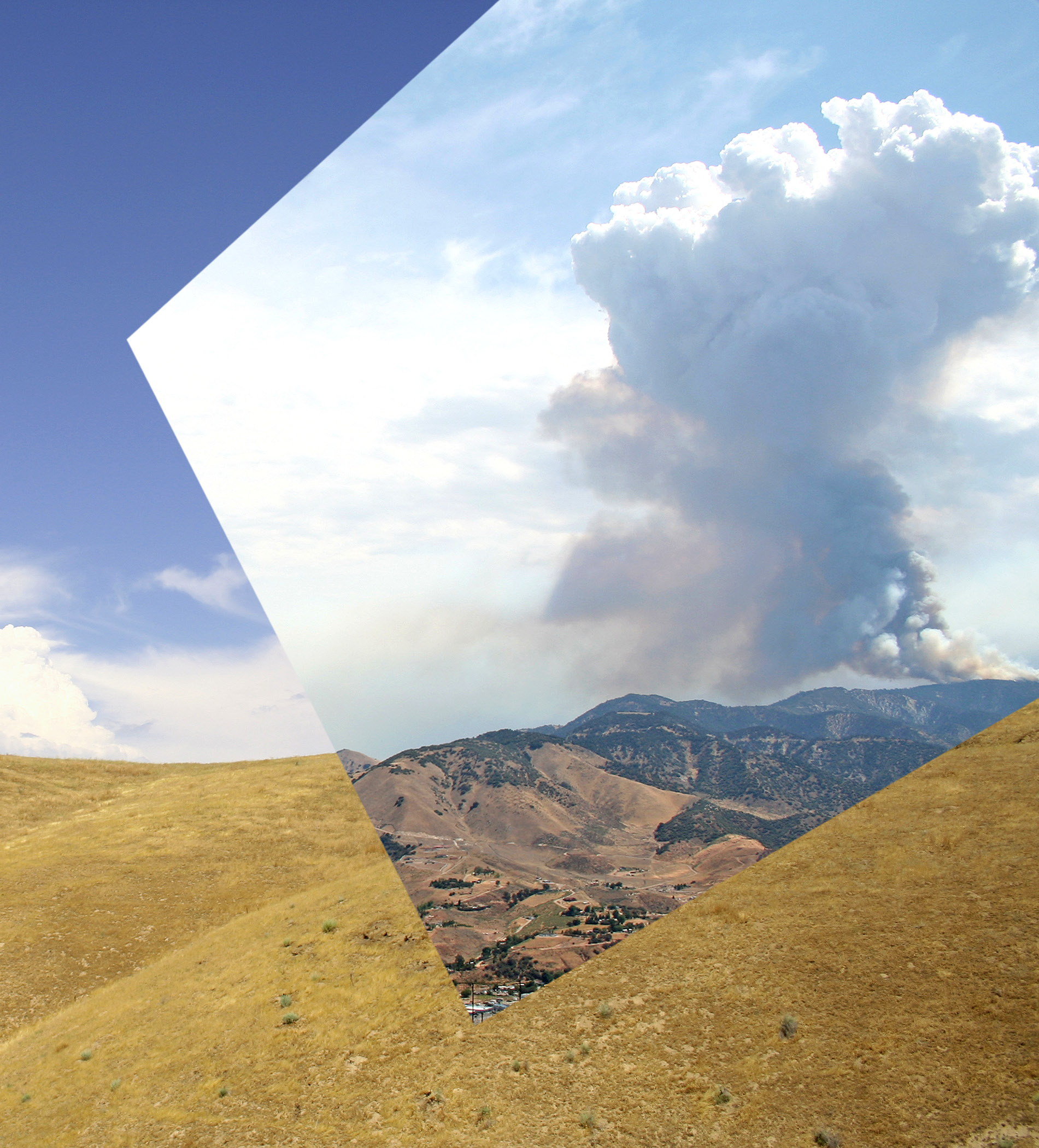
Fire Mountain, (digitally manipulated photograph, output as archival inkjet, limited edition). Available at matted dimensions of 18”H x 26”W, 2006
The tradition of linear forward marching time is backward, from the standpoint of the Aymara people of South America. They see history as lying in front of them. Because history consists of known events, they can “see” it. In their language nayra mara means “in past times or history,” but translates literally as “time in front.” Conversely, because you can’t see what is behind you, it is unknown. The Aymara see this as the future, since they haven’t “seen” it yet. 1
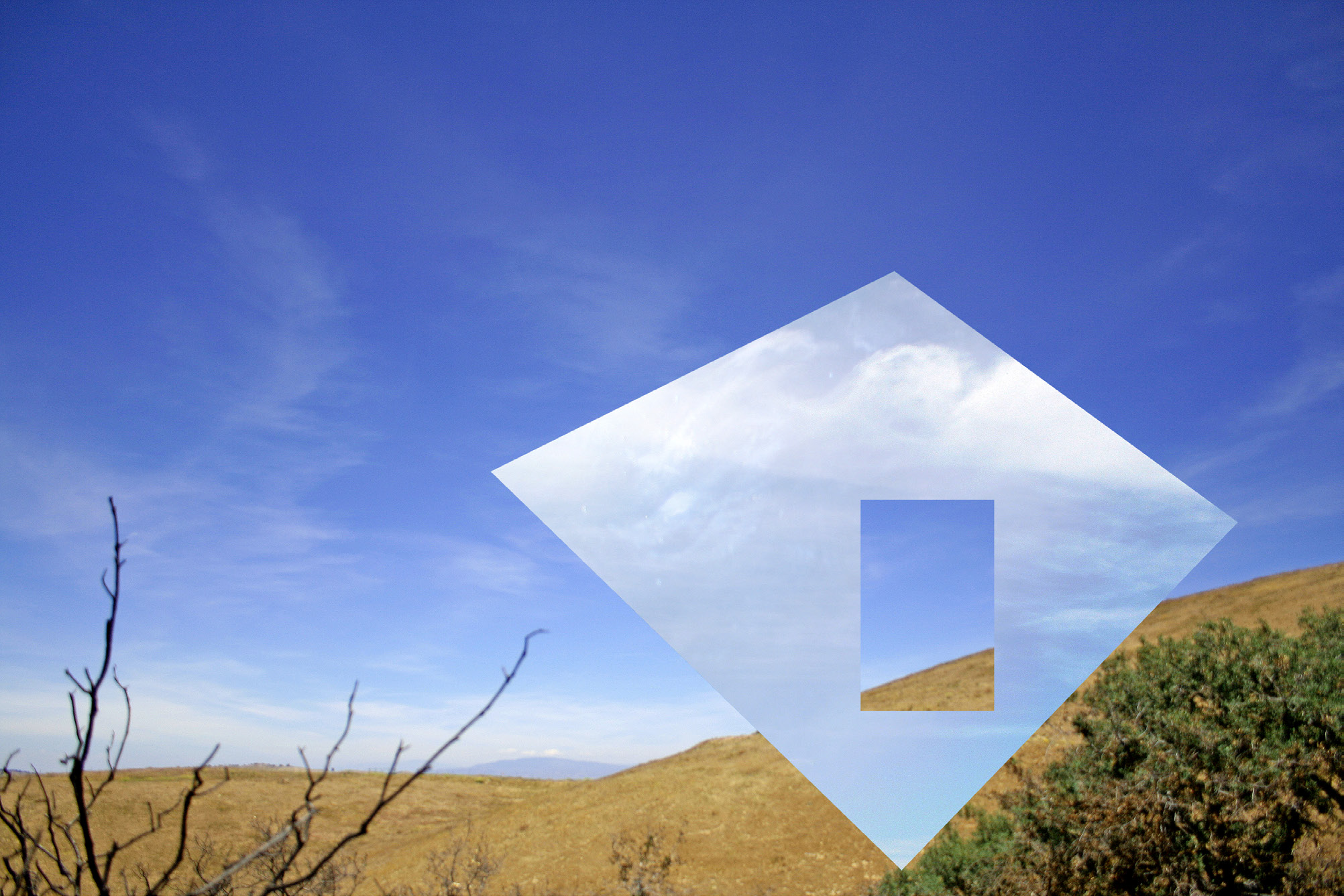
Gateway, (digitally manipulated photograph, output as archival inkjet, limited edition). Available at matted dimensions of 20”H x 26”W, 2006
The Aymara’s concept of forward/past opens doors for artist to explore the relationships between past and future in new intriguing ways especially through photography, which has been traditionally viewed as a method of recording historical facts, in essence capturing history for posterity.
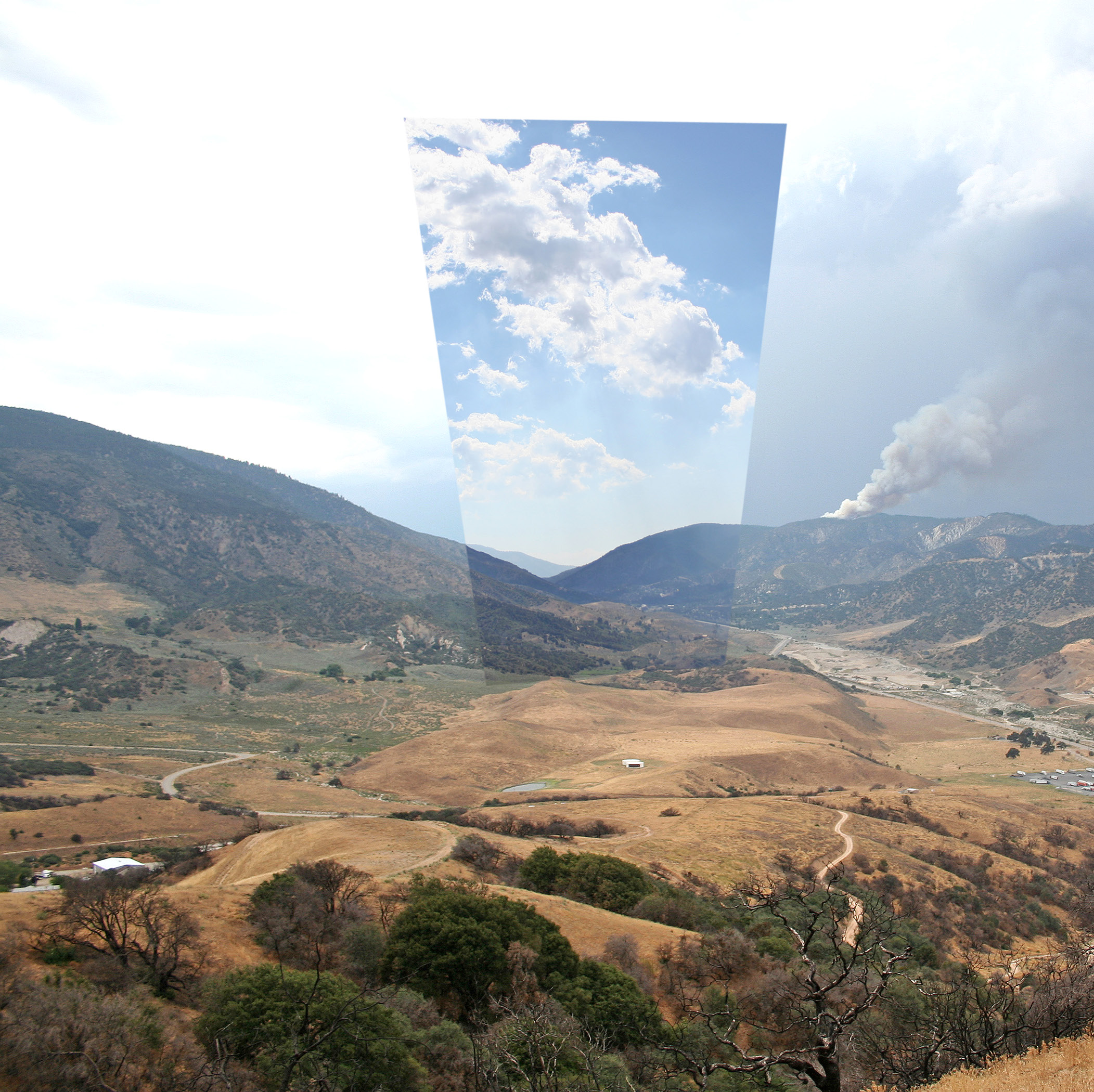
Last Time-Next Time, Two, (digitally manipulated photograph, output as archival inkjet, limited edition). Available at matted dimensions of 20”H x 26”W, 2006
Photography has long been viewed this way and relied upon as a documentation tool, but actually photos have been altered since the beginning of the craft, thus subverting history as a result. With today’s digital technology the ability to alter photographs (and the perception of reality) has escalated due in part to the digital camera but mostly through computer/software advancements. This is where the artist can really enter the picture, so to speak, to experiment with technique and subject. Photography, in the hands of a conceptual thinking artist, can demonstrate anomalies of space and time.
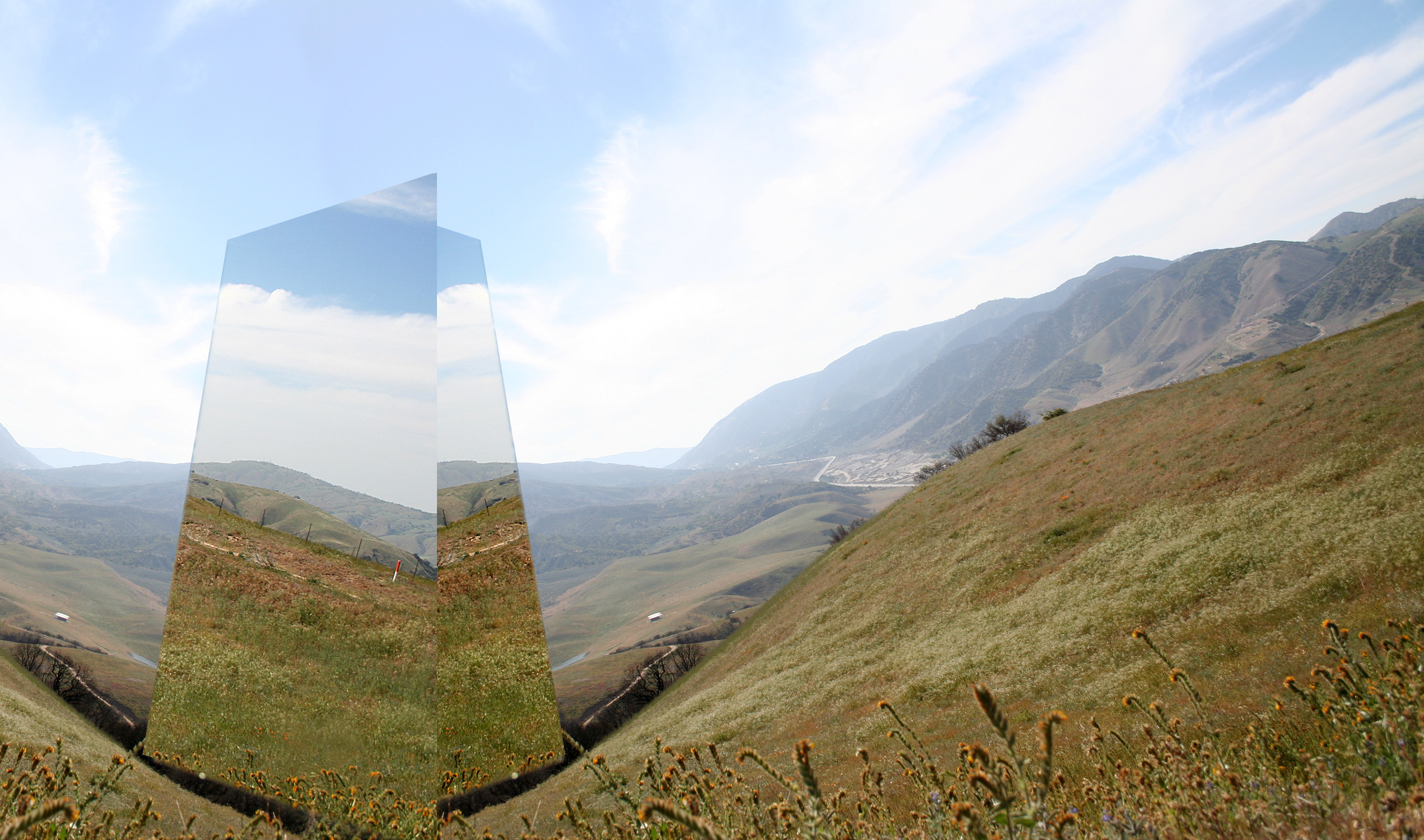
San Andreas’ Fault, digitally manipulated photograph, output as archival inkjet, limited edition). Available at matted dimensions of 15”H x 26”W, 2006
36
Take for instance my recent photographic explorations in the series LANDeSCAPES. Here I deal with the past/future, front/behind issues as well as findings from cosmology and physics such as space/time warps and parallel universes. In essence, I photograph the landscape that lies before me while capturing the landscape behind me by using mirrors. I am particularly interested in the boundaries of differing scenic features like, dessert/ mountain, land/sea, and wilderness/developments. By using mirrors, I am able to show two points of view at the same time. I (as the documentarian) am located between these two views. Essentially, I am in each photograph (sandwiched between realities) yet not visible. Only my points of view are apparent.
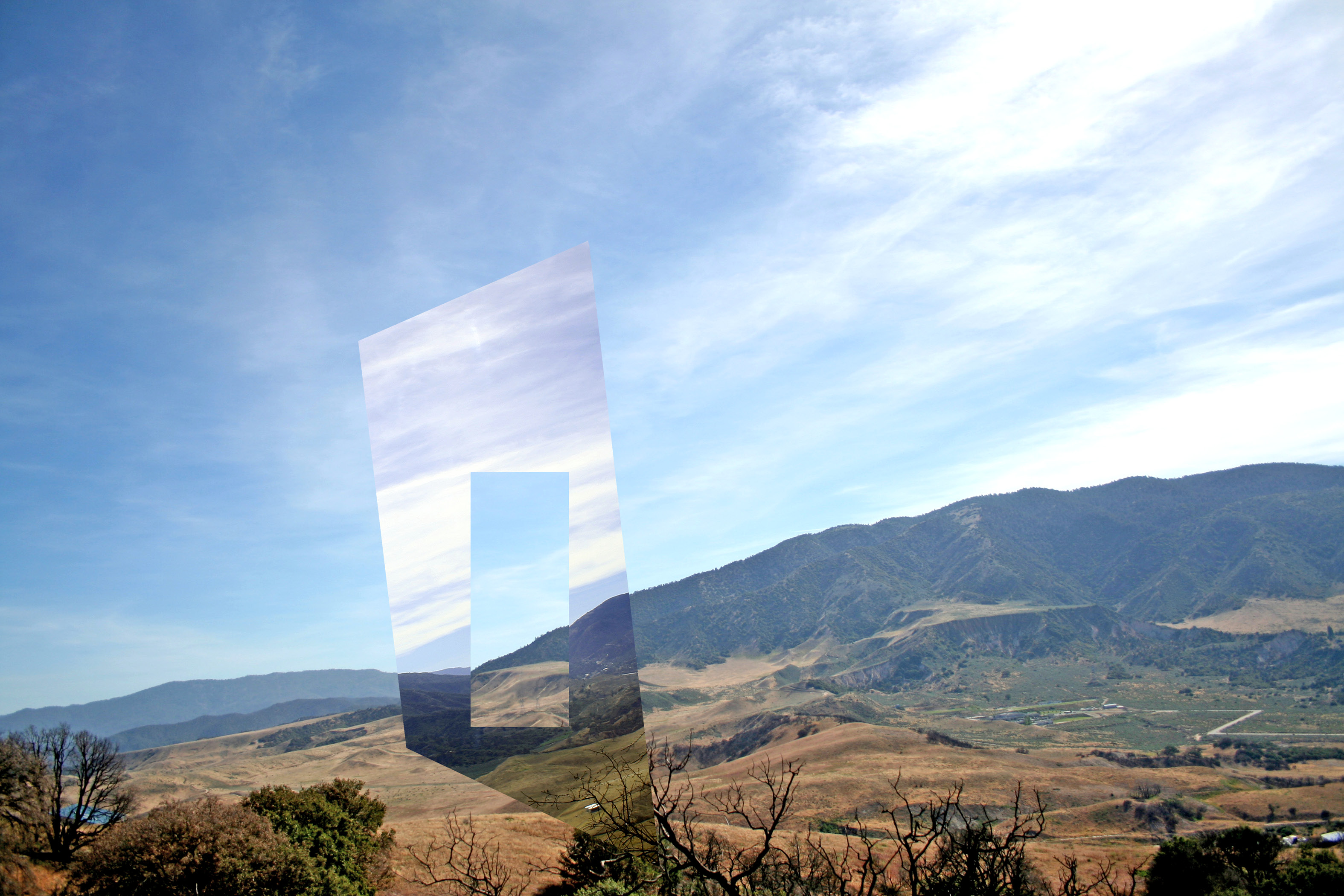
Multiple Reality, (digitally manipulated photograph, output as archival inkjet, limited edition). Available at matted dimensions of 20”H x 26”W, 2006
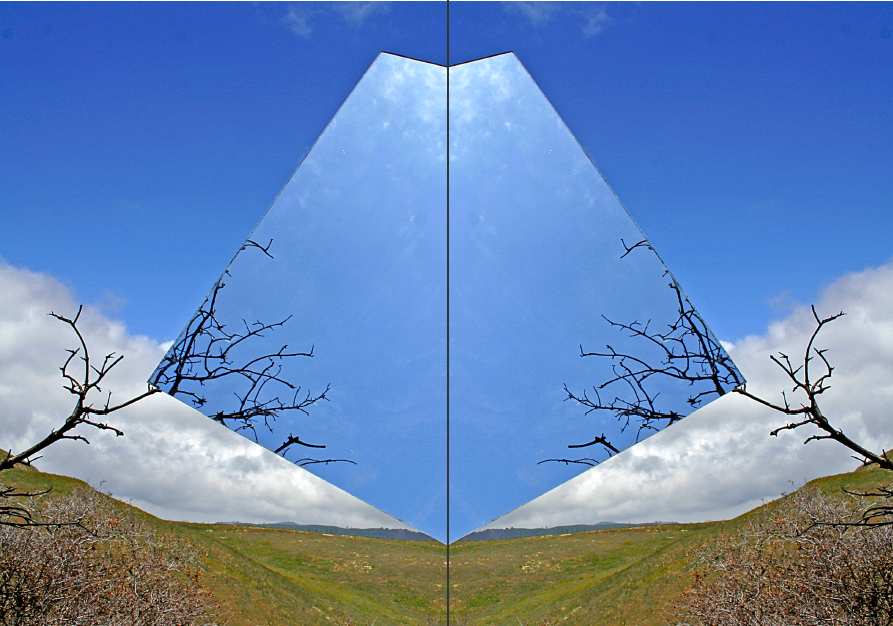
Reaching Beyond Reality, (digitally manipulated photograph, output as archival inkjet, limited edition). Available at matted dimensions of 20”H x 26”W, 2006
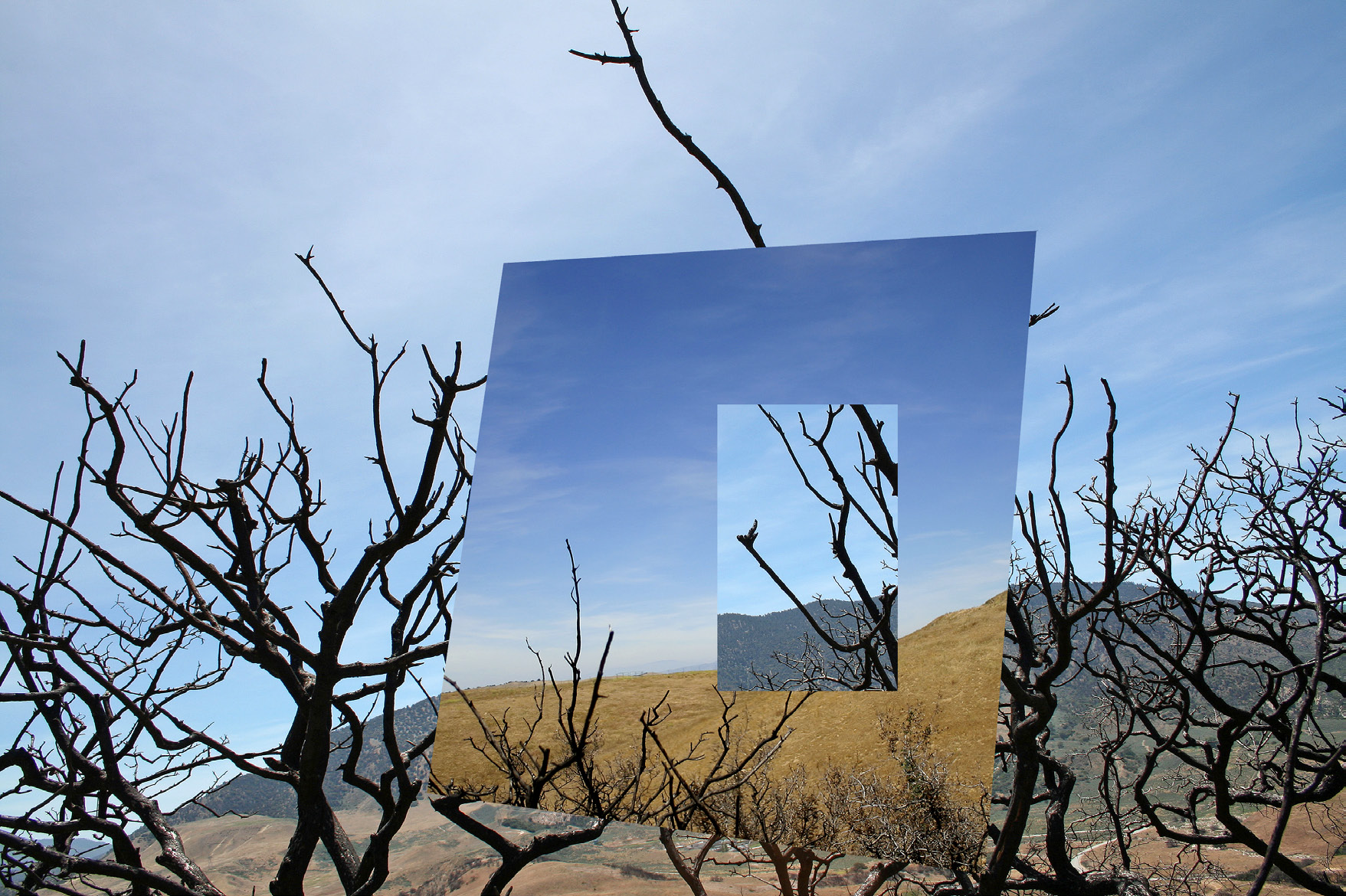
Passageway to Past-Future, (digitally manipulated photograph, output as archival inkjet, limited edition). Available at matted dimensions of 20”H x 26”W, 2006
In this series, I am striving to address how we view history; is it what lies before us (as in Western thought) or what lies behind us, as the Aymara believe. Perhaps both are true; perhaps reality lies in between, or on a parallel plane. In some of my photographic pieces, I have digitally pierced the mirror to create a portal, a door, from one reality to the other.
Footnotes
- Nathan Bierma, Special to the Tribune, “South America’s Aymara Put Future Behind Them,” Chicago Tribune, July 12, 2006, pg
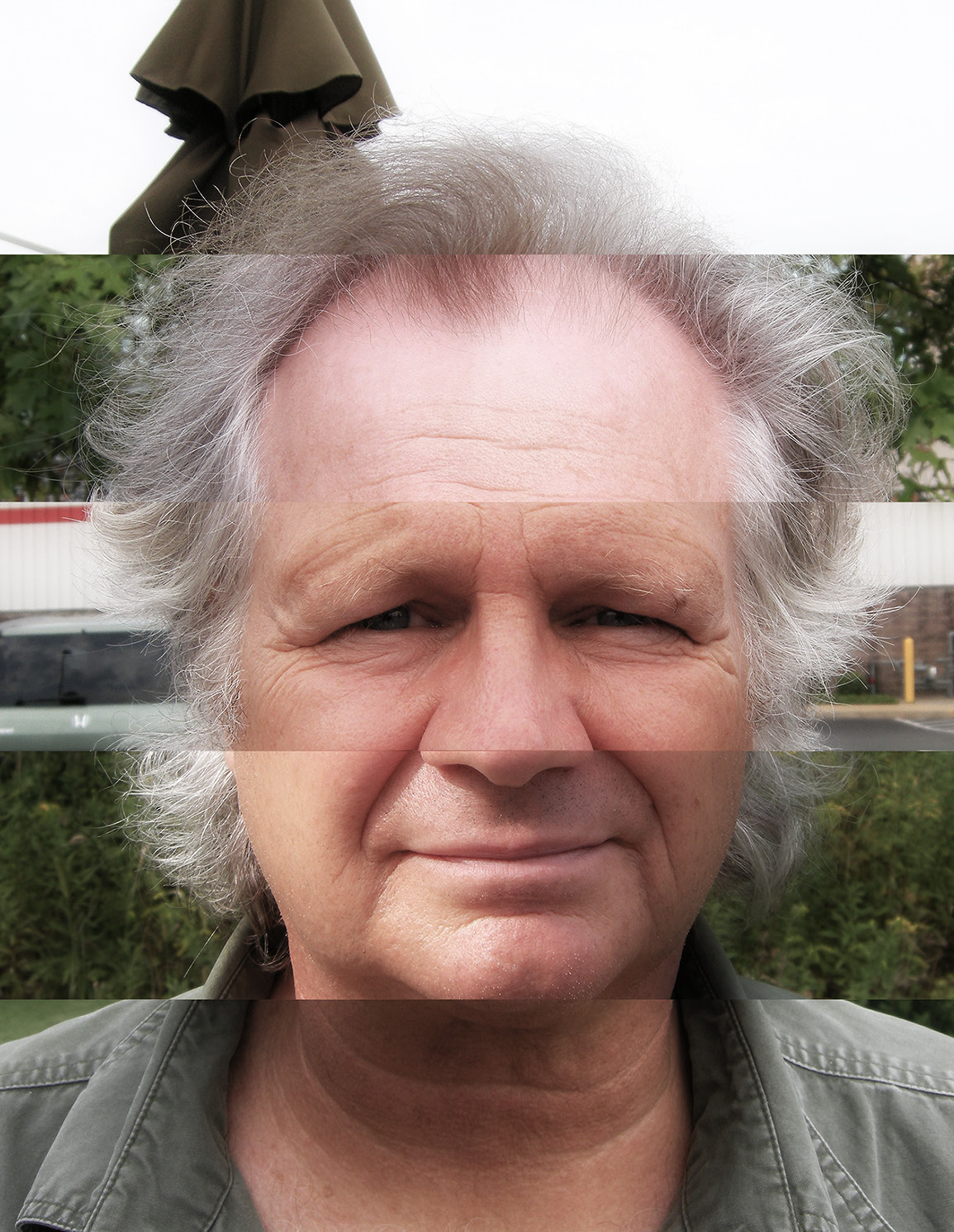
Space/Time, A Revisited History
I am still intrigued with the Aymara’s concept of forward/past and use this often in my photographic explorations. Originally, I wrote of the Aymara people of South America as seeing history lying in front. In their language “nayra mara” means “in past times or history,” but translates literally as “time in front.” Because you can’t see what is behind you, it is unknown. The Aymara see this as the future, since they haven’t “seen” it yet.
My original article featured my pictorial exploration (LandEscapes) where I photographed a landscape that lies before me, while capturing the landscape behind me by using mirrors—thus showing two points of view at once, time in front and the unknown (behind).
Today my work has evolved considerably to include the human form. I continue to address the natural world of landscape, but now my emphasis is on how a person adapts to their environment, how they are absorbed and changed by it. Having recently moved to the Midwest after living in the physically dynamic Southern California for 20 years I was, at first, unimpressed with my new more subtle surroundings. But this move impacted my work by forcing me to deal with the reality of a given place. It has helped me pay attention to and appreciate the details of this diverse environment.
Having always been intrigued with various aspects of reality, I use photography as the medium to help me reveal/obscure truths. Traditionally, photography was viewed as an honest replication of the real world. But, as we all know, even from its inception, photographers used their medium to alter, accentuate and eliminate aspects of the “authentic.” With today’s digital technology the ability to alter photographs (and the perception of reality) has escalated due in part to the digital camera but mostly through computer/software advancements. This is where the artist can really enter the picture, so to speak, to experiment with technique and subject. Photography, in the hands of a conceptual thinking artist, can reveal anomalies of space and time.
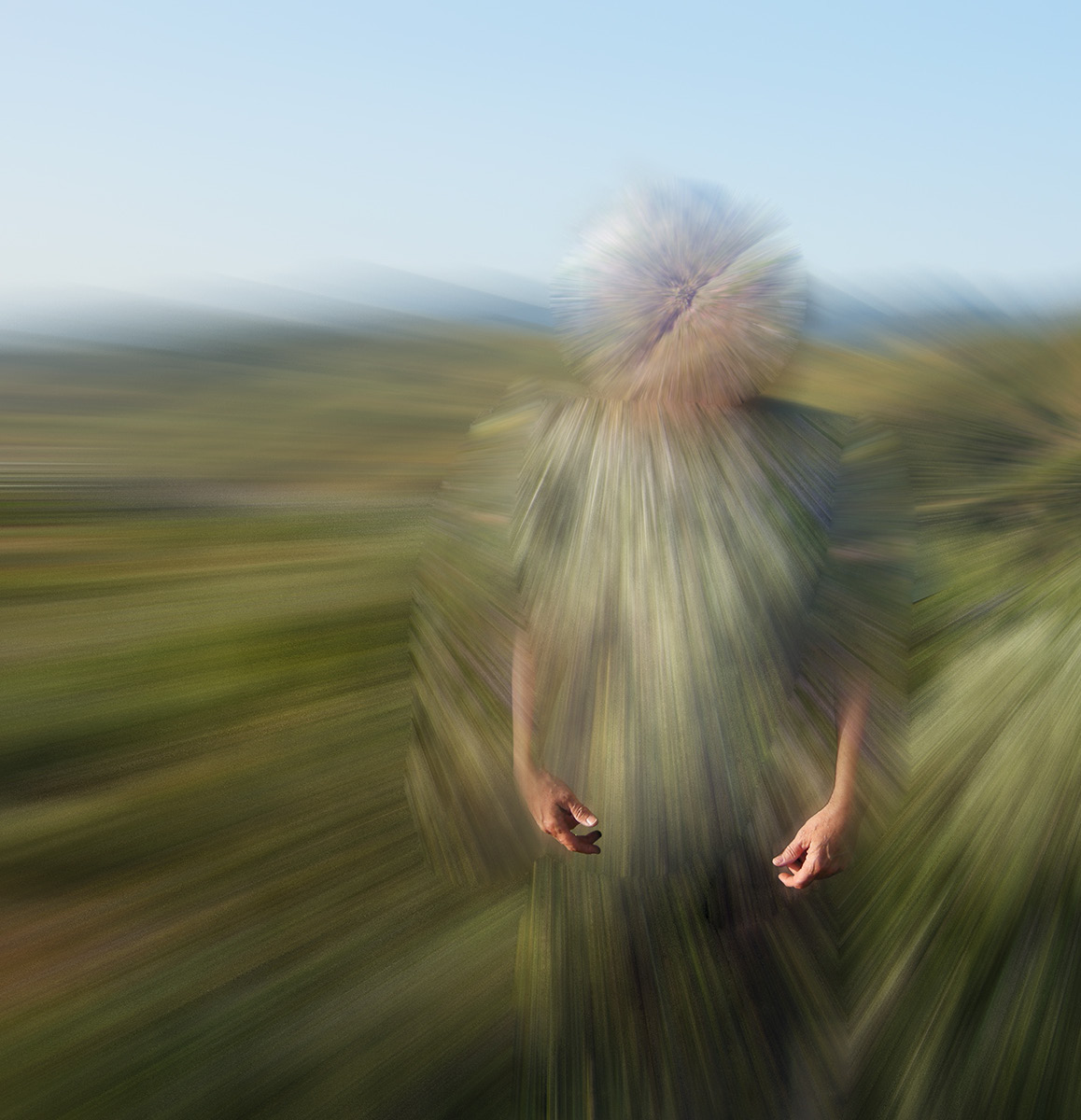
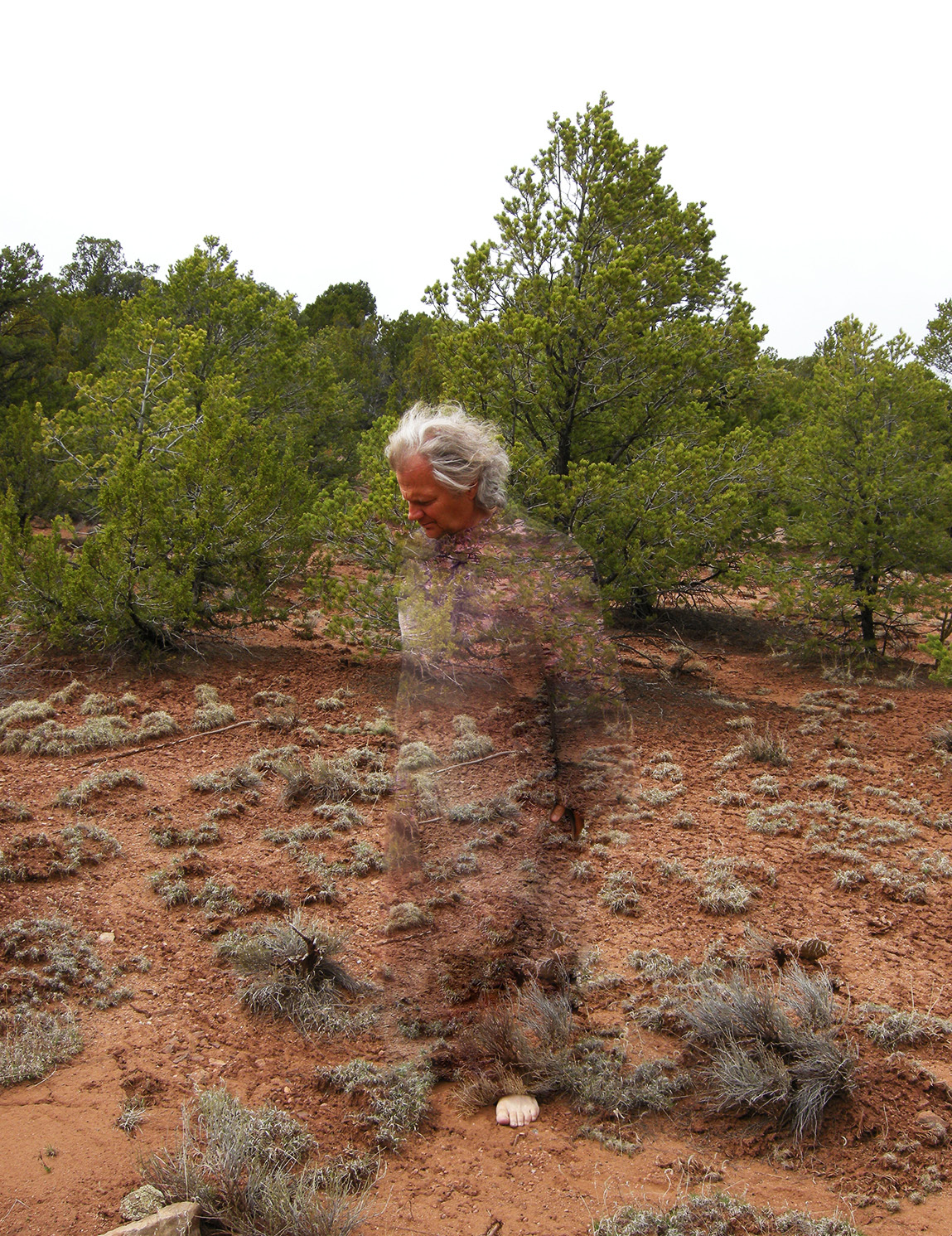
At first, I began my newest series by placing Michael, my husband, in various landscapes and in various poses to both highlight and obscure his presence. Through digital manipulation, I altered the original staged setup (taken in a given location and time) to create a blending of Michael with the landscape to show him fitting-in, disappearing, blending-in, and perhaps, ultimately embracing the environment in a timeless fashion.
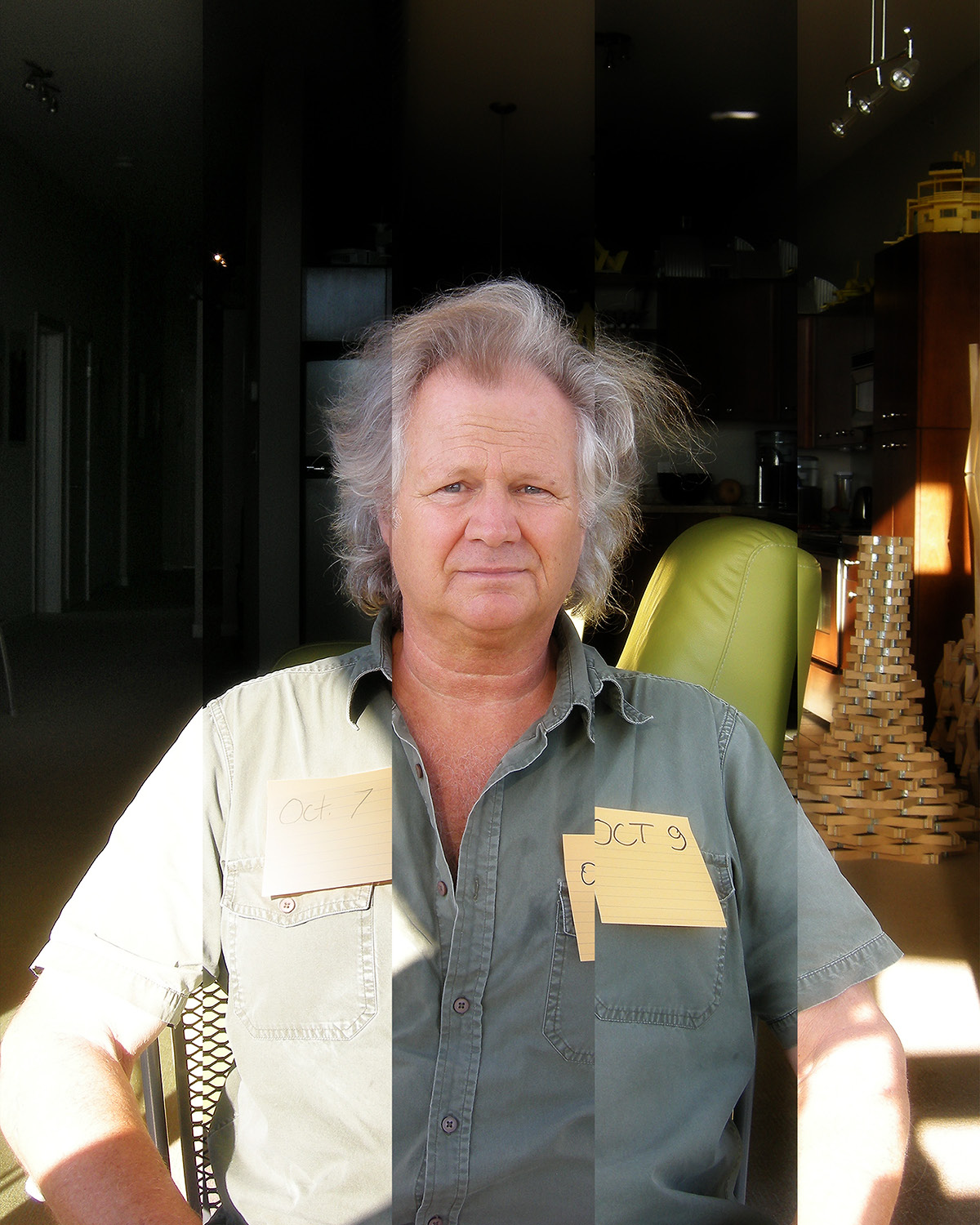 In one recent photographic exploration I dealt with the issue of time more specifically. I took five photos of Michael in different locations on the same day and collaged these five photos together to create one portrait. Each base photo represents a specific time and place with the resulting composed portrait bridging time/place. Another related exploration entailed taking photos of Michael in one location but on five different consecutive days. Now each base photo represents a specific time, but the place remains the same, resulting in a composite portrait bridging time only. I find it fascinating to know a whole day of life experiences are represented in each portion of the completed portrait.
I have also begun photographing headstones in cemeteries and using these as stand-ins for the human form. Since headstones represent a person who has passed, my obscuring and blending with the natural environment supports my intrigue with the vagaries of reality.
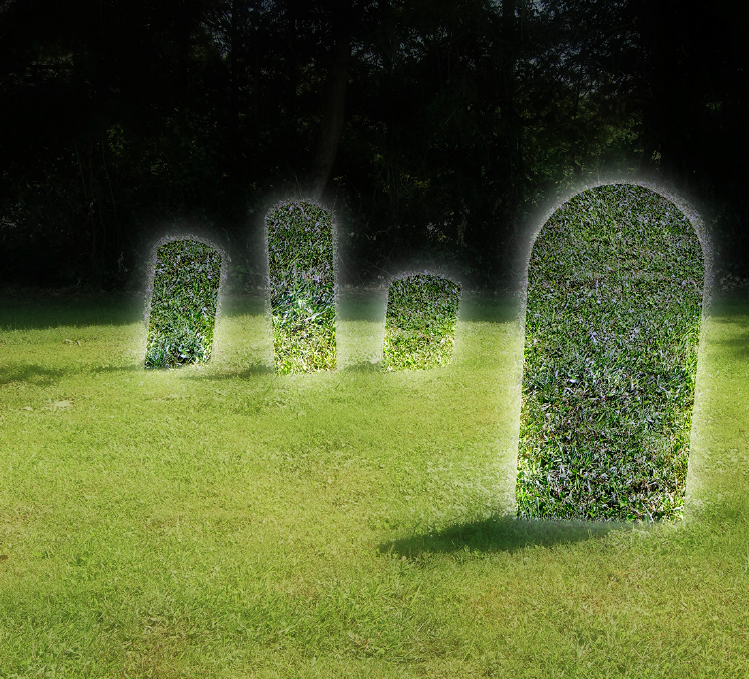 This brings me back to the issues of space, time and history. These have always been central concerns for people—perhaps bringing forth religious ideologies in an attempt to find answers to the questions of why we are here and where do we go when we die. More recently, discoveries in quantum physics that posit multiple or parallel universes seem to indicate attempts to find answers to these age-old questions in a scientific manner. I hope my photographic explorations will, in some way, help people visualize these issues.
 As we look forward, we anticipate the continued growth of games’ importance and popularity in contemporary culture. elements in their research: Ali Mazalek has been creating games among other applications of multitouch tabletops and tangible media; and Carl DiSalvo has been exploring playful applications of robots and environmental sensors. In addition, Jay Bolter, one of the founding members of the program, has been creating augmented reality games with Blair MacIntyre, his collaborator in the College of Computing. And the original authors of the 2005 article have also remained active in game design research. Michael Nitsche published Video Game Spaces (2009) and has worked on Augmented Reality, mobile, and sensor-based game environments. Janet Murray has been working on games within the context of her interactive TV group, and writing about games as a model of interaction design in her forthcoming textbook, Inventing the Medium. Ian Bogost has published Unit Operations (2006), Persuasive Games (2007), Racing the Beam (with Nick Montfort) (2009), a study of the Atari platform, and Newsgames (with his doctoral students Simon Ferrari and Bobby Schweitzer) (2010), as well as creating several well received experimental games, including Cow Clicker (2010) a Facebook-based game that is a response to FarmVille. Faculty and students have been active in DiGRA, GDC, IndieGames, IndieCade (which Celia Pearce co-organizes), Serious Games, and DAC. The proliferation of conferences and the support of university presses (especially MIT Press) for game studies in the past five years has made research in this new field a viable path, even for junior faculty members on tenure track. Two of our doctoral students have also contributed dissertations to the field: Clara Fernandez-Vara did a genre analysis of adventure games (“The tribulations of adventure games: Integrating story into simulation through performance”); Brian Schrank on games and the avant-garde (“Play Beyond Flow: A Theory of Avant-Garde Videogames”).
 The program has also continued its connection with the games industry and placed M.S. students in the field at companies like Electronic Arts and Disney Imagineering. One alumnus, Chaim Gingold, was lead designer on the Spore Creature Editor for Maxis. Another M.S. alumnus, Gonzalo Frasca, received a doctorate from the University of Copenhagen in Game Studies, and returned to his native Uruguay where he runs a successful game company, Powerful Robot. Ph.D. alumna Clara Fernandez-Vara has been research director at the MIT-Singapore collaborative GAMBIT lab.
We find it challenging in general to fund the kind of humanities-driven research that we specialize in, but we have been fortunate in finding sources at NSF and in industry. We have also hosted several conferences in this period, which have brought academic researchers and industry people together. Among these, Ian Bogost and Michael Nitsche, along with John Sharp at the Savannah College of Art and Design, co-organized the Art History of Games 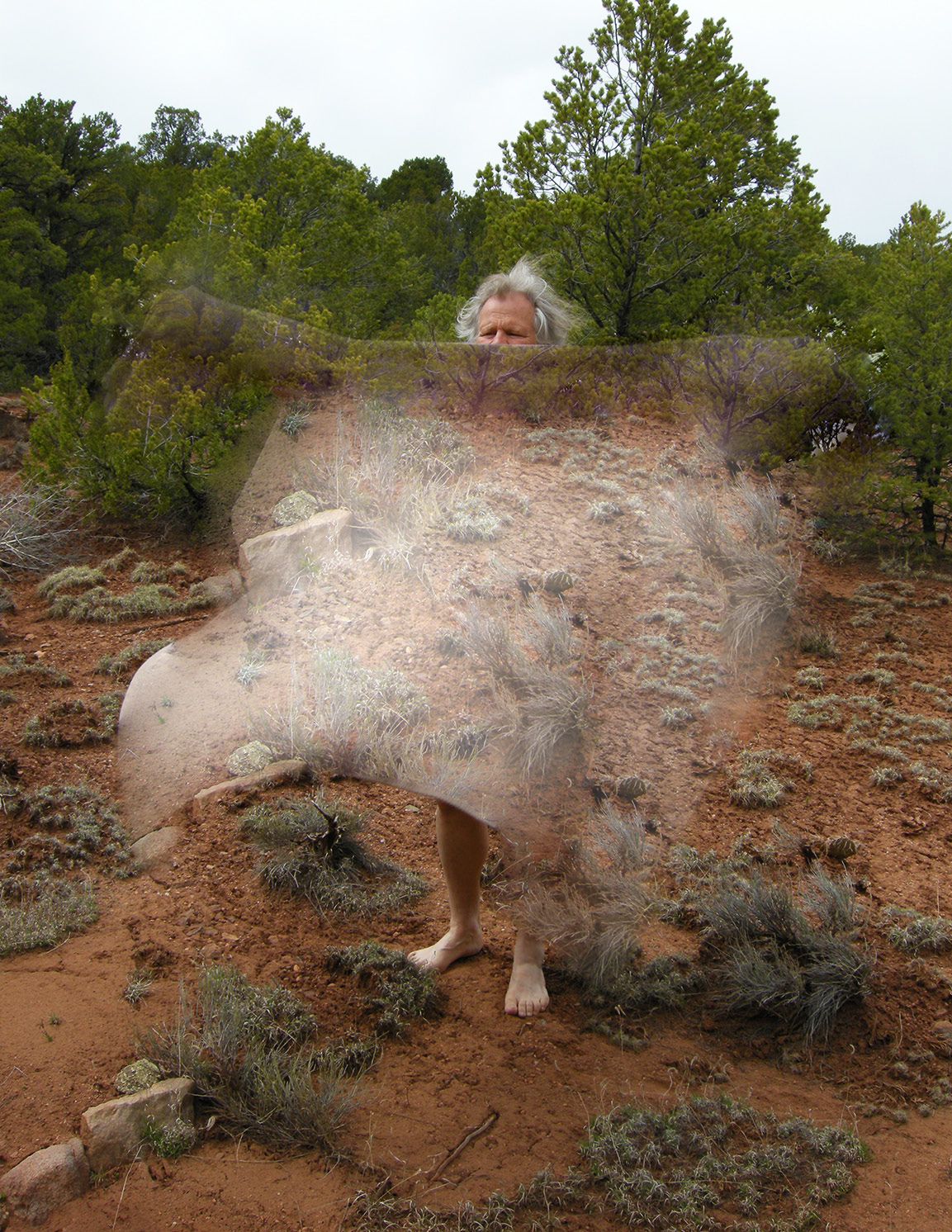 Symposium and Exhibition. The event ran in partnership with the Woodruff Center in the heart of Atlanta’s arts district. The conference brought together a unique mix of speakers— from Doom creator John Romero to Whitney Museum curator Christiane Paul. 350 attendees from all around the world participated. As an example of the Digital Media program’s commitment to theory and practice, Art History of Games also featured an exhibition of commissioned games by leading game artists Jason Rohrer, Eric Zimmerman & Nathalie Pozzi, and Tale of Tales. These titles have since garnered significant commercial success, festival award recognition, and critical praise.
As we look forward, we anticipate the continued growth of games’ importance and popularity in contemporary culture. But rather than seeing that growth as either the development of new and improved forms for existing games, or as the seepage of current games into broader markets, we see videogames as a medium that is expanding in purpose and aesthetics into all walks of life.