
V8N1: Facebook and Social Capital: An Exploratory Study
By Brandon Cordell Waite | July 10, 2013
Introduction
Democratic societies are characterized by their efforts to balance choices and bonding mechanisms, both of which are essential to a healthy democracy. Individualism and personal freedom are enhanced by our ability to make choices, whereas bonding mechanisms strengthen the social cohesiveness and stability of society.1 These two elements are in constant tension. As individuals enlarge their sphere of choice, the ties that bind them together are weakened.
In an increasingly global and networked society, citizens face the challenge of choosing ways to be simultaneously autonomous and tied together. Prominent scholars, such as Robert Putnam,2 worry that citizens are struggling to meet that challenge. They argue that much of the social history of the nineteenth and twentieth centuries can be characterized by the dissolution of community and family connections. According to Putnam, the social support networks that linked individuals to one another and to their communities have dissipated. Likewise, positive attitudes towards public institutions and willingness to contribute to the wellbeing of the community have diminished. To buttress his argument the author points to a wide variety of indicators including measures for voter turnout, general feelings of trust amongst citizens, attendance of club meetings, and as the title of his best seller, Bowling Alone,3 suggests, the number of individuals joining bowling leagues. All of which, he points out, are in decline. He attributes this trend of civic disengagement to the disappearance of a mobilized and civic-minded World War II generation, pressures put on two-career families, longer commutes to work due to suburbanization, and perhaps most of all, television.
New debates about social capital have emerged in recent years as advancements in personal computing and the Internet have simultaneously increased the choices available to consumers while at the same time providing them with more opportunities to connect with one another. The central thesis of social capital theory is that individuals and societies benefit from the sense of belonging, and the concrete experiences of trust and tolerance, found in social networks. The purpose of this study is to examine the extent to which Facebook, currently the most popular profile-based online social network, has the potential to enhance social capital.
Capital, Communities and Computers
Tracing its theoretical lineage back to Marx,4 capital is part of the surplus value captured by capitalists between modes of production and processes of consumption. Subsequent modifications of the concept retain the basic elements of surplus value and an investment with expected returns. For example, human capital theory (Johnson5, Schultz6) conceives capital as an investment (e.g., in skills and knowledge) for which returns (e.g., earnings) are expected and negotiated. Likewise, cultural capital theory (Bourdieu and Passeron7) posits that a dominated class may generate returns from the acquisition of symbols and meanings produced by the pedagogic actions of a dominant class. The distinctive feature of these theories resides in the potential investment and capture of surplus value by individuals and masses.8
Like other forms of capital, social capital enables those who generate it to invest and capture surplus value. As Coleman9 explains, “social capital is productive, making possible the achievement of certain ends that in its absence would not be possible.” Social capital is not possible without personal capital, which is made up of two components: processing and leverage. Processing refers to the cognitive thinking that enables one to make sense of the world around them. Processing is likely to be shaped by many things including one’s age, race and gender. Results become less dependent on resources as one’s processing abilities increase. Leverage refers to the ability to raise the productivity of others by using one’s own expertise. Producing new knowledge and sharing it with others increases one’s leverage, and thus increases one’s personal capital.
As individuals’ personal capital increases, so does the social capital of the groups, or communities, those individuals belong to.
The concept of social capital has become routinized across an extraordinarily diverse set of disciplines.10 Although definitions and measurements of social capital vary significantly, there is general agreement that the norms and networks embedded in social structures help shape and explain human behavior. This theme extends to the development of identity11 and aspirations12, cognitive performance13, reputation maintenance14, and the ability to cope with illness.15 Likewise, social capital has been linked to participatory democracy16, accountability17 and empowerment.18
From its outset, the Internet sparked a sense of optimism with respect to community engagement and democratic ideals amongst many including Becker,19 Dahlberg,20
Grossman,21 Markham,22 and Rheingold.23 According to these scholars, technologies reflect the values and goals of those who use them and the primal desire to socialize has been the driving force behind the Internet. This is evident in the abundance of email providers, chat rooms, message boards, multi-player games and blogs. Individuals use these technologies to connect with each other, creating loose-knit communities. In his groundbreaking book, The Virtual Community, Rheingold paints a positive assessment of the Internet’s ability to bring strangers together to form intimate online networks in which users have a shared sense of collective identity.
Other social theorists were initially pessimistic about virtual communities on the Internet including Davis,24 Koch,25 Oblak,26 Slevin,27 and Wilhelm,28 among others. At issue is whether or not one can have a living relationship within a virtual space. Do we have a mutual stake in each other’s lives when the “other” is only a virtual presence or representation? Can we sustain the human virtue of neighborliness when the virtual medium permits anonymity and the possibility of continual disconnection? What trusted pattern of behaviors, or social norms, can conjointly be constructed with strangers in virtual communities? These questions, they argue, put into doubt the ability of the Internet to reverse the decline of civic engagement and social capital.
Much has changed since these early assessments of online communities. For example, profile-based online communities that simultaneously supplement and transcend geographic communities have become much more prominent. The most popular of these is Facebook, which boasts a greater population than the United States. Facebook members use the network to update their status, post pictures, share links to websites, and chat with friends both far and near. As such, Facebook enables its users to strengthen reciprocal relationships and hone their civic skills like information gathering,29 communication30 and self-expression.31 The purpose of this paper is to examine the socializing activities of Facebook members to determine whether or not they utilize the network in such a way that enables them to capture the benefits of social capital.
These benefits are best captured through individuals’ socializing efforts that 1) increase their ties to various levels of society; 2) increase the diversity of their friendships; 3) engage them in political discourse on their networks; 4) engage them with (the profiles of) political actors; and 5) relay political cues. These actions increase the flow of information, facilitate the exertion of influence, and certify the social credentials of individuals in their networks.
Survey Design
The current study utilized SPSS Dimensions’ Mr. Interview, a comprehensive Web-based application for survey design, data collection and management. Question scales and multiple-choice answers were developed using simple HTML interview templates designed to support multiple platforms and browsers. This instrument was convenient and inexpensive.
Also convenient was the sample population, which was limited to students at The University of Tennessee who receive the Student@Tennessee email newsletter. According to the Office of Public Relations, less than 1% of students choose to unsubscribe leaving nearly 26,000 students, with a minority enrollment of 14%, who receive the email. Although convenient and inexpensive, obtaining significant response rates with Web-based surveys is a much greater challenge than with conventional postal surveys. While the current study suffers from some of the typical methodological drawbacks of online research, namely a non-probability sample with an extremely high non-response rate (N=170), the quality of a particular survey must be judged within the context of its stated aims and the claims it makes. The purpose of this pilot study is to obtain clues for future research projects and the author admits its limitations. Although such clues are produced in this paper, the findings of this study must be tempered given that Facebook users at the university level may utilize the site differently from users outside of academia.
Social Capital Best Practices
The ability to capture social capital depends, in large part, on the degree to which individuals are connected to society. For example, Crutchfield et al,32 Kang and Kwak,33 Lindstrom et al,34 and Teachman et al35 have all found that residential mobility is negatively correlated with social capital. When individuals do not live in an area for any significant length of time, there are fewer opportunities to develop bonds with their neighbors. Similarly, alienation and loneliness can occur in large cities as well as one becomes anonymous in the masses. Likewise, when urban sprawl forces people to have to commute long distances to work, shop and enjoy leisure opportunities, they have less time to become involved in voluntary associations within their communities.36 Facebook has the potential to mitigate barriers to connectivity, including time and proximity. In order to gauge respondents’ perceptions of their “feelings of connectedness to society,” survey participants were asked what effect joining Facebook had on their connectedness to their 1) friends, 2) family, 3) neighborhood, 4) community, 5) state, 6) the United States, and 7) the global community.
Lazarfeld and Merton37 found “a tendency for friendships to form between those who are alike in some designated respect,” or homophily (23). Individuals typically form friendships with people who are similar on certain characteristics such as race and ethnicity,38 education level,39 religious beliefs,40 etc. However, by creating “new, cross-cutting forms of social solidarity and more encompassing identities,” Putnam41 argues that such fragmentations can be overcome (137). To gain insight into whether or not Facebook engenders such a cross-cutting form of social solidarity, survey participants were asked whether, after joining Facebook, they had increased or decreased the number of their friends who are of another 1) race, 2) religion, 3) nationality, 4) gender, 5) sexual orientation, 6) economic status, and 7) education level.
Web 2.0 technologies present a revolutionary platform for civic dialogue. The utility of online social networks as an arena for communication is bolstered by the sheer fact that over half the student population at most universities belong to one.42 The political utility of Facebook is dependent upon the content of network discourse, the interactions between citizens and their elected leaders, and the explicit display of political cues by network members. Thus, survey participants were asked to identify the subjects they discuss on Facebook with their friends. Response categories included 1) American politics, 2) gossip among friends, 3) music, 4) religion, 5) sports, 6) television and movies, 7) volunteering or political activism, and 8) world news. Likewise, survey participants were asked if they had visited the profiles of any of the following: 1) a politician, 2) a political activist group, 3) another politically affiliated group, or 4) a religious organization. Finally, survey participants were asked if they share any of the following personal information on their profiles: 1) political beliefs or positions, 2) political party affiliation, 3) support for a presidential candidate, and 4) support for another politician. For each question, respondents were asked to choose all that apply.
Evidence in Support of Optimism
According to Durkheim, “communities” form as a result of dense and demanding social ties, as well as ritual occasions that draw members of the community together. The data suggest that online social networks embody many of these traits. When asked how many friends they had linked to their profile(s) respondents reported a wide range of connections from 8 to 2000. On average, users had 341 linked friends. The mode response was 200 friends. Although there is no magic number of connections that one must have to reap social capital, it appears that Facebook members use the network to remain in contact with a significantly large enough network of friends to enhance such benefits.
Likewise, membership activities have become habitual for many Facebook users. Most survey participants had belonged to Facebook for 13 to 48 months at the time of the survey (see Table 1). The amount of time respondents spend on the Internet each week ranges between 1 hour and 85 hours, with an average of 16 hours per week. The amount of time respondents spend on Facebook each week ranges from 0 to 80, with an average of 6.26 hours per week. On average, respondents spend over a quarter of their time on the Internet using Facebook. This is not surprising given that an overwhelming number of respondents claimed that almost all of their friends maintained a profile on the site (see Table 2).
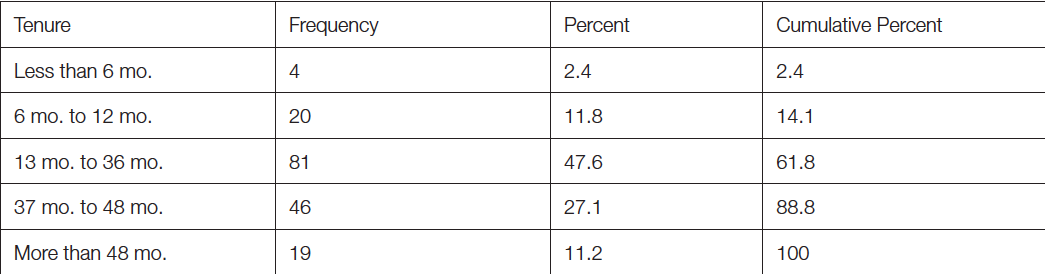
Table 1: Respondents’ Tenure on Facebook
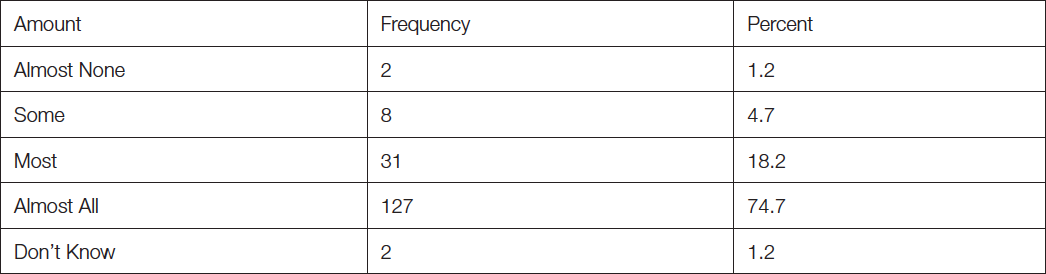
Table 2: Amount of Respondent’s Friends Who Are Members of Facebook
The data also suggest that very few individuals perceive themselves as becoming more isolated as a result of using Facebook. Although a majority of respondents perceived no effect of their Facebook membership on their connections to society, at least some users (>20% at most connection levels) are strengthening their connections to various levels of society including their 1) friends, 2) family, 3) neighborhood, 4) community, 5) state, 6) the United States, and 7) the global community (see Table 3).
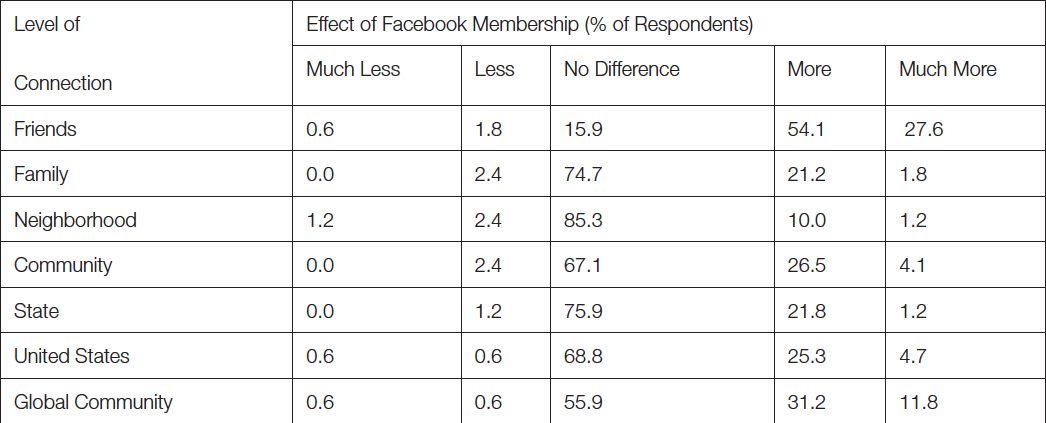
Table 3: Effect of Facebook Membership on Respondents’ Societal Connections
Not all relationships are the same. Bridging relationships involve connections across diverse social groups, whereas bonding relationships involve connections within a homogeneous group. Bridging relationships are more apt at producing positive social capital than bonding relationships given that they lead to the perception of common interests and common humanity between members of the groups.43 One might suspect that Facebook is better at fostering bonding relationships among tightly woven friendships than bridging relationships between disparate segments of society. While this may be true, the data suggest that Facebook has the potential to act as a cross-cutting platform that can increase the heterogeneity of one’s social network. Respondents were asked if joining Facebook had increased, decreased, or had no effect on the number of their friends of a different race, religion, nationality, gender, sexual orientation, economic status and education level (see Table 4). More than 75% of respondents reported no effect of Facebook membership on each category of diversity, but of those who did report an effect, far more respondents increased the diversity among their friends than decreased it. While homophily appears to occur in online social networks, just as it does in off-line communities, the evidence suggests that Facebook has the potential to act as a bridging mechanism for its users that can result in a more richly diverse social network.
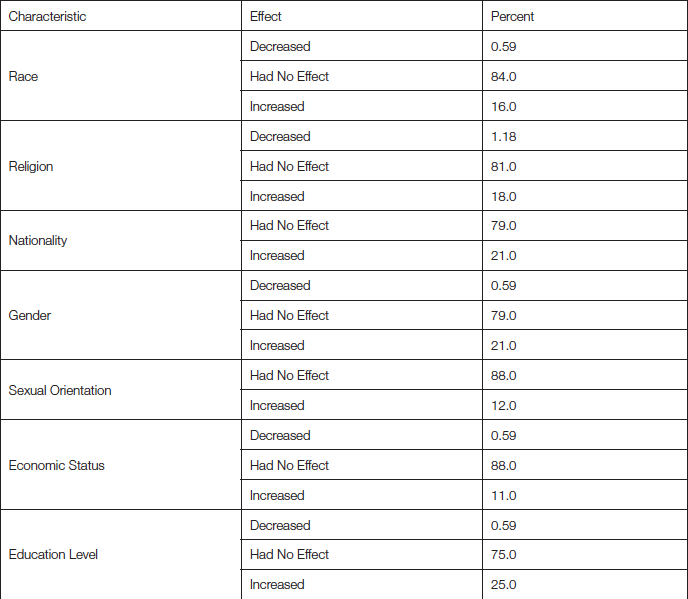
Table 4: Effect of Facebook Membership on Respondents’ Friendship Diversity
Networks are not the only determinant of social capital. The content, as well as the structure, of interactions has important implications for social capital. For example, a lack of confidence often times prevents individuals from discussing certain subject matter. Without such discussions, the development of social capital is less likely to be enhanced in those areas. On the other hand, the more confident one is in a subject the more likely they are to contribute to such discussions and, in return, receive feedback from their friends. This iterative process of dialogue is at the heart of social capital. The data suggest that respondents likely have enough confidence about their understanding of American politics to discuss the matter with others. When given the statement “I have a pretty good understanding of the important political issues facing America,” 78% of respondents either agreed or strongly agreed that they did. Only 11% disagreed or strongly disagreed with the statement. Likewise, when given the statement “Most people in America are better informed about politics and government than I am,” only 15% agreed or strongly agreed with the statement. On the other hand, 62% of respondents disagreed or strongly disagreed with the statement.
When asked what topics they discuss with their friends on Facebook, 42% of respondents said they discuss American politics (see Table 5). More than a third (34%) said they discuss world news and 25% said they discuss volunteering or political activism. Not surprisingly, the topics chosen most by respondents were gossip among friends (71%), television and movies (72%), music (66%) and sports (57%). Religion was chosen as a topic of discussion by a quarter of respondents. Overall, the data suggest that a significant percent of respondents discuss political topics on Facebook. As these conversations generate a myriad of facts and opinions amongst those in one’s network, social capital is manifested in the form of information and viewpoints. The more information and viewpoints one has at their disposal, the greater their ability to conceptualize and act upon their own beliefs.
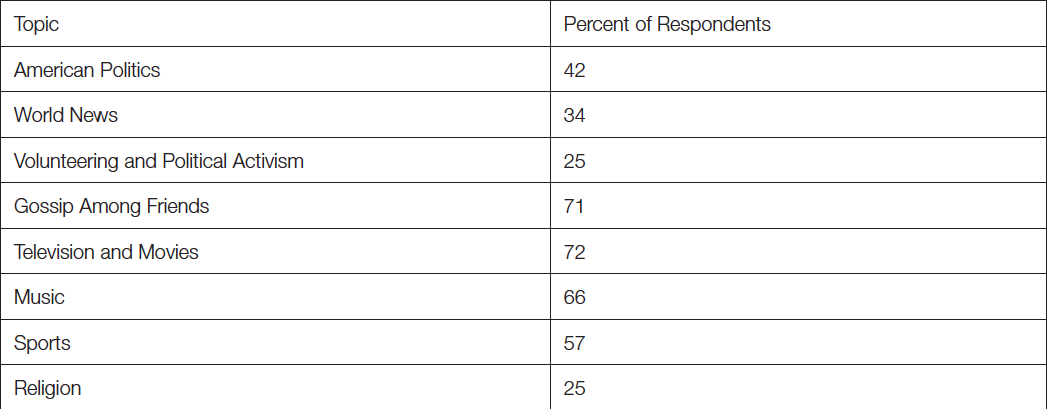
Table 5: Topics Discussed by Respondents on Facebook
While online social networks like Facebook do not negate the importance of face-to-face encounters between policymakers and citizens, they may nonetheless facilitate the exchange of information and ideas between these agents. Respondents were asked whether or not they visited the profile page of various political actors, and whether or not they linked to these profiles by adding them as a friend. The results (see Table 6) show that nearly half of respondents (41%) reported visits to a political activist group. Fewer had visited the profile page of another politically affiliated group (36%) or religious organization (35%). Nearly half (44%) of the users surveyed reported that they had visited the profile page of a politician.
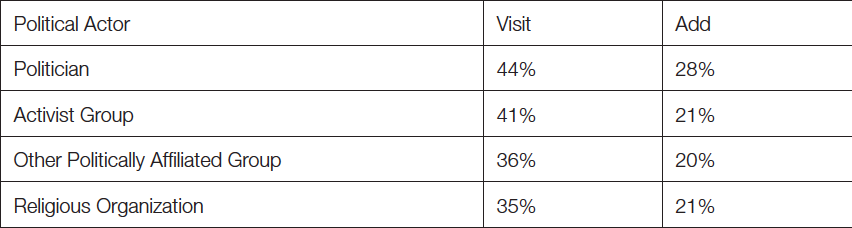
Table 6: Respondents’ Interactions with Political Actors on Facebook
Political information can be disseminated by political actors on Facebook in the form of comments left in linked friends’ comment sections or through bulletins dispatched to those linked to their profile. To receive such contacts, a user must add the political actor as a friend on the network. Nearly a third (28%) of respondents said they had added a politician as a friend on their online social network (see Table 6). Slightly less (21%) said they had added a political activist group as a friend. Fewer respondents reported adding another politically affiliated group (20%) or a religious organization (21%) as a friend on their networks. Respondents’ desire to visit and link to political actors’ profile pages is further evidence that by enabling members to increase their familiarity with politics, Facebook has the potential to generate social capital in the form of information and viewpoints.
Finally, respondents were asked about the information they share on their profiles (see Table 7). More than half (57%) said their profiles contained information regarding their political beliefs or positions. More than a third (39%) of respondents reported sharing their support for a presidential candidate in the 2008 race. Likewise, 33% of respondents reported sharing their political party affiliation on their profile. Other politicians, examples of which might include senators and congressmen, were supported on the profile pages of only 15% of respondents. These findings are important given that the essence of social networking is the ability to generate new information and political cues that individuals can use to guide their own views and actions.
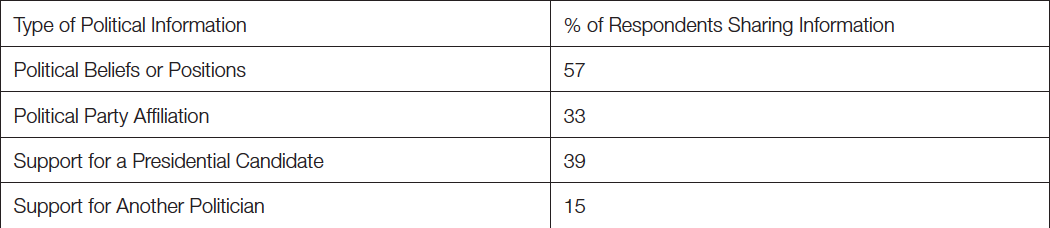
Table 7: Political Cues Shared on Respondents’ Facebook Profiles
In a final pair of questions, respondents were asked how interested they are in politics and what effect joining Facebook had on their level of interest. The evidence (see Table 8) suggests that advocates for participatory democracy should be optimistic. Nearly a fifth of all users reported that joining Facebook has increased their interest in politics. Among those who reported being only somewhat or not at all interested in the subject, 44% perceived that their Facebook membership increased their interest in politics. An overwhelming number (94%) of respondents reported being either somewhat or very interested in politics at the time the survey was taken. These findings reinforce the importance of examining the ways in which Facebook members use the network to seek out and distribute political information. Likewise, they demonstrate to political actors the importance of using social networks like Facebook to advance their careers and policy prescriptions.
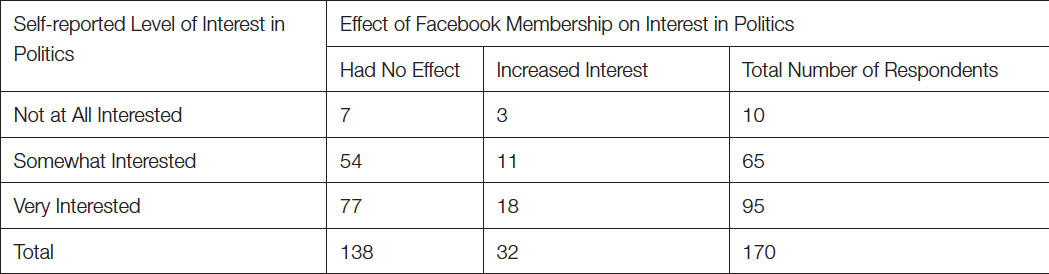
Table 8: Effects of Facebook Membership on Interest in Politics by Level of Interest
Conclusion
Online social networks like Facebook are opening up new spaces for civic discourse to take place. As these platforms emerge it becomes important to determine what, if any, impact such networks might have on the development of social capital. This study identified several “best practices” for the development of social capital and used a convenience sample to determine whether or not Facebook was being used to facilitate these practices. The data support tempered optimism. Most respondents reported no effect of Facebook membership on their connection to society. However, of those who did report an effect, far more increased than decreased their feelings of connectedness to society. Likewise, most respondents reported no effect of Facebook membership on the diversity of their friendships. But of those who did report an effect, far more increased the diversity of their friendships than decreased it.
More importantly, the findings of this study suggest that a significant amount of discourse on Facebook relates to politics. This is driven, in part, by the willingness of many Facebook members to visit and add as friends the profile pages of political actors. These findings are heartening given that the study’s sample population consists of young adults, a demographic that has been apathetic towards politics for decades.
As the population of Facebook users continues to increase in size and diversity more empirical research, using a more heterogeneous sample, is needed. Likewise, our understanding of the social and political implications of Facebook membership would benefit from content analyses of communications on the network. The findings herein suggest that such efforts are likely to produce intriguing results for scholars in the fields of political science, sociology, psychology and media studies.
Footnotes:
- Durkheim, Emile. 1953. Sociology and Philosophy. Translated by D.F. Pocock. Glenco: The Free Press.
- Putnam, R. 1996. The Strange Disappearance of Civic America. The American Prospect 24(Winter): 34-48.
- Putnam, Robert. 2000. Bowling Alone: The Collapse and Revival of American Community. New York: Simon & Schuster.
- Marx, Karl. 1849. Wage-Labour and Capital. Reprinted in 1933. New York: International Publishers Co.
- Johnson, H. 1960. The Political Economy of Opulence. Canadian Journal of Economics and Political Science 26: 552-564.
- Schultz, T. 1961. Investment in Human Capital. The American Economic Review 1: 1-17.
- Bourdieu, Pierre and Jean-Claude Passeron. 1977. Reproduction in Education, Society, Culture. Beverly Hills: Sage.
- Woolcock, Michael and Deepa Narayan. 2000. Social Capital: Implications for Development theory, research and policy. World Bank Research Observer 15(2): 225-249.
- Coleman, James S. 1988. Social Capital in the Creation of Human Capital. American Journal of Sociology, 94: 96
- Woolcock, Michael. 2010. The Rise and Routinization of Social Capital, 1988-2008. Annual Review of Political Science 13: 469-487.
- Haslam, Alexander. 2004. Psychology in Organizations. London: Sage.
- Appadurai, Arjun. 2004. The Capacity to Aspire: Culture and the Terms of Recognition. In Culture and Public Action, ed. Vijayendro Rao and Michael Walton, pp. 59-84. Palo Alto, CA: Stanford University Press.
- Hoff, Karla and Priyanka Pandey. 2006. Discrimination, Social Identity and Durable Inequalities. American Economic Review 96(2): 206-211.
- Milinski, Manfred, Dirk Semmann and Hans-Jürgen Krambeck. 2002. Reputation Helps Solve the ‘Tragedy of the Commons.’ Nature 415: 424-426.
- Kroenke, Candyce H., Laura D. Kubzansky, Eva. S. Schernhammer, Michael D. Holmes, and Ichiro Kawachi. 2006. Social Networks, Social Support and Survival After Breast Cancer Diagnosis. Journal of Clinical Oncology 24(7): 1105-1111.
- Fishkin, James S. 2009. When the People Speak: Deliberative Democracy and Public Consultation. New York: Oxford University Press.
- Jonathan Fox. 2007. Accountability Politics: Power and Voice in Rural Mexico. New York: Oxford University Press.
- Alsop, Ruth, Mette F. Bertelsen and Jeremy Holland, eds. 2006. Empowerment in Practice: From Analysis to Implementation. Washington, DC: World Bank.
- Becker, T. 1981. Teledemocracy: Bringing Power Back to People. The Futurist (6): 6-9.
- Dahlberg, L. 2001. Democracy via Cyberspace: Mapping the Rhetorics and Practices of Three Prominent Camps. New Media and Society 3(2): 157-177.
- Grossman, Larry.1995. The Electronic Commonwealth. New York: Penguin.
- Markham, Annette. 1998. Life Online: Researching Real Experience in Virtual Space. London: Altamira Press.
- Rheingold, Howard. 1993. The Virtual Community: Finding Connection in a Computerized World. London: Secker & Warburg.
- Davis, Richard. 1999. The Web of Politics, Oxford: Oxford University Press.
- Koch, A. 2005. Cyber Citizen or Cyborg Citizen: Baudrillard, Political Agency, and the Commons in Virtual Politics. Journal of Mass Media Ethics 20(2-3): 159-175.
- Oblak, T. 2002. Dialogue and Representation in the Electronic Public Sphere. Javnost 9(2): 7-22.
- Slevin, James. 2000. Internet and Society, Cambridge: Polity Press.
- Wilhelm, Anthony. 2000. Democracy in the Digital Age. London: Routledge.
- Shaheen, Maqsood A. 2008. Use of Social Networks and Information Seeking Behavior of Students During Political Crises in Pakistan: A Case Study. The International Information and Library Review 40(3): 142-147.
- Hugo, Liu. 2007. Social Network Profiles as Taste Performances. Journal of Computer Mediated Communication 13(1).
- Stutzman, Frederic. 2006. An Evaluation of Identity-Sharing Behavior in Social Network Communities. Journal of the International Digital Media and Arts Association 3(1): 10-18.
- Crutchfield, Robert D., Michael R. Geerken and Walter R. Gove. 1982. Crime Rate and Social Integration: The Impact of Metropolitan Mobility. Criminology: An Interdisciplinary Journal 20(3): 467-478.
- Kang, Naewon, and Nojin Kwak. 2003. A Multilevel Approach to Civic Participation: Individual Length of Residence, Neighborhood Residential Stability, and Their Interactive Effects with Media Use. Communications Research 30(1): 80-106.
- Lindstrom, Martin; Juan Merlo and Per-Olof Östergren. 2002. Individual and Neighbourhood Determinants of Social Participation and Social Capital: A Multilevel Analysis of the City of Malmo, Sweden. Social Science and Medicine 54(12): 1779-1791.
- Teachman, Jay D., Kathleen Paasch and Karen Carver. 1996. Social Capital and Dropping Out of School Early. Journal of Marriage and the Family 58: 773-783.
- Duany, Andres, Elizabeth Plater-Zyberk and Jeff Speck. 2000. Suburban Nation: The Rise of Sprawl and the Decline of the American Dream. New York: North Point Press.
- Lazarfeld, Paul F. and Robert K. Merton. 1954. Friendship as a Social Process: A Substantive and Methodological Analysis. In Morroe Berger (ed.) Freedom and Control in Modern Society (18-66). New York: Van Norstrand.
- Shrum, Wesley, Neil H. Cheek, Jr. and Saundra Hunter. 1988. Friendship in School: Gender and Racial Homophily. Sociology of Education, 61(4): 227-239.
- Louch, Hugh. 2004. Personal Network Integration: Transitivity and Homophily in Strong-tie Relations. Social Networks 22: 45-64.
- Robicheaux, Sally. 2003. Religious Homophily, Social Support, and Psychological Well-Being. Paper presented at the annual meeting of the American Sociological Association, Atlanta, GA.
- Putnam, Robert D. 2007. E Pluribus Unum: Diversity and Community in the Twenty-first Century—The 2006 Johan Skytte Prize Lecture. Scandinavian Political Studies, Vol. 30 (2): 137-174.
- McGirt, Ellen. 2007. Hacker. Dropout. CEO. Fastcompany, May: 74.
- Allport, Gordon. 1954. The Nature of Prejudice. Cambridge, MA: Addison-Wesley.
Bibliography
Allport, Gordon. 1954. The Nature of Prejudice. Cambridge, MA: Addison-Wesley.
Baase, Sara. 1997. A Gift of Fire: Social, Ethical and Legal Issues in Computing. London: Prentice Hall.
Becker, T. 1981. Teledemocracy: Bringing Power Back to People. The Futurist (6): 6-9.
Bourdieu, Pierre and Jean-Claude Passeron. 1977. Reproduction in Education, Society, Culture. Beverly Hills: Sage.
Coleman, James S. 1988. Social Capital in the Creation of Human Capital. American Journal of Sociology, 94: 96.
Crutchfield, Robert D., Michael R. Geerken and Walter R. Gove. 1982. Crime Rate and Social Integration: The Impact of Metropolitan Mobility. Criminology: An Interdisciplinary Journal 20(3): 467-478.
Dahlberg, L. 2001. Democracy via Cyberspace: Mapping the Rhetorics and Practices of Three Prominent Camps. New Media and Society 3(2): 157-177.
Davis, Richard. 1999. The Web of Politics, Oxford: Oxford University Press.
Duany, Andres, Elizabeth Plater-Zyberk and Jeff Speck. 2000. Suburban Nation: The Rise of Sprawl and the Decline of the American Dream. New York: North Point Press.
Durkheim, Emile. 1953. Sociology and Philosophy. Translated by D.F. Pocock. Glenco: The Free Press.
Ekstrand, V. 2003. Unmasking Jane and John Doe: Online Anonymity and the First Amendment. Communication Law & Policy 8(4): 405-427.
Forester, Tom and Perry Morrison. 1995. Computer Ethics. Cambridge: MIT Press.
Grossman, Larry.1995. The Electronic Commonwealth. New York: Penguin.
Johnson, H. 1960. The Political Economy of Opulence. Canadian Journal of Economics and Political Science 26: 552-564.
Kang, Naewon, and Nojin Kwak. 2003. A Multilevel Approach to Civic Participation: Individual Length of Residence, Neighborhood Residential Stability, and Their Interactive Effects with Media Use. Communications Research 30(1): 80-106.
Kling, Rob. ed. 1996. Computerization and Controversy: Value Conflicts and Social Choices. Academic Press, New York.
Koch, A. 2005. Cyber Citizen or Cyborg Citizen: Baudrillard, Political Agency, and the Commons in Virtual Politics. Journal of Mass Media Ethics 20(2-3): 159-175.
Lazarfeld, Paul F. and Robert K. Merton. 1954. Friendship as a Social Process: A Substantive and Methodological Analysis. In Morroe Berger (ed.) Freedom and Control in Modern Society (18-66). New York: Van Norstrand.
Lin, N. 1999. Building a Network Theory of Social Capital. Connections, 22(1): 28-51.
Lindstrom, Martin; Juan Merlo and Per-Olof Östergren. 2002. Individual and Neighbourhood Determinants of Social Participation and Social Capital: A Multilevel Analysis of the City of Malmo, Sweden. Social Science and Medicine 54(12): 1779-1791.
Louch, H. 2004. Personal Network Integration: Transitivity and Homophily in Strong-tie Relations. Social Networks 22: 45-64.
Markham, Annette. 1998. Life Online: Researching Real Experience in Virtual Space. London: Altamira Press.
Marx, Karl. 1849. Wage-Labour and Capital. Reprinted in 1933. New York: International Publishers Co.
McGirt, E. 2007. Hacker. Dropout. CEO. Fastcompany, May: 74.
Oblak, T. 2002. Dialogue and Representation in the Electronic Public Sphere. Javnost 9(2): 7-22.
Parks, Malcolm R. and Kory Floyd. 1996. Making friends in cyberspace. Journal of Communication 46(1): 80–97.
Putnam, R. 1996. The Strange Disappearance of Civic America. The American Prospect 24(Winter): 34-48.
Putnam, R. 2007. E Pluribus Unum: Diversity and Community in the Twenty-first Century—The 2006 Johan Skytte Prize Lecture. Scandinavian Political Studies, Vol. 30 (2): 137-174.
Rheingold, Howard. 1993. The Virtual Community: Finding Connection in a Computerized World. London: Secker & Warburg.
Robicheaux, Sally. 2003. Religious Homophily, Social Support, and Psychological Well-Being. Paper presented at the annual meeting of the American Sociological Association, Atlanta, GA.
Schultz, T. 1961. Investment in Human Capital. The American Economic Review 1: 1-17.
Shrum, Wesley, Neil H. Cheek, Jr. and Saundra Hunter. 1988. Friendship in School: Gender and Racial Homophily. Sociology of Education, 61(4): 227-239.
Slevin, James. 2000. Internet and Society, Cambridge: Polity Press.
Teachman, Jay D., Kathleen Paasch and Karen Carver. 1996. Social Capital and Dropping Out of School Early. Journal of Marriage and the Family 58: 773-783.
Wilhelm, Anthony. 2000. Democracy in the Digital Age. London: Routledge.