
V7N1: Browsing the Data Narrative: Affective Association and Visualization
By Elise Takehana | March 4, 2013
The personal computer is perhaps the most significant invention of the 20th century, altering our daily lives and cognitive patterns. Much more than a tool of convenience the computer introduces a new lifestyle metaphor that defines contemporary subjectivity. As with any major technological and social shift in human history, the advent of the digital age has met with resistance and nostalgia. This is perhaps nowhere more true than in narrative. As the field of digital storytelling has developed into hypermedia and the differences between digital literature and digital art becomes harder to discern, we cannot deny that digital storytelling is neither an amplified print narrative nor a new literary genre but belongs to a model beyond print literate thinking. The act of reading and writing in the digital environment can no longer be about composing or determining an objective plot if we are to take advantage of the characteristics of new media. Judging digital writing as fragmented, chaotic, or disastrous assumes that we measure digital writing against the same criteria as print narratives before it. (1) While the print book on the whole creates an authoritative uni-linear narrative, digital storytelling explicitly invites user intervention, interaction, and subjective ordering through a reader’s personal desire or interest. While skimming and non-sequential reading are possible in the print narrative, they are not premised in its present culturally accepted structure or assumptions.
With the continued technological advancements of the 20th and 21st centuries, subsequent experiments in writing and narrative have shown a drive toward and increasingly imperative need of finding new ways to tell stories in a digital environment. While the advent of the digital is not inherently positive, it is assuredly a societal, technological, and increasingly global change that cannot be ignored. Such potential changes rely on the characteristics of new technologies. In examining what digital writing is we must look to the characteristics of digital systems. Marie-Laure Ryan describes such digital systems as algorithm driven operations, interactive and reactive presentations, volatile and variable representations, multi-sensorial, and networked based organizations. (2) Several critiques of electronic literature credit early generative print literature projects and especially William Burroughs’ cut-up as pioneers of enfolding mechanical and computer technologies with practices of writing (Swiss 290). (3)
Burroughs’ writing has brought about an interest in “networked and programmable media as the material basis for artistic innovation and creation.” (4) His repeated assertions that cut-up was not machine writing but a collaboration between machinic abilities and human intellectual agility show the computer and the human user as collaborators articulating the experience of living in a digital world. The computer’s ability to converge human and machine, reader and writer, as well as many media from audio, visual, pseudo-haptic, and verbal models only solidify what previous print experiments in prose literature have been pointing toward since the late 19th century: the digital subject as storyteller is markedly different from the print literate subject as storyteller.
For N. Katherine Hayles, using the computer to compose and the Internet to distribute literary texts has greatly altered what literature is in the digital era. As electronic literature depends less and less on verbal narrative and instead on code, we as readers and critics have to question what we consider to be prose literature. (5) Perhaps the most significant realization we as readers and critics have reached with electronic literature is that styles, media, and genres come with certain assumptions that qualify their use and limits. By maintaining the assumptions and qualities of other media like print books or oil paintings when approaching new media projects, we can easily miss what new media can offer as well as misjudge the effectiveness of new media’s potential in aesthetic and political realms. (6) The very network capabilities of computers today bring certain assumptions about how writers and artists should work with and create through that medium.
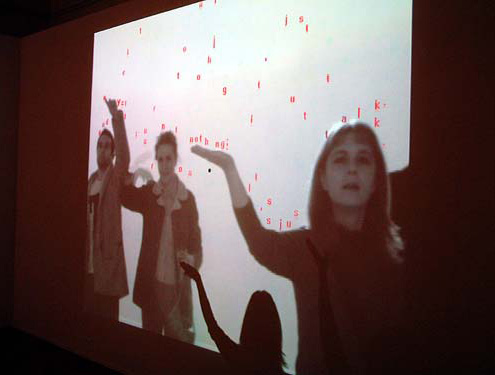
Figure 1: Text Rain by Camille Utterback, 1999
The idea of the network as a model for living and experiencing the world is far from foreign, already infiltrating American political rhetoric as Rita Raley points out in her discussions of terrorism. She cites the first report on the 9/11 attacks, which describe the terrorist cells as “shadowy networks” that work with computers to penetrate their enemies rather than with tanks and missiles. (7) As Craig Saper notes, mail artists of the 1950s used the postal service as a network to distribute and collectively create art and literary pieces. What makes digital media and the computer significant is that the assumptions of working in a network are already built into the machine itself. When Burroughs was working with typewriters to do his cut-ups, the network of texts he used were analog thus not prefaced or prominent to the consumer of the cut-up without serious archival research. The network of text existed in Burroughs’ mind but with networked computers such connections are made visible as the very structure of web writing. While oral cultures advanced performance and literate cultures forwarded hierarchical ordering, our present experience in the digital era has brought the order developed with literacy into an openly accessible network rather than obscured in authorial intent and singular vision. (8) The act of reading and writing in the digital can no longer be about composing or determining an objective plot if we are to take advantage of the characteristics of new media. As more writers, poets, and artists enlist digital technology as integral parts of their composition process, we come to understand technology as a collaborator in our goals of expression and community building rather than an impediment to Romantic conceptions of creative authorship.
The boundary pushing and interdisciplinarity forwarded by experimental print literature has often made categorizing pieces difficult, particularly between the literary and visual arts. Such obstacles are only aggravated by new media, where all media are embedded in one another and encoded into the same 0s and 1s.
Camille Utterback’s digital art piece, Text Rain provides such an example. While it is discussed as an art piece, it is clear that the words that rain down onto the viewers’ shadows are coherent, even poetic. Roberto Simanowski suggests that a work is not digital literature unless the text is a significant linguistic phenomenon meant to be read. (9) Since he does not view the linguistic portion of Text Rain to be the central focus of the piece, he does not recognize it as digital literature. On the other hand, Marie-Laure Ryan argues that Michelle Glaser, Andrew Hutchinson, and Marie-Louis Xavier’s Juvenate is a piece of digital literature even though it lacks written language. Because Juvenate introduces characters and a chronology of a family’s life, Ryan recognizes the purely visual piece as having a substantial amount of narrative information that would warrant the title of digital literature. (10)
Categories themselves pose a challenge to digital literature because the vast majority of literary works made to be read on the computer are hybrids. Bertrand Gervais argues that these digital hybrids are iconotexts that combine visual and linguistic reading methods, merging the semantic meaning of words with graphic design components making digital texts “first and foremost seen as images instead of writing. They are no longer read, they are experienced as a spectacle.” (11) While Gervais leans heavily towards the visual aspects of digital texts, the idea that verbal and visual marks are entwined in varying degrees has a long history. Loss Pequeño Glazier argues that visual elements were always important to writing evident in Chinese characters, Egyptian hieroglyphics, and cave paintings. The codex form delivers a short reprieve in which the text and image were separated in history. (12) Friedrich Kittler affirms that early print technologies like Gutenberg’s press were designed to visually compete with handwritten manuscripts rather than become machines of mass production. (13) On a more fundamental level, orthography theorist, Pierre Duborgel claims that children learning to write make no distinction between writing and drawing, viewing each as equally iconic and gestural. (14) The concrete stability of the printed letterform gives way to such effect as John Cayley’s use of letter permutations in translation and Judd Morrissey’s smooth page transitions in The Jew’s Daughter.
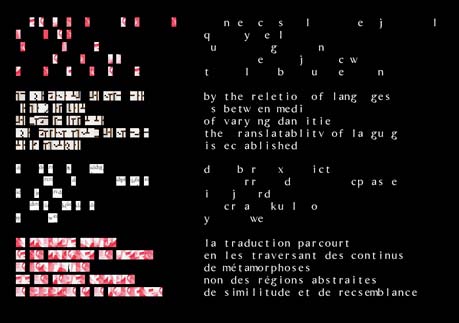
Figure 2: Translation By John Cayley, 2004
Audio elements are not foreign to digital literature either. With the inclusion of visual, kinetic, and auditory elements in digital literature, it cannot rely on traditional emphases on narrative or narrative theory conceived for print literature that do not credit extra-verbal components. If we are not looking for plot, character development, diegesis, (15) or other such staples of literary narrative theory, what are digital writers and artists using as the keystone to their projects? In essence, the question asks what motivation lies behind prose literature that is augmented (16) by the networked space of the computer?
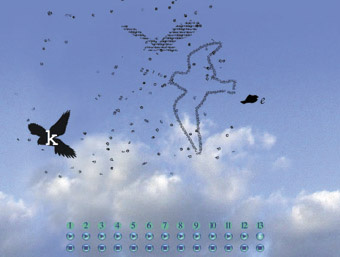
Figure 3 Birds Singing Other Birds’ Songs By Maria Mencia, 2001
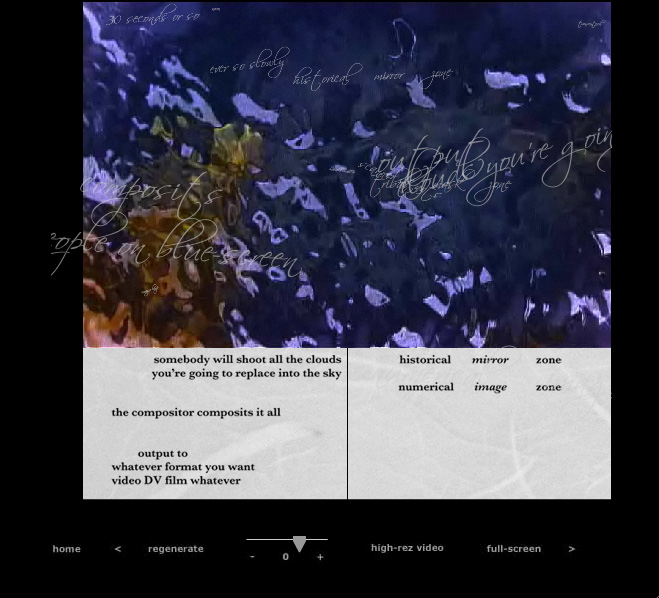
Figure 4: slippingglimpse by Stephanie Strickland and Cynthia Lawson Jaramillo, 2007
As a piece of electronic literature, Maria Mencia’s Birds Singing Other Birds’ Songs offers no plot but rather movement through a compositional space. The piece is composed of one looped animation of a blue sky with white fluffy clouds on the bottom half of the screen. The bottom center of the screen has thirteen numbered sets of “play” and “stop” symbols that the viewer can manipulate. Each play button will introduce one flying bird and its bird call onto the screen and each stop button will make that corresponding bird quickly disappear and its call cease. The idea of interacting with the piece is not the major conceit of the work given the ease of the interface and the lack of any hidden triggers. Rather the pleasure derived from this work seems to arise from being able to compose the space by choosing which bird images and sounds should and should not play together.
Composing a digital space is equally a central trope in Stephanie Strickland’s poem, slippingglimpse. While slippingglimpse works with moving background images and animated text, it does not contain an audio track. On each text screen short phrases and words appear to move with the background image and seem to recede and approach the viewer by shrinking away and returning. The words are shown in a script font to resemble handwriting. Eventually the background fades to black and only the words are visible. At the bottom center of the screen is the option to call forth a scrolling screen that reveals a portion of the poem. Unlike Mencia’s piece where the viewer can manipulate which birds to activate, the reader of slippingglimpse does not choose the words or control their movement. The undulating words and phrases create a dynamic network of linguistic material providing a potential space for the reader to make their own mental connections between the phrases. Turning to the scrolling poem, the reader seems to have gotten the phrases and words to scatter themselves into a recognizable textual order. Because each line of the poem seems to be able to move to several places without diminishing semantic value, the reader cannot help but wonder if the scrolling poem is composed as an anchor, as the poem, or if this is one version of how all the words and phrases found one another when they receded into an illegible squiggle.
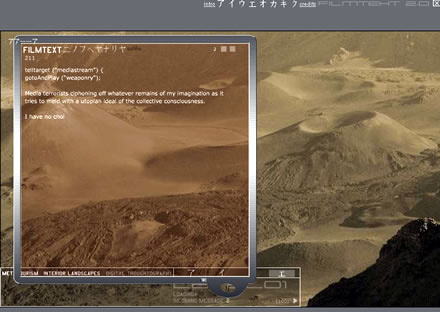
Figure 5: FILMTEXT by Mark Amerika, 2002
Similarly, Mark Amerika incorporates multiple media in order to expand writing beyond the verbal especially because he found that his literary and artistic works were converging with, or as he states, “infecting,” one another. He understands this infection of the literary onto the artistic and vice versa to stem from a common agenda of finding “Life Style Practices” for the “digital apparatuses” dominant today. (17)
FILMTEXT seems to combine the qualities of Mencia and Strickland’s works, blending the reader’s ability to compose the screen space with a poetic quality of verbal expression. FILMTEXT includes eight levels, each containing a still image of rocks, deserts, cliffs, or space satellites. Each level includes elliptical rings that can be clicked to activate either an email in-box or a video screen each with the option to choose audio loops, video thumbnails, or pop-up and animated text. The piece itself claims to be an event rather than an institution or document and with the reader’s role of selecting what elements are activated; the event is one of a reader-driven remixing of the composition. With FILMTEXT, the reader scans the screen space looking for the elliptical spaces in order to find additional material to build an associative web of information that the author supplies. The reader’s ability to choose between set options is not posited as empowering. Rather Amerika seems to take FILMTEXT as a demonstration of what reading and writing are in the digital appartus. The writer creates a space with certain thematic qualities and potential for sensational connections to which the reader processes and composits the material.
Mencia, Strickland, and Amerika’s pieces each present themselves as processes of composition in which the viewer or reader must negotiate by making choices. Rather than offering a comprehensive plot and narrative exposition, the digital writer has to create a space that has the potential to evoke sensations in the reader who is essentially placed in a situation of constant choice and risk, choosing a path on which to build meaning and risking incoherence with each step. While the writer is turned into a sensation sower, the reader is made into a hunter-gatherer skimming through information in the networked databases of the digital world looking for information he or she can use to solve problems and build meaning. (18) Instead of building grand narratives, writing and reading in the networked space of the digital is invested in creating areas where sensational occurrences are possible. These sensational occurrences risk a visceral experience, which can mediate between contemplative and immersive models of understanding. Ryan describes Saint Ignatius’s Exercises as exactly that, saying that the practice of imagining the descent into hell through our five bodily senses immerses the practicant in the world space of hell while also causing him or her to contemplate the state of their soul. (19) While Saint Ignatius’s Exercises, as a print example, is confined to verbal semantic material to allude to sensational occurrences that the reader must imagine, the digital apparatus and its multimedia capabilities can include visual, aural, and pseudo-haptic elements that augment the immersive experience demonstrated in Exercises. Sensation is so powerful because it combines the awareness of embodiment and the risk of that body being compromised that come with contemplation. Because sensation is immediate and captivating, it compels us to participate even given the risks of immersion.
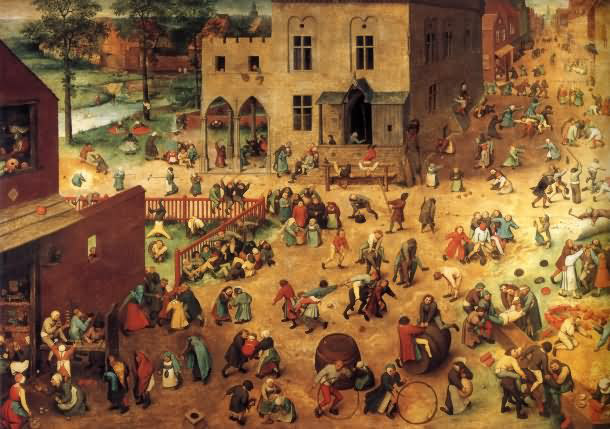
Figure 6: Children’s Games by Pieter Bruegel, 1560
Stepping away from plot-centric narrative becomes a crucial difference between print narrative and digital narrative. Instead of honing causal relationships the digital reader browses, exploring a space of potential associative connections. Narrative is clearly becoming an exploration in pattern recognition where instead of closing off interpretations of a text, narrative satisfaction results from a process of exploring and wandering through a text. (20) Stuart Moulthrop’s examination of hypertext resulted in similar findings concluding that narrative is a question of “itinerant desire” rather than of logic or sequence. (21) Even studies in more traditional narrative theory conclude that narrative is turning to thematic, associative, and spatial elements. Rick Altman uses Pieter Bruegel’s The Fair at Hoboken and Children’s Games to show that multiple-focus narrative is unique because it does not privilege a central figure but instead create a consuming periphery where a theme or set of connections can be developed.
While he used literary texts to explicate his other narrative models, Altman chose to use the woodcarvings of Pieter Bruegel and their subsequent drawings to demonstrate the functions of the multiple-focus narrative. This seems particularly appropriate for digital literature that is increasingly indistinguishable from digital art. Altman argues that because readers or viewers of a multiple-focus narrative are placed in the position of following an “itinerant desire” and of building thematic associations from non-hierarchical material, the readers or viewers take up questions far beyond plot and character that are central to dual and single-focus narratives. (22) Rather, the reader or viewer becomes interested in theme and mood, or building up a sensual subjective interpretation of the narrative tidbits the writer or creator assembles in one composition. Here the reader/viewer does not identify with a character but develops a theme from the growing intersections of paths. By fixating on common traits Altman argues that characters are no longer autonomous but representative of a reader determined theme. (23) Altman recognizes these traits of multiple focus characters in the lack of detail Bruegel uses in the facial features of his villagers. No villager has individually distinct characteristics but rather, Altman argues that they become vectors or lines of sight that the viewer of the drawing follows to explore other elements of the composition. The reader determines a trajectory through which he or she travels through the narrative space, moving from vector to vector made available in the compositional elements of the piece. Multiple-focus narratives are for the people at large. While the reader does not necessarily become the author of digital spaces, he or she does serve as a compositor. The reading experience is thus increasingly personalized by enacting reader-motivated connections as an integral part of narrative development or progression.
What happens to narrative in the discussion of prose literature in the digital space? Narrative has served as a backbone of literature for such a long period of time that it is unreasonable to expect it to lose all relevance despite the growing similarity between literature and other arts in the digital era. Narrative cannot ignore the interactive and programmatic capacities of the computer. Marie-Laure Ryan explores changes brought about by an overlapping of narrative and interactivity. She argues that interactive media are not very good storytellers chiefly because narrative meaning comes from responding to linear structure assumed by the text rather than any combination of texts a reader may compile. (24) In order to make room for interactive elements in storytelling, narrative has to let go of plot as its defining feature. (25) Whether the process feels more like skimming, browsing, searching, or contemplating; making connections, recognizing patterns, and interpreting are all essentially acts of reading. With digital technologies like the computer to aid and increase the flow of information, we have only more cause to view narrative as firmly based in data accumulation and movement through that data driven by itinerant desire rather than by self-knowing subjects and their representations. In contrast to the self-knowing subject who works in closed systems with a knowledge of the end, those subjects driven through a narrative space by itinerant desire process one intersection or choice at a time without a universal knowledge of the structure of a system. The self-knowing subject depends on logical progression towards a known end while the subject driven by itinerant desire depends on affective choices to make associative links. Digital technologies have only made people more aware of reading extending beyond studying the poem or novel and traditional models of narrative as a linearly sequential diegesis of causal events.
Norman Klein points out that while data during the Enlightenment was the fodder of science and few narrative films, with the exception of documentaries, were dominated by data, data became the mode of storytelling for computer and video games, the Internet, and mapping by 2004. (26) With the prolific amount of information made available by digital networks, it is no surprise that uni-linear narrative is overwhelmed by the data influx. Writing and reading in the digital apparatus becomes clearly much more than creating and consuming verbal semantic material. Instead writing and reading is a massive field of data forcing the writer and reader to face risk, desire, penetration, interpretation, and constant remixing of the composition. In place of the causal line, storytelling in the digital environment occurs in an associative and thematic mass. Writers must take into account the role of reader participation that alters the progression of the storyline, the presence of the computer as a collaborator in the act of writing, and the database logic that comes with working on computers and the Internet. Readers must use their own desires and experiences to navigate through unfamiliar territory risking incomprehension and exposure. With the nature and expectations of the writer and reader so significantly altered by digital technologies, the time has arrived for the humanities to take up the challenge of incorporating these traits into our cultural capital, building a rhetoric to bring to our schools where our ideas of literacy are far too limited to be of use to a digital subject working with a networked computer.
Footnotes:
- Jay David Bolter, Writing Space: Computers, Hypertext, and the Remediation of Print, 2nd ed.(Mahwah, NJ: Lawrence Erlbaun Associates, Publishers, 2001), 204.
- Marie-Laure Ryan, Avatars of Story (Minneapolis: University of Minnesota Press, 2006), 90.
- Thomas Swiss, “Electronic Literature: Discourses, Communities, Traditions,” in Memory Bytes: History, Technology, and Digital Culture, ed. Lauren Rabinovitz and Abraham Geil (Durham, NC: Duke University Press, 2004), 283-304.
- N. Katherine Hayles, Electronic Literature: New Horizons for the Literary (Notre Dame, IN: University of Notre Dame Press, 2008), 20.
- Ibid., 4.
- N. Katherine Hayles, “Translating Media: Why We Should Rethink Textuality,” The Yale Journal of Criticism 16, no. 2 (2003): 263.
- Rita Raley, Tactical Media (Minneapolis: University of Minnesota Press, 2009), 77.
- Jay David Bolter, Writing Space: Computers, Hypertext, and the Remediation of Print, 2nd ed. (Mahwah, NJ: Lawrence Erlbaun Associates, Publishers, 2001), 106.
- Roberto Simanowski, “Holopoetry, Biopoetry and Digital Literature: Close Reading and Terminological Debates,” in The Aesthetics of Net Literature: Writing, Reading and Playing in Programmable Media, ed. Peter Gendolla and Jörgen Schäfer (New Brunswick, NJ: Transaction Publishers, 2007), 53.
- Marie-Laure Ryan, Avatars of Story (Minneapolis: University of Minnesota Press, 2006), 166.
- Bertrand Gervais, “Is There a Text on This Screen? Reading in an Era of Hypertextuality,” in A Companion to Digital Literary Studies, ed. Ray Siemens and Susan Schreibman (Malden, MA: Blackwell Publishing, 2007), 196.
- Loss Pequeño Glazier, Digital Poetics: The Making of E-Poetries (Tuscaloosa: The University of Alabama Press, 2002), 169.
- Friedrich Kittler, “The Perspective of Print,” trans. Geoffrey Winthrop-Young and Michael Wutz, Configurations 10 (2002): 38.
- Carrie Noland, “Digital Gestures,” in New Media Poetics: Contexts, Technotexts, and Theories, ed. Adalaide Morris and Thomas Swiss (Cambridge, MA: MIT Press, 2006), 223-224.
- The unfolding or telling of the story space rather than the showing (mimesis) of the story space. Strong diegetic elements often hint at a strong narrator however, narrative theorist Gérard Genette argues that all texts contain a diegetic element and narrator.
- I felt that “augmented” underlined the idea that digital literature does not abandon all elements of print literate devices. Just as the switch from oral to literate culture did not completely obliterate oral devices (we are still talking about rhetorical structures), the digital will not completely eclipse the linear and hierarchical ordering abilities of the literate apparatus.
- Mark Amerika, “Expanding the Concept of Writing Notes on Net Art, Digital Narrative and Viral Ethics,” Leonardo 37, no. 1 (2004): 11.
- Richard Johnson-Sheehan and Craig Baehr, “Visual-spatial Thinking in Hypertext,” Technical Communication 48, no. 1 (2001): 24.
- Marie-Laure Ryan, Narrative as Virtual Reality: Immersion and Interactivity in Literature and Electronic Media (Baltimore: The John Hopkins University Press, 2001), 116.
- David Ciccoricco, Reading Network Fiction (Tuscaloosa: The University of Alabama Press, 2007), 42.
- Ibid., 43.
- Rick Altman, A Theory of Narrative (New York: Columbia University Press, 2008), 263.
- Ibid., 286-287.
- Marie-Laure Ryan, “Beyond Myth and Metaphor: Narrative in Digital Media,” Poetics Today 23, no. 4 (2002): 607.
- Marie-Laure Ryan, Narrative as Virtual Reality: Immersion and Interactivity in Literature and Electronic Media (Baltimore: The John Hopkins University Press, 2001), 257.
- Norman M Klein, “Waiting for the World to Explode: How Data Convert into a Novel,” in Database Aesthetics: Art in the Age of Information Overflow, ed. Victoria Vesna (Minneapolis: University of Minnesota Press, 2007), 86.
Works Cited:
Altman, Rick. A Theory of Narrative. New York: Columbia University Press, 2008.
Amerika, Mark. “Expanding the Concept of Writing Notes on Net Art, Digital Narrative and Viral Ethics.” Leonardo 37, no. 1 (2004): 9-13.
FILMTEXT. Mark Amerika. http://www.markamerika.com/filmtext/ (accessed July 12, 2009).
Bolter, Jay David. Writing Space: Computers, Hypertext, and the Remediation of Print. 2nd ed. Mahwah, NJ: Lawrence Erlbaun Associates, Publishers, 2001.
Cayley, John. translation. Electronic Literature Collection. http://collection.eliterature.org/1/works/cayley__translation/translation5.mov (accessed July 12, 2009).
Ciccoricco, David. Reading Network Fiction. Tuscaloosa: The University of Alabama Press, 2007.
Gervais, Bertrand. “Is There a Text on This Screen? Reading in an Era of Hypertextuality.” In A Companion to Digital Literary Studies, edited by Ray Siemens and Susan Schreibman, 183-202. Malden, MA: Blackwell Publishing, 2007.
Glazier, Loss Pequeño. Digital Poetics: The Making of E-Poetries. Tuscaloosa, Alabama: The University of Alabama Press, 2002.
Hayles, N. Katherine. Electronic Literature: New Horizons for the Literary. Notre Dame, IN: University of Notre Dame Press, 2008.
“Translating Media: Why We Should Rethink Textuality.” The Yale Journal of Criticism 16, no. 2 (2003): 263-290.
Johnson-Sheehan, Richard, and Craig Baehr. “Visual-spatial Thinking in Hypertext.” Technical Communication 48, no. 1 (2001): 22-30.
Kittler, Friedrich. “The Perspective of Print.” Translated by Geoffrey Winthrop-Young and Michael Wutz. Configurations 10 (2002): 37-50.
Klein, Norman M. “Waiting for the World to Explode: How Data Convert into a Novel.” In Database Aesthetics: Art in the Age of Information Overflow, edited by Victoria Vesna, 86-94. Minneapolis: University of Minnesota Press, 2007.
Mencia, Maria. Birds Singing Other Birds’ Songs. Electronic Literature. http://collection.eliterature.org/1/works/mencia__birds_singing_other_birds_songs/index.html (accessed July 12, 2009).
Morrissey, Judd. The Jew’s Daughter. Electronic Literature Collection. http://collection.eliterature.org/1/works/morrissey__the_jews_daughter.html (accessed July 12, 2009).
Noland, Carrie. “Digital Gestures.” In New Media Poetics: Contexts, Technotexts, and Theories, edited by Adalaide Morris and Thomas Swiss, 217-243. Cambridge, MA: MIT Press, 2006.
Raley, Rita. Tactical Media. Minneapolis: University of Minnesota Press, 2009.
Ryan, Marie-Laure. Avatars of Story. Minneapolis: University of Minnesota Press, 2006.
“Beyond Myth and Metaphor: Narrative in Digital Media.” Poetics Today 23, no. 4 (2002): 581-609.
Narrative as Virtual Reality: Immersion and Interactivity in Literature and Electronic Media. Baltimore: The John Hopkins University Press, 2001.
Saper, Craig J. Networked Art. Minneapolis: University of Minnesota Press, 2001.
Simanowski, Roberto. “Holopoetry, Biopoetry and Digital Literature: Close Reading and Terminological Debates.” In The Aesthetics of Net Literature: Writing, Reading and Playing in Programmable Media, edited by Peter Gendolla and Jörgen Schäfer, 43-66. New Brunswick, NJ: Transaction Publishers, 2007.
Strickland, Stephanie, and Cynthia Lawson Jaramillo. slippingglimpse. Stephanie Strickland. http://www.stephaniestrickland.com/ (accessed July 12, 2009).
Swiss, Thomas. “Electronic Literature: Discourses, Communities, Traditions.” In Memory Bytes: History, Technology, and Digital Culture, edited by Lauren Rabinovitz and Abraham Geil, 283-304. Durham, NC: Duke University Press, 2004.
Utterback, Camille. Text Rain. 21c Museum. http://www.21cmuseum.org/museum/exhibits/text-rain.aspx (accessed July 12, 2009).