
V6N2: Remix Identity: Cultural Mash- Ups and Aesthetic Violence in Digital Media
By Jamie O’Neil | March 4, 2013
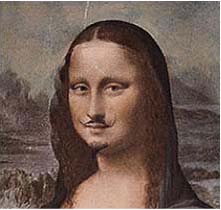
Figure 1 Detail of L.H.O.O.Q by Marcel Duchamp (1919)1
When one has been hurt by new technology, when the private person or corporate body finds its entire identity endangered by physical or psychic change, it lashes back in a fury of self-defense. — Marshall McLuhan, 1968 (2)
The term “mash-up” sounds brutal. In one sense, remixing can be thought of as a form of “lashing back” at mass media. Forty years ago, McLuhan theorized that violence is a quest for identity, spurred on by the destruction of private-literary-individual-psychic space – by (what we now call) digital media. Although networked, digital identity construction has the possibility of increasing the range and quality of expressivity; it also undermines the traditional, authentic feeling of individual identity and cultural belonging. On the social level, this results in a confusion of cultural identity, which McLuhan saw in the rise of tribalism (today’s fundamentalism) and the struggle to hold onto patriotic identities of old. This paper builds upon McLuhan’s contention that digitization (the conversion of analog messages to discrete 1’s and 0’s) causes identity crisis which, in turn, leads to the present state of polarization, extremism and ultimately conflict between old identities and new.
Jean Baudrillard, referring to McLuhan, said that the worst type of violence is aesthetic violence. (3) He suggests that when message is lost in massage, and our lives become Reality TV through self-broadcasting, social networking etc.; when old forms of cultural richness, differentiation and depth are transformed into info-entertainment via the screen; the digital native finds only meaninglessness. Remix identity – the process of superimposing multiple identities, either in cultural works (songs, videos or visuals) or through virtual personal identities (avatars, aliases, online identities) – is a way of dealing with this mixed-up cultural situation; it allows for a heterogeneous conglomeration, where the original is “layered” with new potentialities. Although mashing-up is a violent act against the transcendent “original,” it is a better option than the artificiality of mass media or state-funded preservationist cultural projects, and is also perhaps, a better way of being rebellious for today’s generation of digital natives.
MySpace, MySelf
With a remix, there is a striking reversal of content and form. Consider how a web designer chooses an appropriate formal design to express the content of the site; the Remixer begins with just the opposite: a final form first, as a finished song or video is usually the main content. One could argue that the same could be said about any piece of digital media art that “samples” material (e.g. a website that employs a stock photo), except for one special characteristic that makes the remix unique: it maintains the identity of its source content. Whereas a sampled piece of audio can easily become obscured in a song by Nine Inch Nails, (because it has been synthesized into a new rhythm), a remix is always transparent to its original content. This issue was at the core of the dispute over Vanilla Ice’s famed sampling of the Queen/Bowie single Under Pressure. In my view this was a debate about identity. Vanilla Ice claimed his song was different because of the addition of one note, but the inherent identity of Under Pressure was unmistakable, thus his song was a remix even if that was not his intention. Alternatively, an intended remix is overt in revealing the identity of the original content; it transforms the “original” like a demi-mask when layered over a familiar face.

Figure 2 web advertisement for HP (2004)
Remix extends far beyond the realms of music and digitally sampled images and can be globally defined as any appropriation of preexisting content that maintains that content’s identity. Hybrid meta-media such as MySpace, Facebook, and YouTube are markedly different than “cool” media in determining identity formation. Digital natives differ from past groups, by virtue of being an Internet generation as opposed to one shaped by the forces of rock-n-roll or TV. The effect of Elvis, The Beatles, or even Sesame Street, on their respective generations hinged on regarding these cultural icons as “originators” of content. Conversely, MySpace, Facebook, and YouTube are empty vessels, where many different kinds of content converge. For instance, Crank Dat Soulja Boy remixed with Spongebob receives over 50 million views. (4) This is an important clue in relating to this remix generation, who, like their continually evolving playlists, are more adaptable (or susceptible) to continual identity mutations.
Before expanding upon this thesis, a short clarification on how I am using the term “identity” is useful. Identity is a term that originated in ancient philosophy for the purpose of describing an inanimate object’s inherent being. Empiricists are credited with the modern colloquial understanding of human identity, as something equated with the psychological Self. (5) There is also corporate identity, cultural identity, and racial/gender identity, all of which refer to the organizational identity of groups. Because my theory intends to be scale-independent, I will be referring to both social and individual modes when using the term “identity” in this paper. Furthermore, it is important to clarify the difference between the terms “identity” and “image.” An individual, group or inanimate object will project an “image,” whereas “identity” concerns an authentic understanding. For example, we may attempt to alter our personal image with a makeover, but our self-identity may not accept our new image as “who we really are.” Thus identity points to a more profound or absolute sense of selfhood or group membership.
The Remixer: Consumer/Creator
“It used to be that assuming or redefining an identity took a lifetime. Now it can be done in as long as it takes to shop for an image.” - Brian Massumi (6)
A few years ago an advertisement declared: “You Are Your Playlist.” There is a validation of this idea through serious consideration of remix identity. Though it may sound shallow, empirically, our self-identity begins with what we consume, through our education, environment, and the screens and earplugs that feed us. Remix culture is forever engaged with consumer culture in a struggle over representation rights for the official picture of reality. Culture is the identity of a society, and “playlist” is the interface between individual and social interpretations of the world. A new form of alienation occurs when people over-internalize their playlists like embedded product placement ads. When culture proper takes on exchange value and aesthetics are available to anyone willing to pay, identity becomes too fluid, like capital itself. Traditional Marxist alienation becomes a deeper, more introverted disjunction between authentic feelings and the fragments of identity. (7) The division between consumer and creator breaks down, and near the threshold, the activity of shopping itself equates to cultural production. Then art lashes back. Perhaps energized by the old transcendental motives, but regardless of why, a “quarrel over representation that sets art and the official image of reality against each other” (8) ensues. Critics of remix must come to see it as the way we insert our subjectivity into media playlists that have been over consumed – mashing-up is media regurgitation.
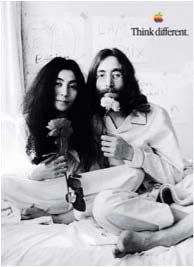
Figure 3 Image from Apple™ advertisement (late 1990’s) (9)
A discussion of art digesting consumer society cannot avoid mention of Apple Computerä. In fact they sell “genius” through a process quite similar to beat-syncing (the mixing of a pre-existing song with other musical elements). In the same fashion, Apple’s appropriation of past icons was a way of remixing genius identity with Apple’s logo superimposed over it like a groove locked into the same tempo. Ironically, John Lennon can be used to sell their computers, but don’t try to remix a Beatles song on your Mac as its software blocks remixing of its own songs (GarageBand cannot import a song purchased from iTunes). Apple’s cooptation of “thinking differently” is reciprocated by their obedient consumers who return the favor by metabolizing the Apple brand into their personal identities. This entire feedback circuit serves to convince their customers that “originality” is still possible, just like it was for all their pitchmen. Imagine…John Lennon endorsing Garageband muzac?
At the time of this writing Apple’s motto, think different – think like us, and their homogeneous, hyper-consistent identity has taken its first small blow from the Microsoft response to Apple’s I’m a PC and I wear a suit ads. These ads were monumental in the evolution of the Apple brand because Apple no longer needed to use celebrity pitchmen. Instead, the product itself had reached celebrity status and could be sold by a generic everyman-type of model. But the ads backfired by virtue of exposing that Apple was guilty of stereotyping the image of PC owners. Apple’s flimsy design culture (symbolized by their trendy gen-X model) is confronted with a series of real PC “suits” that symbolize a more mutable, heterogeneous, multicultural… identity mix.
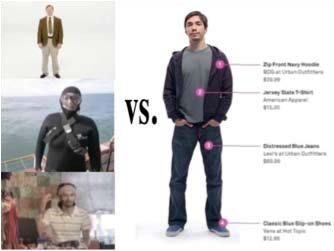
Figure 4 Stills from Microsoft TV commercials juxtaposed with “how to dress like a mac” (2008, 2006) (10)
Nicholas Bourriaud, curator and theorist, wrote Postproduction in 2002, a book that cites numerous artworks that appropriated and re-exhibited pre-existing works, an activity that goes back to Duchamp’s famous ready-mades. Bourriaud provides numerous examples from the art world, but in his characteristic style, he links contemporary art to popular culture and the socio-economic forces that affect artists. He uses the term “musician-programmer” to refer to the today’s digital native, who blurs the distinction of creator/consumer by way of remixing or cutting & pasting pre-existing code. (11) Bourriaud alludes to identity mixing at the conclusion of Postproduction:
The musician-programmer realizes the ideal of the collective intellectual by switching names for each of his or her projects, as most DJs have multiple names…more than a physical person, a name now designates a mode of appearance or production, a line, a fiction… (12)
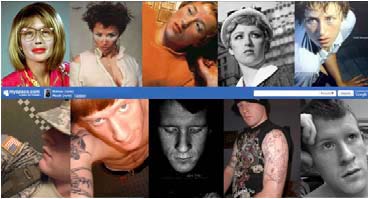
Figure 5 Cindy Sherman Photos (top row) juxtaposed with photos from DURK’s MySpace page. (2008)
Facebook and MySpace present names, images, and digital material that mask identity, but specifically, this mask is more like a remix than a total disguise, because it maintains some transparency to the “original” individual. Social networking involves “friends” that the user connects to in the virtual and real world, causing the construction of digital identity to function more as an overlay, superimposition, or hybrid of a virtual and real person. Remixing is different from a conventional photographic image or mechanical reproduction that raises the typical question of resemblance and aura. With remix, there is a conscious effort to refer to, and expose a deeper representation, and this is precisely how digital portraits are employed on Facebook and MySpace. Rather than a single, consistent representation, it is the transformative, imaginative, and mutable identity series that fascinates this generation with digital photography. Photographic remixing has a distinctive aesthetic that presents a dual-image; a picture-of-a-picture that self-criticizes itself, prohibiting it from being accepted at face value by the viewer. On a social networking page, a newly uploaded self-portrait exists within a larger selfportrait consisting of the screen name, friends, relationship status, playlist, past photos, etc.. There is a teleology in contemporary art that anticipated this, epitomized in Magritte’s famous representational aphorism: “this is not a pipe.” Rather than affirming identity, pictorial representation obliterates it. Of the many artists today who approach photography images in this way, the most relevant to the notion of remix identity, is the work of Cindy Sherman.
Since the late 1970’s to the present day, Cindy Sherman has presented remixes of herself. Viewing her chain of images recalls an existential truth observed by Albert Camus regarding how we come to know the identity of film actors by witnessing them in subsequent, fictional roles. Appropriately Sherman entitles her images “Untitled Film Still…” and then affixes a number, as if to accentuate the continual mutation of identity. Her Untitled Film Still series anticipates the mass digital photo-albums brought forth by the convergence of camera phones and social networks. In both Sherman’s work and the photo albums of MySpace user DURK (pictured in bottom row of figure 5) a dualimage is present, we see both the actor and the character, a transparency to the “original” Cindy Sherman who is ever adaptable, and most importantly, able to mutate when mixed with a nostalgic, media-image. This is how the world has come to know both Cindy Sherman, and by extension, millions of social networkers like DURK, who primarily exhibit an obsession with self-portraiture, but whose sequences and series of images emphasize a temporality of the image that transforms the individual over time – a remix identity.
Identity Grid, Aesthetic Violence
“The more they know about you, the less you exist.” — Marshall McLuhan
A favorite anecdote of Baudrillard’s when he was explaining his idea of simulation, was to refer to the Borges story of the map that replaces the “real” terrain.13 So it is with the social networker, that they may diagram themselves so thoroughly, that identity begins to describe its map (as opposed to the other way around). Simulation proceeds from this reversal of content and expression, the real and the map. Remix identity is a response to the violence of the digital image that captures and reduces the fidelity of the original via a process of quantization. It begins with a negation of the very possibility of an original; and does not proceed from a conventional paradigm of representation, but rather from one of simulation, which recognizes that we live in a world of copies-of-copies, and that identity results by differentiation from generic models (one’s relative position to established styles, types, genres, etc.).
Recognition that identity results from unique pathways through pre-existing material at first may sound banal, but remix identity uses this construction of an identity “grid” as a means to infer or suggest a plane of transcendence existing in the void of the signified (material that cannot be represented). By not pretending that originality is still possible, identity thus materialized, grounded, and contained, prefigures a line of escape. The previous paradigm of representation, which primarily concerned resemblance, honored the inherent identity of the thing captured in the image. Aesthetic violence results from this over-adherence to an identity grid in either the image or the imagined “reality” of the thing captured, in such a way that one’s fixation on “real” material becomes too rigid. The backlash occurs when a social networker’s profile page begins to serve as a limitation, rather than a possible expansion, for identity.
The digitized image is at its core, a conversion from smooth, analog qualifications to discrete, measurable quantifications. The bitmapped, pixilated, jaggy, compressed, image symbolizes the spastic bits of transcendence left in our world – think of the video quality of Al-Qaeda’s communications. Yet when we become “highdefinition” material copies – duplicable, repeatable, beyond the confines of time and space – we seem to surrender the possibility of being anything more. Remix identity offers an escape from these two polarities (the transcendent low-res image vs. the material high res). Consider the distant future when a computer will be capable of scanning the entire “content” of a human brain; if such a process were possible it would only help one appreciate remix identity through the quantifiable results. For we are more than the sum total of our “content,” rather it is our pathways through knowledge that define us and increasingly, as with a conventional remix of art or music, “flows of content and expression are in a state of conjunction or reciprocal precondition.” (14) When a previous form, for example a pop song, becomes the content of a new song, the division breaks down, content becomes not an original song, but rather a new temporal state capable of continual change. McLuhan recognized how an old medium becomes the content of a new one (e.g. the content of writing is speech, the content of print is the written word, the content of the telegraph is print, etc.) Deleuze and Guattari, in one of their rare citations of McLuhan, commend him on this point, as it exposes an increased fluidity between symbol and meaning under capitalism. The negative outcome of this is John Lennon endorsing Apple (exhibited in Figure 3). Yet, there is an opportunity that comes along with this fluidity as well, for it resists the despotic “signifier that strangles and overcodes the flows” (15) of meaning. Remix, through its reciprocal transmutation of content and form becomes the aesthetic and communicational method of choice in a capitalistic society that requires an exchange value for everything. Critics of remix see this only as a problem, whereas supporters see it as a form of detournement, a way of subverting mass media’s hegemony over the meaning of cultural symbols by turning them against themselves for the purpose of discourse, dissent, or criticism.
Conventional media, say a vinyl record, was a recording of content (art, music, a chunk of knowledge, or entertainment). When turntables were paired together and vinyl records beat-synced, the combination of two “recordings” resulted in a remix – a previous final form served as the content for a new form. It is no different for digital natives remixing identity, what matters is the power of one’s combinations. Mixing content can lead to different results: mixing baking soda and vinegar makes for a strong cleaning agent; mixing bleach and ammonia creates a poison that can kill you. The combinatorial richness of our content defines us, but with remix identity, elements are associated and mixed through a quasi-causal (16) process of beatsyncing. Elements retain their heterogeneity, as they can be cross-faded to reveal their independent states; this is significantly different from a process of synthesis, where source elements are causally altered to a degree that is irreversible. Thus today an “original” can be understood as any synthesis that sufficiently hides its source code – like an omelet that cannot be reversed to its prior form as an egg. With remixing, beat-synced elements are acausally combined – two or more heterogeneous tracks are played synchronically, the source elements can be cross-faded by the DJ, accentuating the temporal, emergent state of the record-ed content. Remix identity involves a keen sense of pattern recognition (as opposed to information consumption) and the weaving of intricate patterns becomes identity material per se. You are not your content; you are the unique pathways through content that become powerful combinations when mixed. This self-conception is a key insight from the present generation of digital natives – the remix generation.
Brian Massumi, whose writing on identity has been the inspiration for remix identity, found a wonderful example of conventional notions of identity in the US Army tagline: Be all that you can be. To this, Massumi responds, “Rewrite the slogan of the US Army: dare to become all that you cannot be,” (17) which expresses the dynamism of remix identity. The abovementioned term “identity-grid” comes by way of Massumi as well, and is in this paper correlated with the material of online identity: the playlist, photo-series, friends list, and digital material presented in the context of social networking. To reiterate, over-adherence to the identity grid (when the map creates the terrain) constricts the individual: “Every person is a dissipated individual squirming in handcuffs waiting to escape.” (18) The army’s old idea of identity (firmly grounded in the mysterious being of the potential individual) no longer serves us in this overloaded information environment. Identity lost sets off a violent backlash; no space for transcendence leads the squirming individual to the only thing they find “real” about themselves – a fundamental adherence to the identity grid. Anything outside the lines of the grid is unacceptable.
From grids to gradients is the method of remix identity. A grid is a unit of measurement, a method for mapping or diagramming an elusive, processual identity. Identity grids are useful to the Remixer as only a reference frame for departure. As a serious social networker remarked, “Facebook is like a mask, MySpace is like a wardrobe,” (19) i.e., a layer that is superimposed over the body. Social networking resembles fashion, as it is a heavily coded transformation that serves to negotiate identity with image. Although bits and bytes are far more mutable than pieces of fabric, the design of one’s self-presentation leads to more or less friends in the friends list. In the old days, when the army tagline was true, your uniform was an expression of your inner content, not anymore with remix identity: ‘What used to be mutually exclusive identities or behaviors can now overlap quite comfortably in the same body, which may run through an endless series of self-transformations.” (20) A living example of Massumi’s quotation above is DURK, screen name of a college student and ardent social networker who is an amazing conglomeration of US Army soldier /skateboarder /artist (see his photo series in bottom row of figure: 5 above). The playlist of the social networker today is no longer about strict adherence to a consistent style of music, consistent with the stereotype of the individual. Rather, it is the definition of self by virtue of the inconsistencies of the playlist and how the eclectic combination of material in the playlist reflects the unique conglomeration comprising the individual. Digital natives have been criticized for flux and flow between their core values and their outer, political expressions; this is a side-effect of remix identity, where the traditional correlations between identity and image, between content and expression, between archetype and stereotype have been subverted by the mutable flow of bits.
Walk this Way: Cultural Mash-ups
“This season wannabe rappers abound in white suburbia.” (21) -Brain Massumi
A classic example of a cultural-mash-up on YouTube is one by DJ Vlad entitled, 2pac vs. John Lennon (23) where an audio remix of famed east-coast rapper Tupac Skakur’s a cappella track is overlaid with John Lennon’s hit “Imagine.” The power of this superimposition is amplified by the video mash-up that cross cuts pre-existing video of 2pac and Lennon, in such a way, that the juxtaposition equates the two men. The mash-up perpetuates both men who were assassinated after achieving megastar fame, albeit in vastly different cultural contexts. This mash-up follows in the wake of DJ Dangermouse’s famed remix project The Grey Album, which mixed raps from Jay-
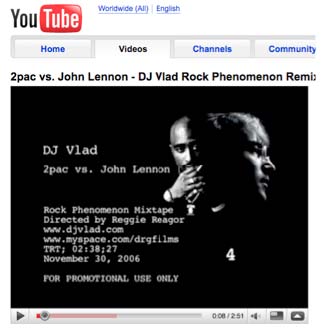
Figure 6: DJ Vlad remix: 2pac vs. John Lennon22
Z’s The Black Album over loops from The Beatle’s The White Album. The interracial overtones of The Grey Album became symbolic of the social/political dimension of cultural mixing that many YouTube mash-ups today embrace in the spirit of the melting pot tradition. In fact a recent perusal of the 300+ comments that the 2pac vs. Lennon video has received, shows that the figure of Obama has now entered the commentary, which further energizes the discussion of racial overtones inherent in the mash-up. There is a historical reason why remix aesthetics are so important to the landscape of YouTube cultural mash-ups. The first widely accepted pop remix was the 1986 Run DMC remix of Aerosmith’s “Walk this Way.” I recall the sub-cultural tensions that this remix evoked (as I was a 16 year old in white suburbia, with its own growing sub-culture of wannabe rappers). “Walk this Way” bridged a strong cultural polarization between the camps of heavy metal and hip-hop. Now, decades later, there is full cultural hybridization between these two music genres, but that is not to say that there is no anxiety, or even violence that results from this cultural mixing and mashing-up.
Jean Baudrillard’s discussion of his idea of aesthetic violence is not a complete theory, but is nonetheless very stimulating. In 2002 he gave a lecture at the European Graduate School entitled Cultural Identity. As with all his writings, Baudrillard’s notion of aesthetic violence is a thread within his meta-theory of simulacra and simulation. In his lecture he states: “The true violence done to beings and things, the violence of globalization, is not a commercial and economic violence, it is a cultural and aesthetic violence, in the same way that true genetic violence is not that of biological cloning, but of cultural cloning.” (24) With his succinct style, this quotation by Baudrillard connects across time to 1968, when Marshall McLuhan was grappling with a world becoming increasingly violent and spastic. In McLuhan’s diatribe on war and technology, War and Peace in the Global Village, he continually returns to the idea that violence is an outlet for identity in crisis. He says:
When our identity is in danger, we feel certain we have a mandate for war. The old image must be recovered at any cost. But as in the case of “referred pain,” the symptom against which we lash out may quite likely be caused by something about which we know nothing. These hidden factors are the invisible environments created by technological innovation. (25)
Remixing (and by extension, mashing-up) is the most significant aesthetic and epistemological outcome of the technologies of digital media and the Internet. It is distinct from other similar practices such as sampling, design templates, stock photos and cutting and pasting, by virtue of the fact that a remix (and only remix) overtly exhibits the identity of the preexisting material. In a remix, there is a transparency (either created intentionally or not) to the “original” that is obfuscated in all other digital appropriations. This terminological distinction is important, especially when we move from the definition of remix aesthetics and epistemology to the notion of remix identity. The ability to construct identity, as a superimposition over multiple, heterogeneous identities, especially with cultural overtones, is precisely what keeps multiculturalism from its modernist “universal” tendencies. An embrace of remixing, especially on the most serious level of identity is the answer to a culture/identity that requires differentiation to exist amidst widespread convergence, that threatens with the force of a digital tsunami to obliterate identity-differentiation in every way. Remix identity maintains cultural differentiation through a heterogeneous conglomeration of different identity source tracks.
With the coming of age of digital natives (the remix generation) digital media becomes much more than a set of tools used by the communication and entertainment industries; it is more than a method for networking with friends through the Internet too, for remix identity is a network connection to one’s deepest, most authentic feelings of selfhood. The alienation of man from his environment caused a violent backlash in the wars of the mechanical and electrical ages. The hope of remix identity is that with more expressivity, digital pathways to identity can overcome the alienation experienced in the digital age through an acceptance that every person is a heterogeneous mash-up of sorts. The problem intuited by McLuhan and Baudrillard is now a real one, and creativity is needed to transform this fundamental problem of “generalized culturalization” into a new possibility.
…true alienation is that everything would become aesthetic and cultural and in the worst finality, everyday life itself, would become a work of art; in sitcoms, reality TV Shows, or big brother: Temptation Island. It all started with Duchamp and now it’s ending as generalized culturalization. (26)
The crisis of identity resulting from new technology can only be amended by a detournement of technology itself; social networking and YouTube are an aesthetic response to the “generalizing” force that hyper-quantification exerts upon the individual and social psyches. By making possible the remix, digital media presents a line of escape for differentiation and depth in both personal and cultural manifestations of identity.
Acknowledgment
Special Thanks to the Canisius College Students; Matthew Rath, Derrick Garner and David Jackson for their insightful discussions with the author during the development of this paper; and Professor Derrick de Kerckhove, Director of The McLuhan Centre for Culture, University of Toronto, whose words on digital identity inspired this paper.
Footnotes:
- Image retrieved from http://en.wikipedia.org/wiki/Mona_Lisa (accessed 15, 10 2008).
- Marshall McLuhan and Quentin Fiore, War and Peace in the Global Village (New York: Simon & Shuster Inc. 1968. 1985) 97.
- “Jean Baudrillard - Cultural Identity and Politics - 2002 3/8” http://www.youtube.com/watch?v=AZmKCzRR5vU (accessed October 15, 2008)
- “Crank Dat Soulja Boy Spongebob” http://www.youtube.com/ watch?v=v3ARyAb_1Bs (accessed August 12, 2008).
- Robert Langbum, Mysteries of Identity, (London: University of Oxford Press, 1977) 25.
- Brian Massumi, A user’s guide to Capitalism and Schizophrenia: Deviations from Deleuze and Guattari. (Cambridge, Massachusetts: The MIT Press, 1992) 134.
- “Jean Baudrillard - Cultural Identity and Politics - 2002 3/8” http://www.youtube.com/watch?v=AZmKCzRR5vU (accessed October 15, 2008) .
- Nicholas Bourriaud, Postproduction (New York: Lukas & Sternberg, 2002) 87.
- Image retrieved from: http://images.businessweek.com/ ss/06/01/redefining_ceo/source/4.htm (accessed August 12, 2008)
- Images retrieved from http://www.youtube.com/ watch?v=eOIBGPOKgus and http://www.lifeclever.com/howto- dress-like-a-mac/ (accessed August 12, 2008).
- For more information, please see: [iDC] Remix Culture vs. Object-Oriented Culture: A conversation between Lev Manovich and Patrick Lichty, http://mailman.thing.net/pipermail/ idc/2006-April/000345.html (accessed August 12, 2008)
- Nicholas Bourriaud, Postproduction (New York: Lukas & Sternberg, 2002) 81.
- Jean Baudrillard, Simulations (Cambridge, Massachusetts: The MIT Press/Semiotext[e], 1983) 1.
- Gilles Deleuze and Felix Guattari, Anti-Oedipus: Capitalism and Schizophrenia (Univ. of Minnesota Press 1983) 241
- Ibid. 240
- Brian Massumi, A user’s guide to Capitalism and Schizophrenia: Deviations from Deleuze and Guattari. (Cambridge, Massachusetts: The MIT Press, 1992) 113.
- Ibid.
- Ibid. 64.
- This comment was made to me by DURK, pictured in figure: 5 during a video interview.
- Ibid. 134.
- Ibid. 135.
- Image retrieved from http://www.youtube.com/ watch?v=CkNG3Rm2pCg (accessed October 12, 2009)
- Ibid.
- “Jean Baudrillard - Cultural Identity and Politics - 2002 3/8” http://www.youtube.com/watch?v=AZmKCzRR5vU (accessed October 15, 2008).
- Marshall McLuhan and Quentin Fiore, War and Peace in the Global Village (New York: Simon & Shuster Inc. 1968. 1985) 97.
- “Jean Baudrillard - Cultural Identity and Politics - 2002 3/8” http://www.youtube.com/watch?v=AZmKCzRR5vU (accessed October 15, 2008).
Works Cited:
Baudrillard, Jean. Jean Baudrillard - Cultural Identity and Politics - 2002 3/8. http://www.youtube.com/watch?v=AZmKCzRR5vU (accessed October 15, 2008).
Baudrillard, Jean. Simulations. Cambridge, Massachusetts: The MIT Press/Semiotext[e], 1983.
Bourriaud, Nicholas. Postproduction. New York: Lukas & Sternberg, 2002.
Deleuze, Gilles and Guattari, Felix. Anti-Oedipus: Capitalism and Schizophrenia. Originally published, L’Anti-Oedipe, 1972. Hurley, Robert and Seem, Mark and Lane, Helen, trans. Minneapolis: The University of Minnesota Press, 1983.
Guattari, Félix. Chaosmosis: An ethico-aesthetic paradigm. Originally published, Éditions Galilée, 1992. Bains, Paul and Pefanis, Julian, trans. Indiana: Indiana University Press, 1995.
Langbaum, Robert. The Mysteries of Identity: A Theme in Modern Literature. London: The University of Oxford Press, 1977.
Massumi, Brian. A user’s guide to Capitalism and Schizophrenia: Deviations from Deleuze and Guattari. Cambridge, Massachusetts: The MIT Press, 1992.
McLuhan, Marshall and Fiore. Quentin. War and Peace in the Global Village. New York: Simon & Shuster, 1968.