
V6N2: datatainment
By Grégoire Cliquet | March 5, 2013
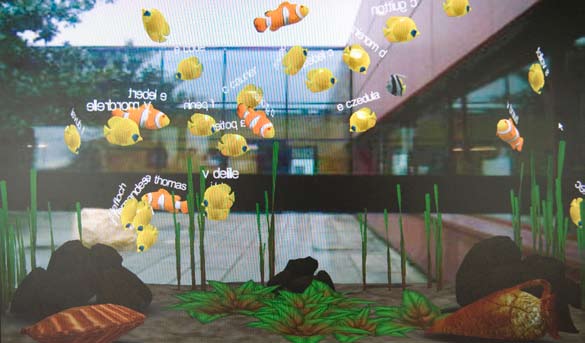
Image 1 Dataquarium / l’École de design Nantes Atlantique / 2007
Definitions
data: In this paper “data” is to be understood as part of a basic material malleable at will that can be shaped just like clay into a form or as a volume laden with meaning and emotion. Data can either be presented in a quite elementary way: in binary, hexadecimal, decimal patterns… like digital data produced for statistic purposes (“log” files on web servers, for instance), or they can be aggregated in a meaningful (informative) way, which means considered as a message/message fragment (a comment on a blog, for instance).
(enter)tainment: Since playing games is said to be very significant in the evolution of species and especially in the evolution of mammals, (1) we should overstep the usually mostly derogatory views of game-playing and rather strive to see it in a different, anthropological light by focusing on its cultural and teaching-oriented dimensions. (2) Reaching far beyond all competitive or collaborative logic, games are metaphors of the real world in that they transpose formal, customary behaviors and enable individuals to increase their creativity while fostering their social skills and, in the greater picture, contributing to the very development of civilization. (3) As Chris Crawford (4) says, the ability of games to bring together distinct entities makes them key elements of interaction design. Game playing promotes dialogues between human beings and machines as shown by Apple’s tremendous success: “The Macintosh is just a toy.” As a new “hyper-social” society composed of “digital natives” is currently surfacing, games appear as a great opportunity to transcribe the behaviors and actions of individuals within an informational environment (cyberspace).
Datatainment stems from experiments conducted in the field of mapping whereby it first and foremost aims at representing the digital territory. To do so it borrows from graphic semiology5 and transcends the founding principles of information mapping:6 in this case variables are materialized by dynamic symbols, be they metaphorical, explicit, or personified; maps (the media) – traditionally used to contextualize data or messages – turn into “environments” within which data and messages can evolve easily. But the true specificity of datatainment lies in its implementing interaction modes that break free from usual functionality and accessibility requirements so as to enable users to experience situations drawing inspiration from the notion of gameplay.
Context
The birth of the Web 2.0 (7) and the subsequent increase of all related online content-oriented applications have brought about a rise in the amount of resources available to Internet users, promoted knowledge-sharing, and woven social relationships out of shared knowledge and opinions. Some thinkers see this phenomenon as the expression of a “collective intelligence.” (8) It also appears as a huge field for exploration (data mining). A good example of this is a study conducted by F. Ghitalla, (9) which proved to be strategically effective on the political field. Data mining on French blogs enabled him to predict that the French would say “no” to the European Constitution at the referendum held on May 29th, 2005, whereas most polling agencies announced that the Treaty would be heartily welcomed by the French. In the field of economics, “Crowdsourcing” (10) enables one to observe market trends or the dynamics of competition seen from a user’s point of view. (11) In the field of data research the crossbreeding between browser history, correspondence, and Internet user behavior has played a quite significant part in Google’s quickly achieved fame.
Datatainment is not meant to create analyzing tools: it is rather a mode of representation helping Internet users grow increasingly aware of their own “cyber-existence,” and in so doing, realize that they are constructing a digital identity. Facebook, Myspace, Twitter, Flickr, and many other 2.0 applications contribute to the development (usually unconsciously) of a “virtual you.” Rooted in a long-term educational approach, datatainment is a means of facing the crucial need to educate people about the omnipresent information ecosystem that is also on the verge of becoming omniscient.
“Serious” Games
Video games undoubtedly took part in the development of micro-computing whereby they helped the broad public adjust to it. Their success – now going way further than merely fulfilling the need for entertainment (12) – shows how the Internet users of today have embraced video games as cultural values, going as far as making video games into essential 21st Century knowledge acquisition and knowledge transfer tools. Nowadays video games are gradually breaking free from all-too-common heroic fantasy-type quests and growing more mature, becoming “serious games.” J. Alvarez (13) defines “serious gaming” as a “Computer application aiming to combine serious aspects such as – this is a non-exhaustive list – teaching, learning, communication and information with amusement- oriented features stemming from video games. This combination – achieved by implementing an “educational scenario” – endeavors to detach itself from mere entertainment.” Serious gaming is a means of transposing contexts, objects, activities, and actual situations to “virtualize” them into playful environments. In this virtual context the user can therefore explore real-life situations as a game. To do so, serious gaming relies on digital realistic models and takes the shape of a simulation device coupled with gameplay, enabling the player to follow an interactive educational process. (14) Thanks to serious gaming, we can play to solve a wide range of complex issues ranging from the individual practice of a foreign language (15) to collective protein folding (16) or to planning, organizing, and rehearsing varied rescue operations. (17)
Datatainment Specificities
The main difference between datatainment and serious gaming lies in their relationship to reality. When I play “Fold It,” the game’s interface renders behaviors and automatic responses that fully mirror the biochemical phenomena ruling over protein structure. This way, by manipulating a three-dimensional puzzle I get a chance to discover new protein structures that may bear fruit and lead to the production of an actual vaccine. On the other hand, datatainment relies on resources coming from an already immaterial environment; it takes raw material from the web and recontextualizes it into a metaphoric state. Then, datatainment aims to materialize this metaphorical eco-system into a simulated everyday object as an aquarium or via tangible interfaces and communicating products. (18)
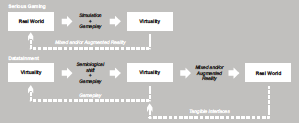
Image 2 Differences between Serious Gaming and
datatainment
The sole use of the datatainment application, (over and above the materialization of an “e-reputation”) in the universe of social networks, consists of embodying a digital environment, in principle, invisible, but one which translates behaviors or acts in a significant way into our real environment. Datatainment «gives» the general public, through an easily recognizable form, digital databases with the purpose of awareness or prevention.
Thus, we can already envisage a datatainment application in the sustainable development domain, making users aware, in a playful way, of their respective consumption of natural resources (water, electricity, etc.). A virtual avatar, for example, could communicate through its state of vitality, its cautious use or waste of natural resources. This virtual pet, with which one can form an attachment, could closely evoke a determined « ecologically biased » community of consumers who could doubtlessly become more « efficient » through the Datatainment application than through the use of other coercive methods normally adopted (catastrophic documents, political pricing policies, etc.).
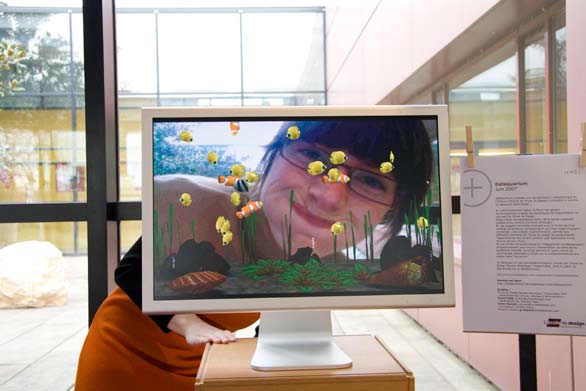
Image 3 Dive!
Moreover, Datatainment forms part of a process accompanying the arrival of new types of operating system exploitation allowing, up until now, the conception of content production. At the time of Web 2.0, it became necessary to ponder new modes of interaction adapted for contemporary usage. The computer was not originally designed for today’s new internet use patterns. Nowadays, the computer’s internet connection is mainly used for visualization, access, and content consultation; there was therefore an obligation to broaden the basic principles of direct manipulation alongside these new behaviors via the development of new operating systems. Web 2.0 made it necessary to ponder new modes of interaction adapted for contemporary use; Datatainment will become part of this ongoing development process by accompanying the arrival and subsequent exploitation of new types of operating systems that up until now have focused on the conception of content production. If the WYSIWYG (19) contributed at that time to familiarizing us with printing documents, Datatainment extends this notion, by means of « What You See is What you Are », (20) to bring us closer to digital social environments. The components of the system are not about « exploitation » anymore, but rather about « cohabitation » with the computer and are dedicated to the manipulation of creative content following in the footsteps of Mash Up software – a manipulation capable in its own way of “breeding” the production of new content.
Dataquarium
“Dataquarium” (21) is an experiment conducted in 2007 by two interaction design students as part of the datatainment project. (22) This study was centered on the “Campus” (23) of L’École de design Nantes Atlantique (LEDNA), an intranet centralizing several online services, sustaining the cohesion of all our pedagogical activities: webmail, planning, phonebook, project follow-up, further teaching material, photo gallery, and a public instant messaging application, the “Mégaphone,” which is quite popular among our students. The Campus has now become absolutely indispensable and brings together the activities of over 700 students, teachers, and coordinators. It is visited by an average number of 250 users a day.
The dataquarium installation was developed as an exhibition in the entrance hall of LEDNA, in the form of an aquarium. This first experiment aims to help us visualize in real-time the incoming and outgoing data flow from the Campus and to provide a metaphorical virtual representation of its users. The environment (setting and flora) is dynamically generated according to daily statistics relating to the number of users visiting the website of LEDNA, (24) the bandwidth used, and incoming and outgoing e-mails. Users connected to the intranet move about in the shape of three different varieties of fish attributed to three different types of users: students are represented by butterfly fish, professors and coordinators by clown fish, and a hypothetical caretaker – the Managing Director of LEDNA – appears as a Henochius fish.
The short texts coming from the “Mégaphone” or from the text message area (as far as the on-line version is concerned) gradually crumble to pieces on which this virtual aquatic fauna then feeds.
The fish behave in a randomly autonomous way. Labeled with a text message area, the online version enables users to send information so as to command their avatar to perform such or such action within the aquarium (speed, slow, etc.).
Finally, thanks to a management-console-like interface, users are free to modify their personal data (e-mail, website URL) and to customize the default texture of their fish (bitmap format image). The “W” key is used to display/hide the name of the fish and the “Z” key enables users to shift the camera view angle and zoom on the fish.
Crystal Campus
A second version called “Crystal Campus” is currently in progress. It pertains to a “Crowdsourcing” dynamic (25) aiming to spur students to feed and enhance the resources available to the whole community by contributing personal data. Instead of ranking students according to their schoolyear or their major (Product, Interaction, or Spatial design), we rather wish to rank them – and sometimes single them out – for their contribution to our digital resources. For instance, we can rank them by using their ability to store bookmarks on our social bookmarking platform and by analyzing their position into our informal social network (Friend of a Friend – FOAF). Crystal Campus should also pave the way to a broader-scoped reflection on new teaching methods born from the network-based environment. A “knowledge-sourcing” process given concrete expression through a carefully thought-out integration of all hypermedia, through the web 2.0’s “social” and “community-based” dimensions, in order to emphasize a horizontal approach to knowledge transfer, as encouraged by Laurent Neyssensas – professor at LEDNA – in an article about “short-distance learning.” (26)
Beyond its technical realization, Crystal Campus constitutes the base of a social and ethical experimentation which is designed to study social consequences to bring together informational spheres with our natural environment. In effect, this version which is more «evolved» could be considered by students as a surveillance tool which could be rejected by a community due to it being different to its predecessor: the Dataquarium. On the other hand, more realistic in the treatment of information and in its re-transcription, it could lead to reuniting and energizing campus life at the heart of the school and favor the bringing together of individuals. In so doing, it can contribute, and therefore energize, collaboration (often claimed but rarely effected), rather than causing competition between individuals. With this in mind, we will propose modes of representation based on «shared» avatars rather than individualized and we will analyze the dynamic results emanating from this collective appropriation in comparison with the well known phenomenon, emblems, and mascots.
We will establish in parallel with Crystal Campus an observation protocol, aimed at gauging the acceptance of Datatainment and adjusting its’ positioning, to define a balance between pragmatic behavior analysis «on line» user behavior and metaphoric and playful representation techniques.
Footnotes:
- Karl Groos, The Psychology of Animal Play (Kessinger Publishing, 2005).
- Johan H. Huizinga, Homo Ludens: A Study of the Play-Element in Culture (Routledge, 1998).
- Roger Caillois, Les jeux et les hommes, Ed. rev. et augm. (Gallimard, 1992).
- Chris Crawford, The Art of Interactive Design: A Euphonious and Illuminating Guide to Building Successful Software (No Starch Press, US, 2002)
- “Information semiology” would perhaps be more appropriate, referring to the use of maps to represent information.
- Jacques Bertin, Semiology of Graphics (Univ. Wisconsin P, 1984).
- Tim O’Reilly, “What Is Web 2.0? Design Patterns and Business Models for the Next Generation of Software,” O’Reilly, September 30, 2005, http://www.oreillynet.com/pub/a/oreilly/tim/ news/2005/09/30/what-is-web-20.html. (accessed 3/15/09).
- Pierre Levy, L’Intelligence collective : Pour une anthropologie du cyberspace (La Découverte, 1997).
- Several business intelligence tools dedicated to exploiting trends prevailing in the Web 2.0. can be found on the RTGI website (“Réseaux, Territoires et Géographie de l’Information”) http://rtgi.fr/?p=solutions (accessed 3/15/09).
- Jeff Howe defines crowdsourcing as “the act of taking a job traditionally performed by a designated agent (usually an employee) and outsourcing it to an undefined, generally large group of people in the form of an open call.” Crowdsourcing. http://crowdsourcing.typepad.com/ (accessed 3/15/09).
- An issue I have been researching as part of my Ph.D. thesis, “Web 2.0 and Integration of the Horizontal Innovation Strategy into the Global Innovation Strategy of SMC’s.”
- According to R. Caillois “MMORPG” (Massively multiplayer online role-playing games) rank in the “mimicry“ category because when “corrupted” (i.e., when the boundaries between game and reality are too blurry) they can be quite harmful and – among other potential consequences – lead to the player’s alienation or schizophrenic behavior (cf. table II, p 122).
- Julian Alvarez, “Du jeu vidéo au Serious Games : Approches culturelle, pragmatique et formelle” (Université TOULOUSE II - Toulouse le Mirail, Université TOULOUSE III - Paul Sabatier, 2007), http://www.jeux-serieux.fr/wp-content/uploads/ THESE_SG.pdf. (accessed 3/15/09).
- Jean-Noël Portugal, 2nd European Serious Game Summit (Lyon, France, December 2006)
- “English Training” or “Dr Kawashima’s Advanced Brain Training” on Nintendo DS http://www.nintendo.fr/NOE/fr_FR/games/nds/programme_dentranement_ crbral_avanc_du_dr_kawashima_2920.html (accessed 3/15/09).
- http://fold.it is part of the research effort to find an anti-HIV vaccine.
- Such as “SWORD”: Game developed by MASA Group for firefighter training. (http://www.masa-sci.com/security.htm) (accessed 3/15/09).
- Check out the “nabaztag” rabbit (http://www.nabaztag.com/fr/ index.html) (accessed 3/15/09).
- WSIWYG-What You See Is What You Get
- Time Magazine Dec. 25, 2006 : Person of the Year: You (http://www.time.com/time/covers/0,16641,20061225,00. html) (accessed 3/15/09).
- http://datatainment.lecolededesign.com/dataquarium
- Diane Faidy (http://turing.lecolededesign.com/dfaidy/) and Julien Dumail (http://clickonme.free.fr/)
- http://campus.lecolededesign.com
- http://www.lecolededesign.com
- Jeff Howe. Crowdsourcing. http://crowdsourcing.typepad.com (accessed 3/15/09).
- Laurent Neyssensas, “Short-distance learning [keeping track of information],” Blog, Laurent Neyssensas, June 13, 2008.
Works Cited:
Alvarez, Julian. “Du jeu vidéo au Serious Games : Approches culturelle, pragmatique et formelle.” Université TOULOUSE II - Toulouse le Mirail, Université TOULOUSE III - Paul Sabatier, 2007. http://www.jeux-serieux.fr/wpcontent/ uploads/THESE_SG.pdf.
Bertin, Jacques. Semiology of Graphics. Univ. Wisconsin P, 1984.
Caillois, Roger. Les jeux et les hommes. Ed. rev. et augm. Gallimard, 1992.
Crawford, Chris. The Art of Interactive Design: A Euphonious and Illuminating Guide to Building Successful Software. No Starch Press,US, 2002.
Groos, Karl. The Psychology of Animal Play. Kessinger Publishing, 2005.
Huizinga, Johan H. Homo Ludens: A Study of the Play- Element in Culture. Routledge, 1998.
Levy, Pierre. L’Intelligence collective : Pour une anthropologie du cyberspace. La Découverte, 1997.
Neyssensas, Laurent. “Short-distance learning [keeping track of information].” Blog. Laurent Neyssensas, Juin 13, 2008.
O’Reilly, Tim. “What Is Web 2.0 ? Design Patterns and Business Models for the Next Generation of Software.” O’Reilly, Septembre 30, 2005. http://www.oreillynet.com/ pub/a/oreilly/tim/news/2005/09/30/what-is-web-20.html. v