
V5N1: Review: iDEAs 07: Beyond Boundaries
By Dena Elisabeth Eber | July 3, 2013
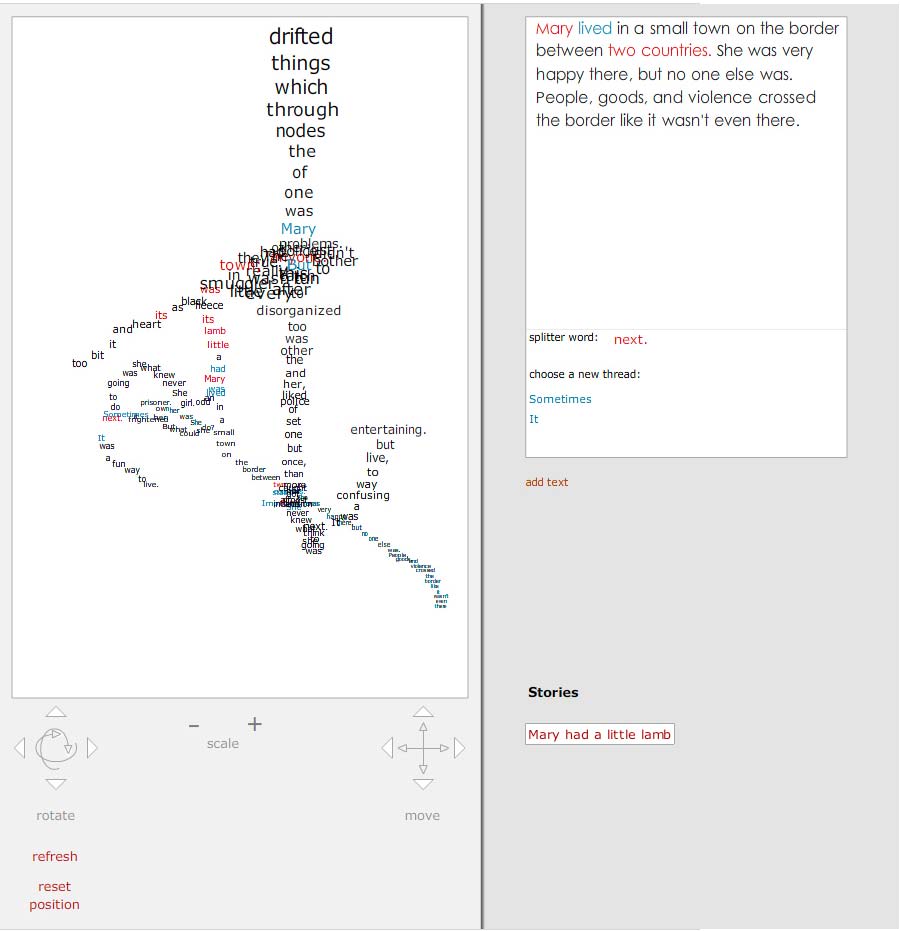
Figure 1
Seth Ellis’ Story Engine (figure 1) is a desktop interactive work reminiscent of the Exquisite Corpse taken to a new level. The Exquisite Corpse game was developed by the artists and writers associated with Andre Breton’s surrealist group during the early twentieth century. In the original game, writers added text to words already in place from the last writer without knowing what the previous words were. In the end, a new sentence (or story) was formed, one without a single author and one with text that made sense only in relation to the words around it. Seth Ellis borrowed from this game but extended it as an artistic visualization that continually expands and is infinitely navigable. Because of the technology, authors may add and build on the text without the need to delete what has come before. Users can then navigate through the many lines and associations as one narrative can spawn many that contain narratives within. The resulting text is not only rich in multiple threads, but it creates an appealing and unpredictable formal spread of color and space made possible by technology. In the strictest sense, this is a text based visually interactive narrative in which the author/artist gives up control to the next author/artist or participant, thus surrendering to the postmodern assertion that the author/artist is no longer at the helm.
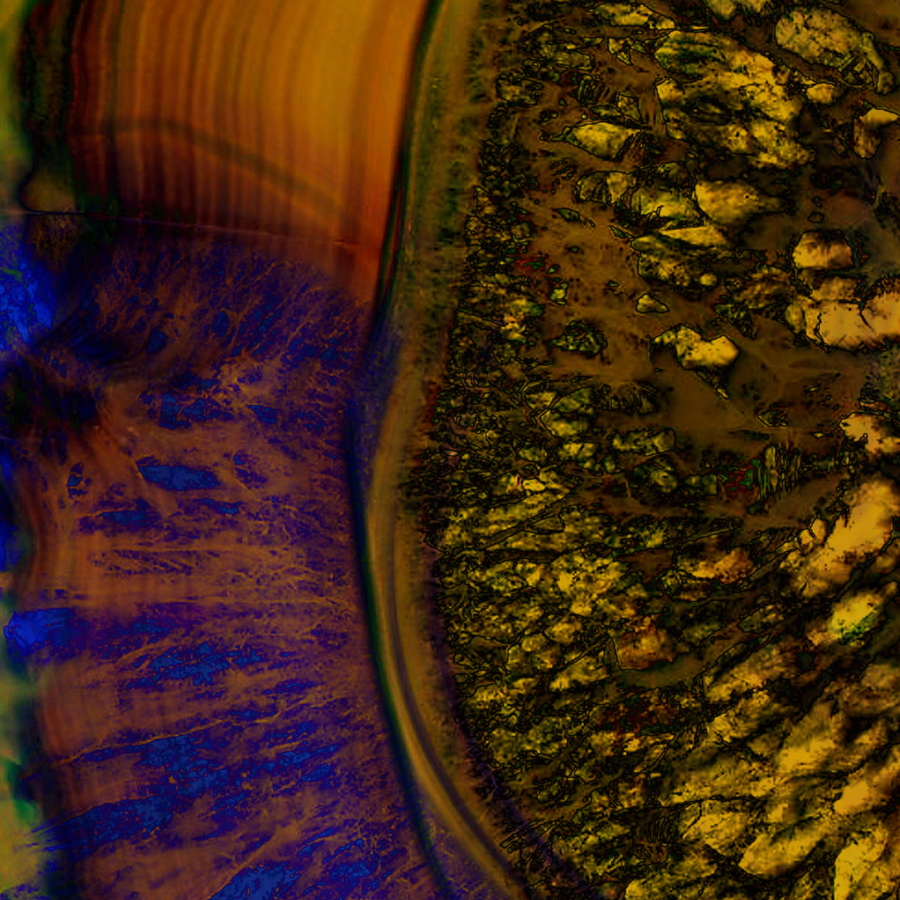
Figure 2
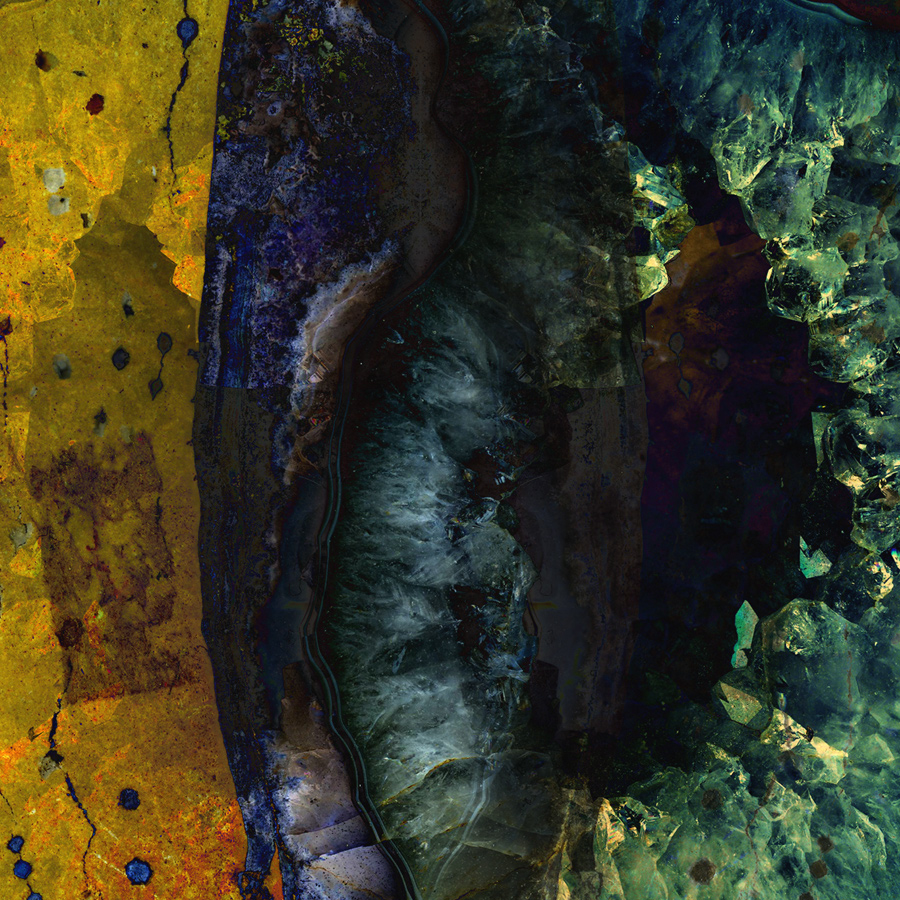
Figure 3
Carol Farber’s images (figures 2 and 3) also borrow from the established painterly and photographic aesthetics, but cross boundaries into a realm that embraces the manipulated referent to create a new truth. In Surface 3 (figure 2) and Surface 1 (figure 3) Farber uses nature as a reference to inform color and texture taken further with digital imaging. Surface 3 is reminiscent of a tree or a slice from a tree and Surface 2 clearly uses a geode as source material, but both push the traditional photographic image into an extended representation that is a painterly interpretation of the object. Nature has always been a reference, but the suggestion of a photograph that is digitally manipulated frees the artist to combine digital with traditional techniques to further extend relationships and to suggest another reality. The works are abstract; yet reveal an essence and an allusion to nature. Much like Monet’s impressionistic interpretation of atmosphere, the images are an interpreted vision of nature. These works are neither photographs nor paintings, but sit past the edge of both disciplines by borrowing aesthetics and moving forward.
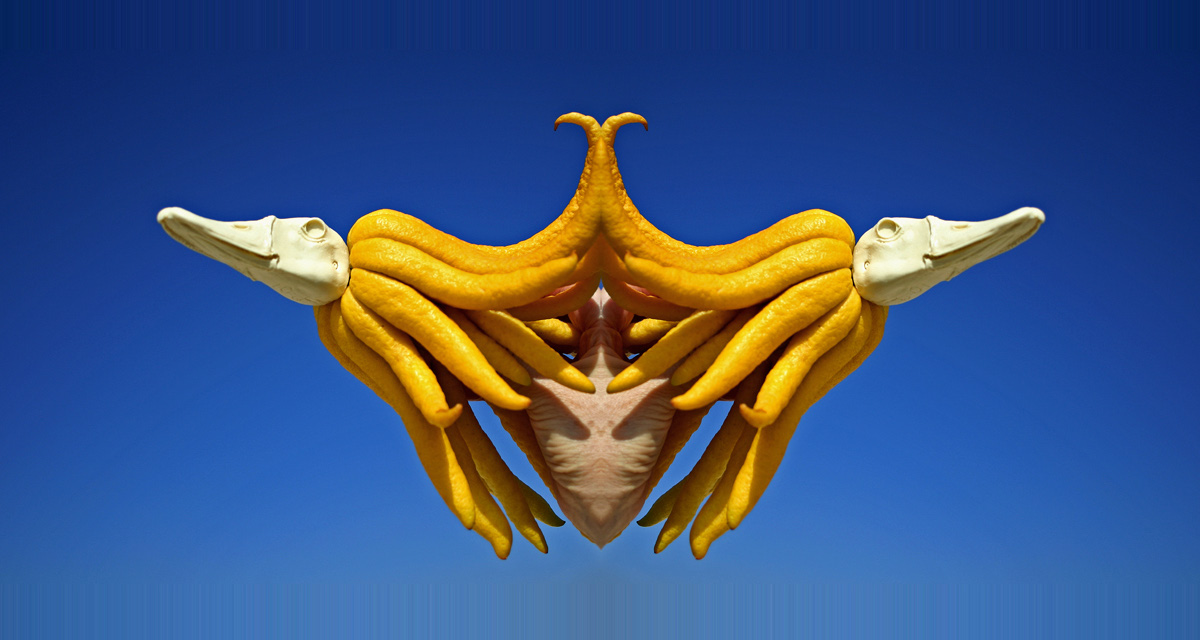
Figure 4
Ellen Jantzen (figure 4), Qian Li (figure 5), and Kel Smith (figure 6) are other artists in the exhibition who, like Farber, work with digital imaging to find a place beyond photography, painting, and drawing. Jantzen (figure 4) turned photographic truth on its head by making images that look photographic, but are clearly an
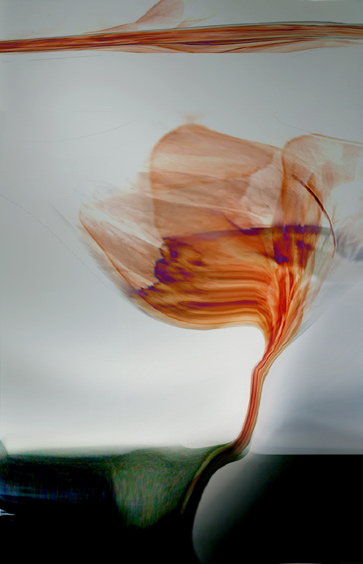
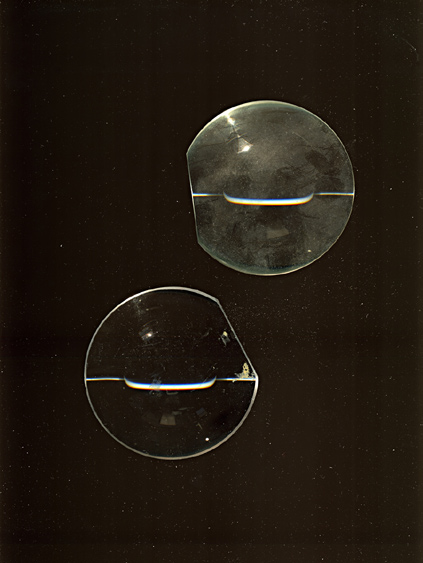
Figure 6
imagined reality fabricated in digital space from a disassociated object. Li (figure 5) mimicked painterly forms using digital paint and photographic approaches to create abstract images that suggest the movement of dancing figures. Smith (figure 6) used a custom built digital camera fashioned from a scanner to show objects that are defined only by the contrast of the light that hits their edges and the dark of the space around it. The shapes appear to be floating in a dimension captured in time by the artist. As with Farber’s images, these works provide more examples of the moving artistic boundary.
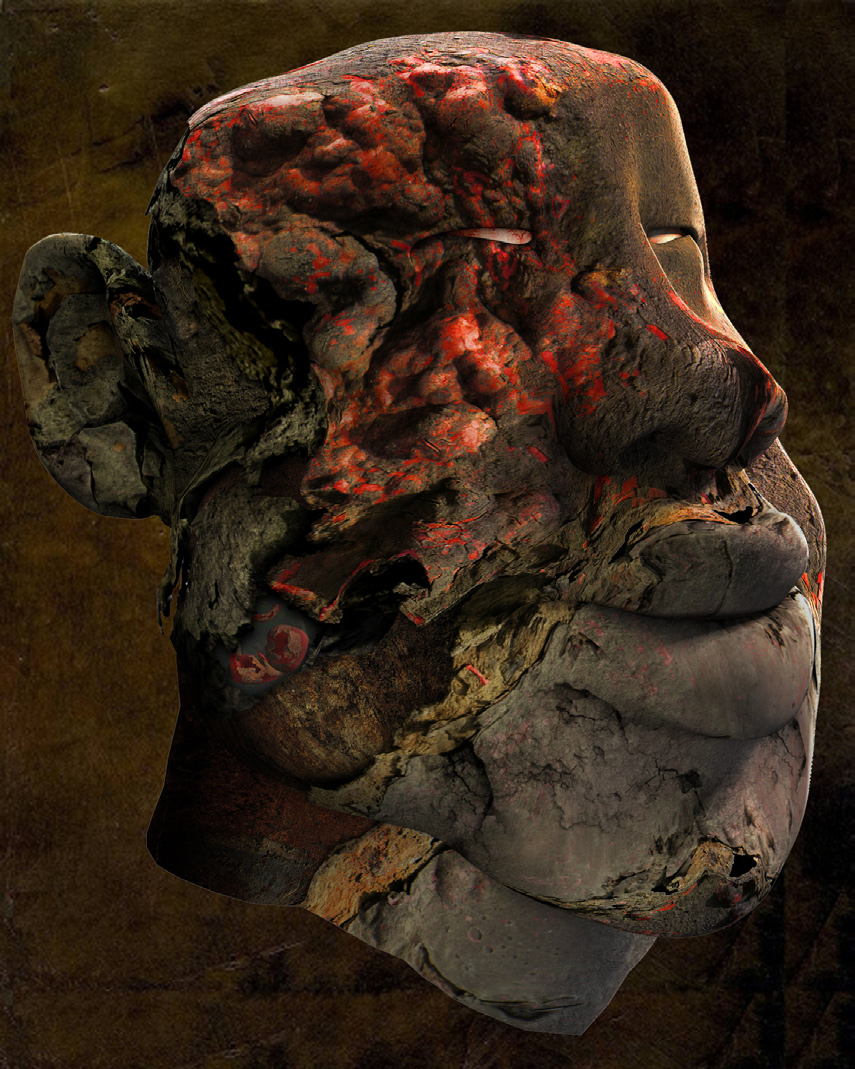
Figure 7
Animation is another tradition that has settled into a new paradigm since the widespread implementation of computer graphics. This new framework is characterized by hyper-real representations of characters and environments, and dramatic effects that were very difficult if not impossible to create prior to digital animation. However, the technology affords even more possibilities than the strict continuation of traditional animation. Both LiQin Tan (figure 7) and Anthony Fontana (figure 8) created works that exemplify some of this potential. In the animation installation Rusty Faces, Tan used digital metal printing and digital simulation of rust to metaphorically show the physical and mental regression of humans. The animations deteriorate a brain and degenerate solid forms to rust as, thanks to the use of LCDs, the wall-mounted image transforms in real time. This is neither print nor animation, but extends both to provide an expressive experience with motion, physical objects, and simulations.
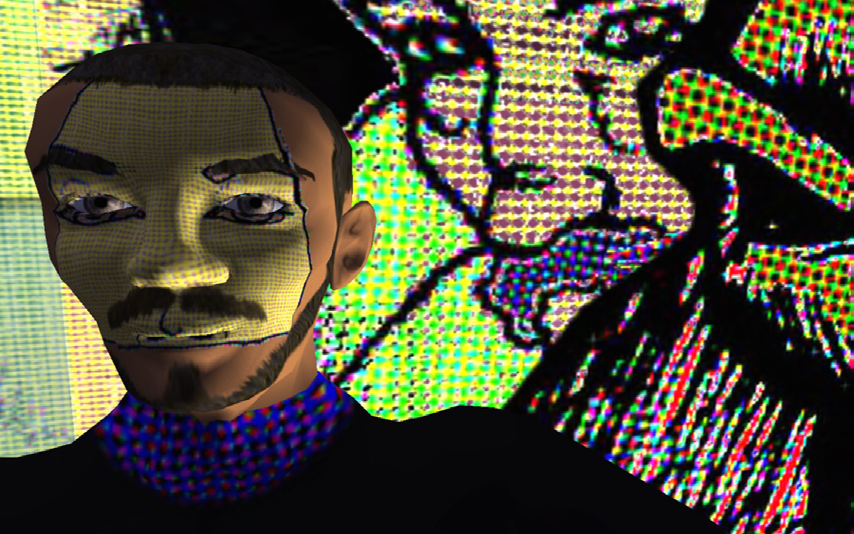
Figure 8
Fontana takes another approach with his machinima animation, Machinima Paradiso. Machinima is a play on “machine-made cinema” and uses a real-time 3D gaming engine to create narratives and images. This practice stems from online role-playing games such as Second Life in which the participant creates her digital self as an avatar using the modeling tools provided by the engine. Participants can then create a flow of events from this role playing and narrative mix. It thus empowers artists to create machine driven real-time animations that can be captured and later presented as an animation. Fontana’s work plays on the notion of art in virtual space as his avatar, or self, is represented as a form of art, thus redefining the “self-portrait as art” as part of the digital gaming culture.
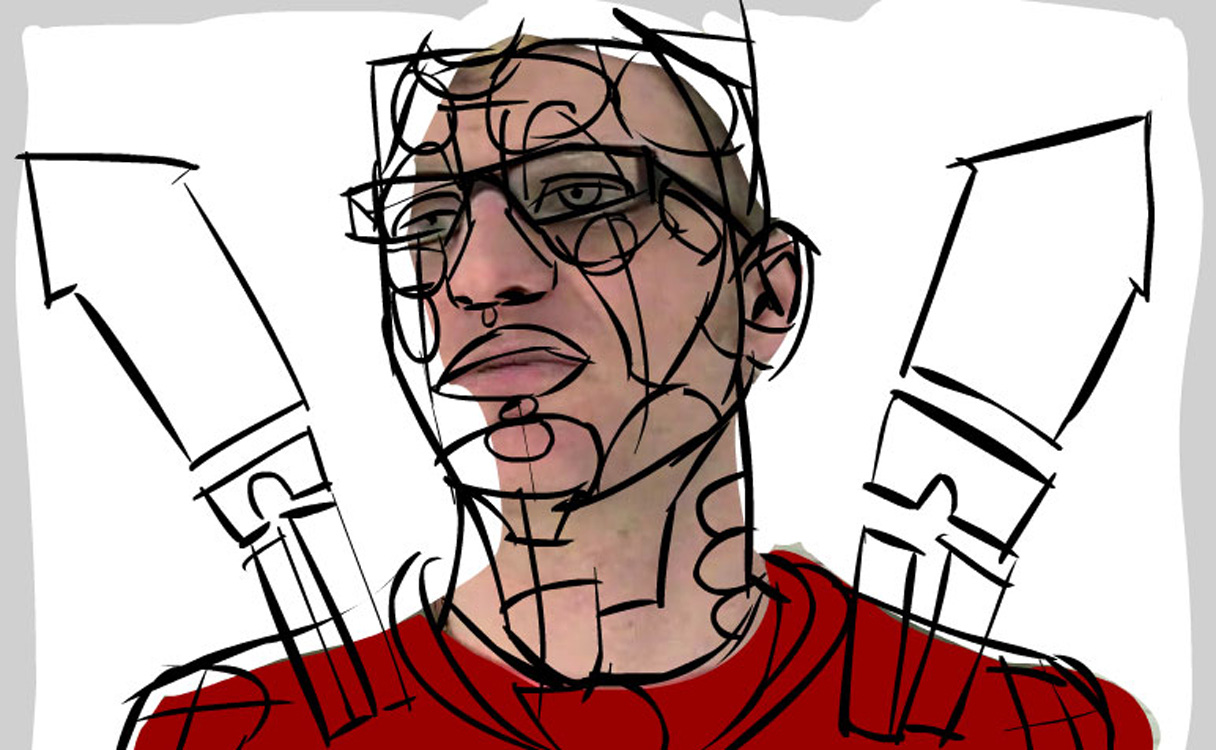
A number of artists use the digital capabilities of video editing to create cinematic experiences in a number of non-narrative and narrative ways that reference our preconceived notions of narrative film. Artists who approach their work from this angle in the Beyond Boundaries exhibition include Shellie Fiocca (figure 9), Christopher Cassidy (figure 10), and the collaborators Brigid Maher and Leena Jayaswal (figure 11). Fiocca (figure 9) mixed traditional drawing with video to create a more intimate form of narrative, a kind of distorted third-party storytelling. In this way she used digital media to reconstruct her memory, which was represented as videos of people responding to her statements. Fiocca then digitally re-edited them with animated drawings to express her intended meaning of struggle and strength that she had when she wrote the statements. Indeed these techniques were possible prior to digital editing, but they were less likely and certainly more complex. The digital editing allowed Fiocca to later cull the videos for what she remembered as her meanings, thus using the technology as an auxiliary memory.
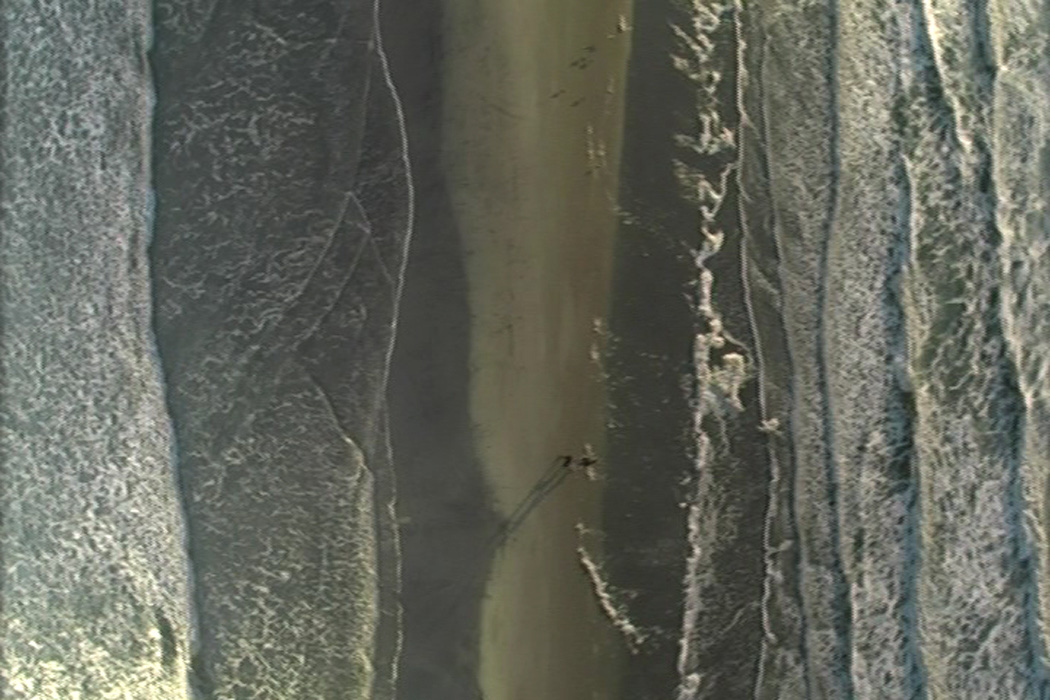
Figure 10
In The Isthmus of Kansas (figure 10), Cassidy used video editing and projection to create an experience of possibilities, or what might happen in the future if our sea levels rise to diminish the United States into a single strip of beach. Cassidy juxtaposes orthogonal footage from the Atlantic and Pacific oceans and then projects them to flatten and simplify the space, causing the viewer to contemplate the source of this beautiful and meditative projection. It is only after the formal experience provided by the technology wears thin when the viewer is faced with the reality of the implications of such beauty. Although the media does not define this work, the technology facilitates the relationships through a novel experience.
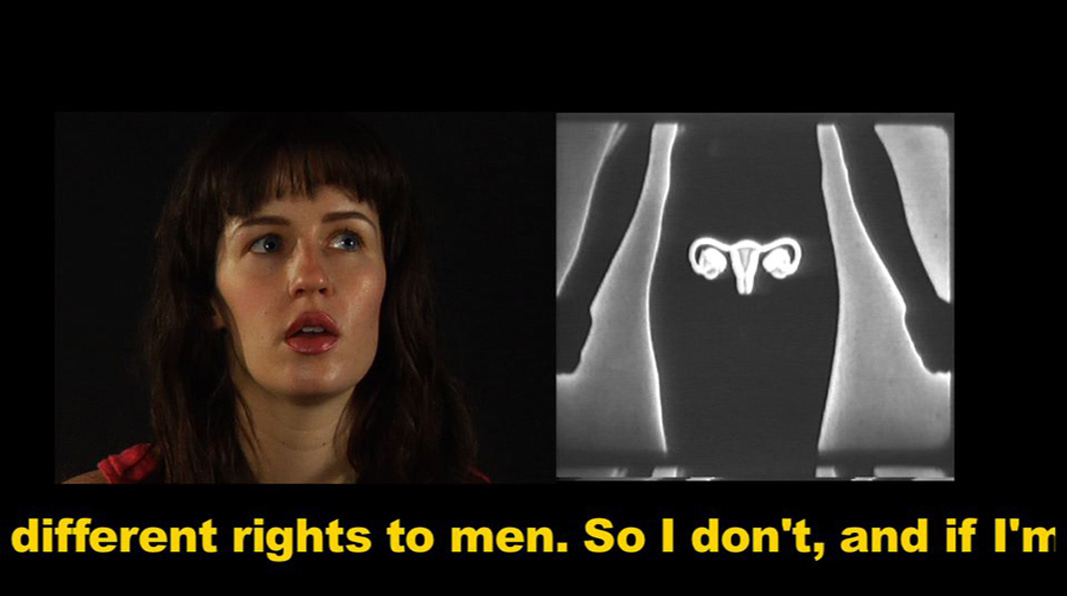
In The New “F” Word (figure 11), Brigid Maher and Leena Jayaswal also used digital editing and juxtaposing to force relationships, but instead of oceans or drawings, they were spoken dialogues and associated imagery. The new “F” word for generation Y is feminism, and the video shows interviews of women from this generation speaking about how feminism relates to them. Their words and perceptions are put into context with corresponding mixed media footage that includes historical clips from the women’s rights movement, contemporary clips of controversies dealing with gender issues, and current protests. The work connects the past and the present, both in technology and in ideals. The relationships formed using the technology of the past and the present lay the groundwork for current feminist perceptions.
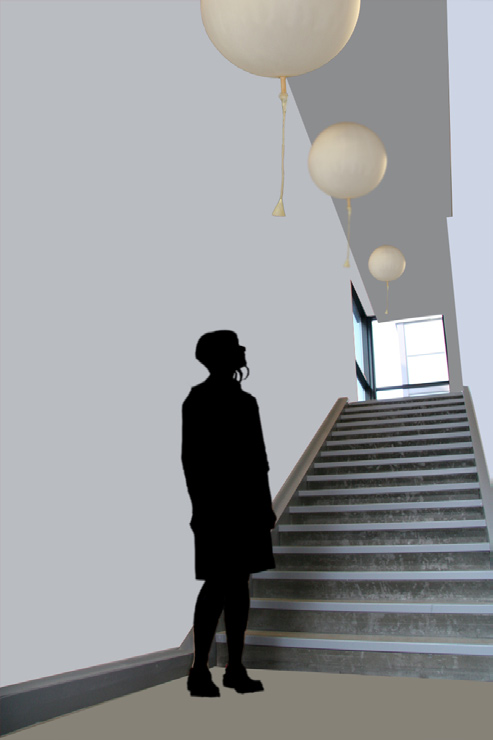
Figure 12
Installation and performance art enjoy a long history that has roots in ceremonies (performance art) surrounding the creation of cave paintings (site specific installations) in ancient times. New media provide even more ways to create installation and performative works. This exhibition includes two installation works that exemplify some of these ways. In “We,” (figure 12) Yevgeniya Kaganovich, Dale Kaminski and Mat Rappaport used sound created by visitors to the exhibition that was collected via weather balloons positioned throughout the gallery. The samples created an idealized averaged sound that a single privileged participant was able to hear though a headset. The balloons represented the surveillance space and the average of their sound represented the idealized citizen.
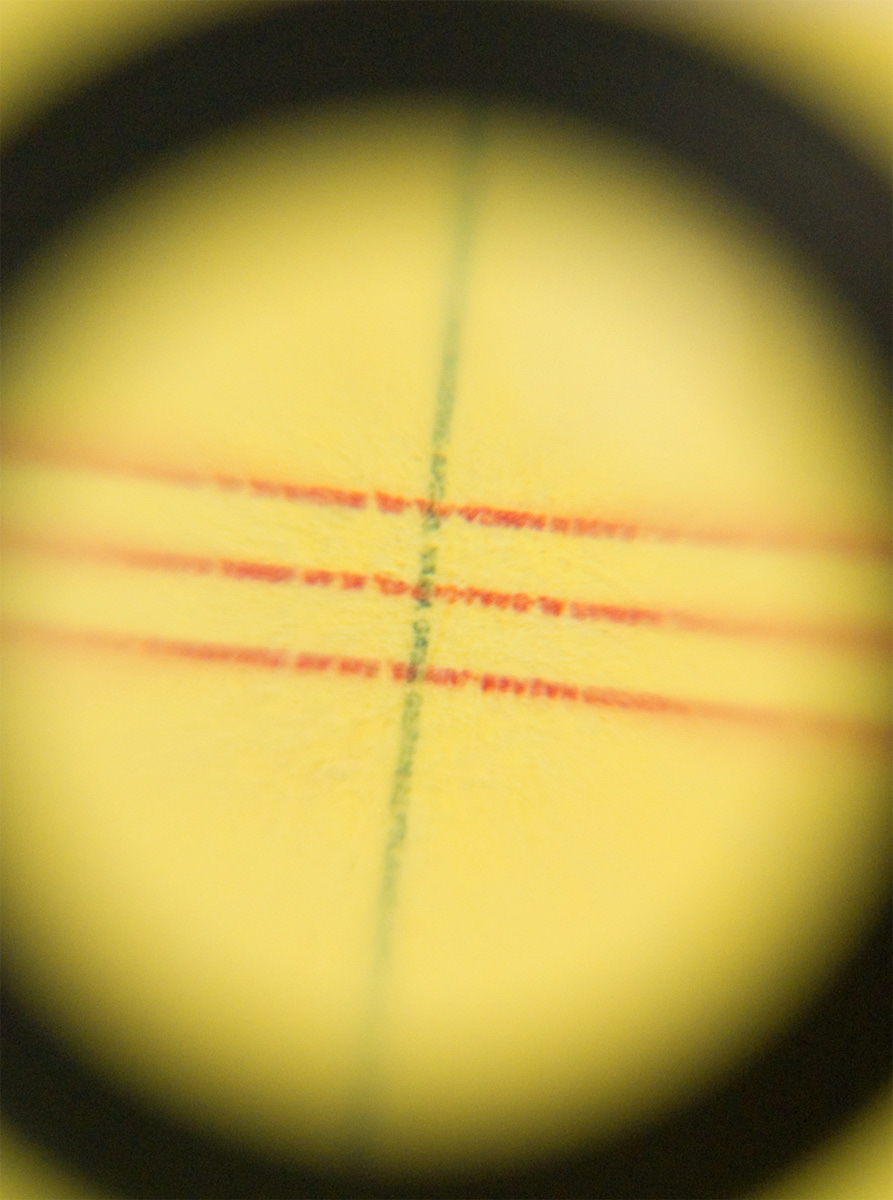
Matt Kenyon used micro-printing technology to infiltrate Capitol Hill with his site-specific installation, Notepad (figure 13), which enlisted unsuspecting performers to carry out the act. Kenyon created yellow legal notepads made up of lines that, upon inspection, looked completely normal. However, the lines were actually made up of micro-printed text of the personal details of Iraqi civilian casualties. Kenyon printed notepads in editions of 100 and covertly distributed them to the United States Congress, thus circulating unacknowledged body count data through Capital Hill. Kenyon represented this installation and performance with his display of the legal pads in the iDEAs07 exhibition. The pads were equipped with a digital magnifying glass that displayed the enlarged text from the lines on a computer screen. This guerrilla-like approach to infiltration was made possible through digital technology, thus the digital became the facilitator in the process of this work.
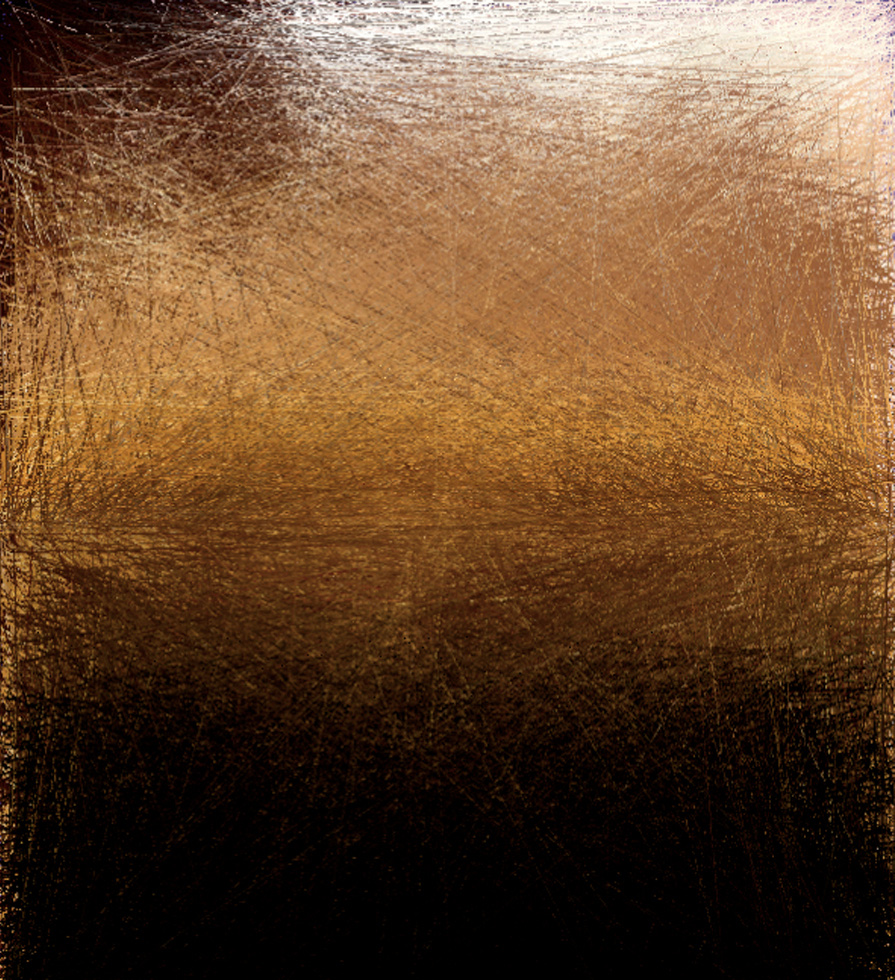
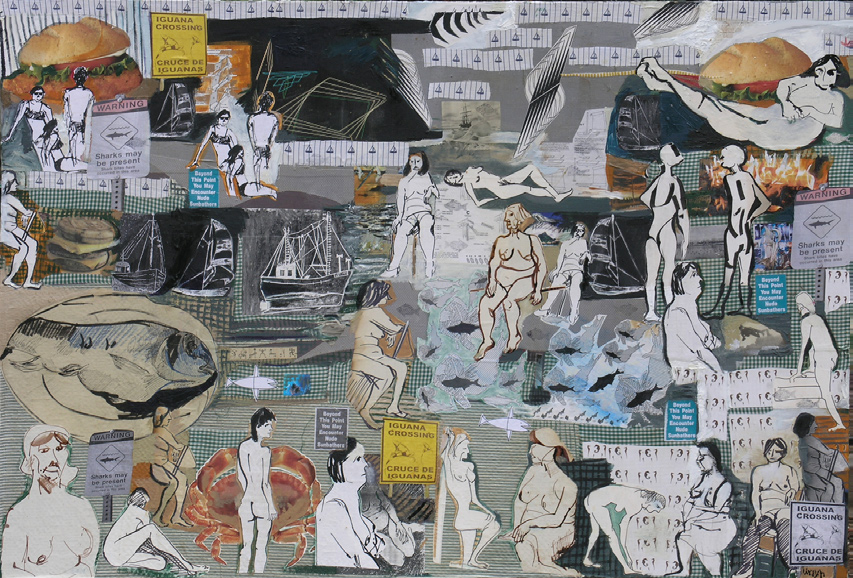
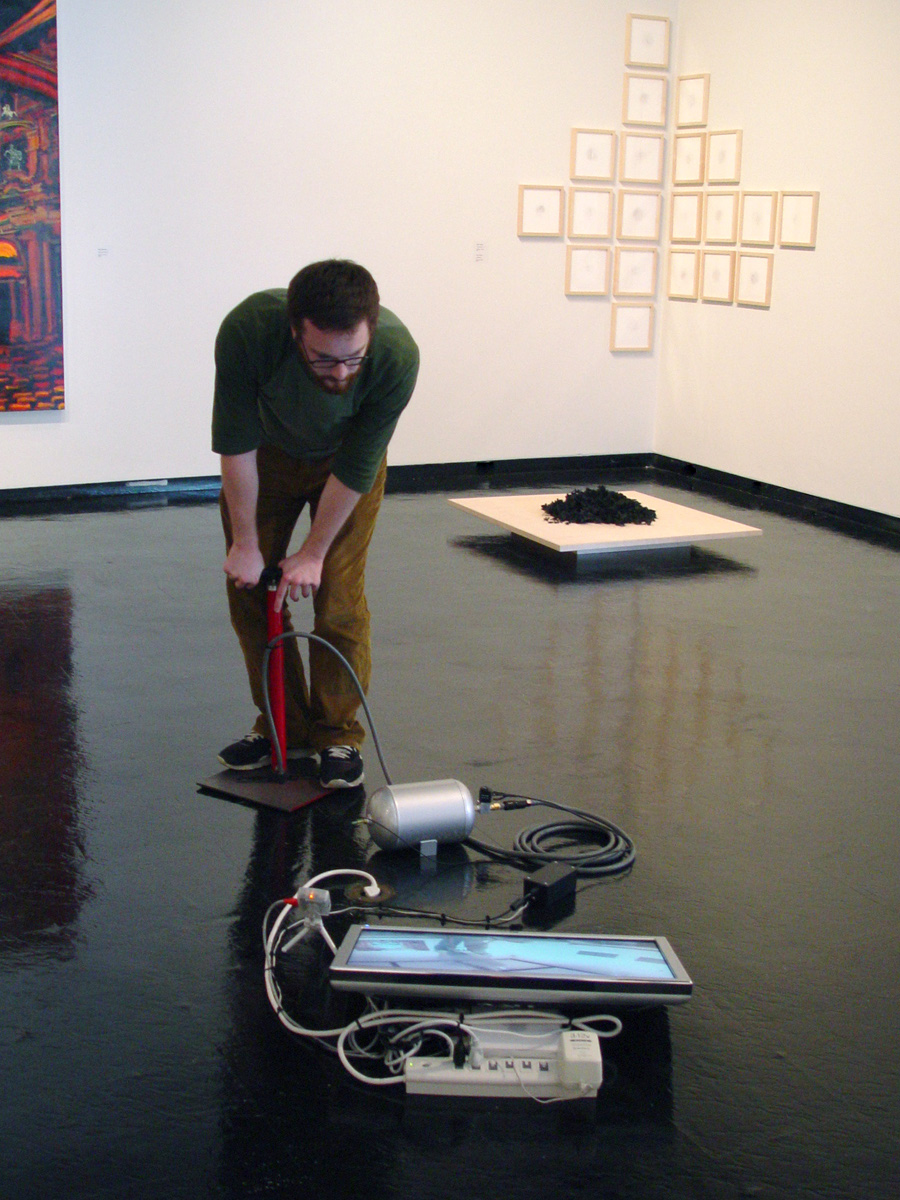
The animations, images, videos, interactive works, and installations I presented here are only a small selection of pieces that collectively contributed to positioning digital media arts beyond a definable artistic boundary. The works in the exhibition challenged this traditional “line in the sand” in similar ways. Other works included Dylan Morre’s Fields (figure 14), which was a moving digital painting that slowly changed over time, thus creating for the viewer an awareness of being in an actual, yet digitally abstracted field. In Beyond this Point (figure 15) Anna Ursyn used digital imaging techniques to compare the regularity of nature with human constructions, both physical and intellectual. By putting the imagery in close proximity, she forced relationships to read as symbols that formed sentences. Jack Stenner’s Honeypumper: Moment of Absence (figure 16) is an interactive installation that used technology to force the participant to question presence though absence. When the participants approached the pump and monitor on the floor, they immediately saw themselves in the space of the gallery on the screen. However, as they pumped, their image disappeared but the environment remained. The image of the person was stored forever in the biosphere, thus referencing Joseph Beuys’ seminal Honeypump in the Workplace in which the “honey” that flowed through the work was the invisible creative energy in the air created from the social interactions of the larger society.
The art from the iDEAs 07: Beyond Boundaries exhibition was complex and multifaceted, however, it embraced two distinct aspects that are currently, and will continue to be, characterized by flux and defined by the rate of change of technology. The first exists on the fringe of the art world, embracing, exploring, incorporating, and translating the newest digital media for the given time. The second is the molding of yesterday’s digital “edge” into traditional art forms or into mature and unique works that often do not fit within traditional aesthetics.
Regardless of whether the art includes older or newer technologies, digital media art sits outside of tradition. It is a lightning rod for new media and acts as a disseminator of language and implications connected with it. Although traditional boundaries do not apply, grounding in artistic practice does, albeit in flux.
As the works in this exhibition show how digital media art crosses traditional aesthetics, so too were new ones created, however, they remain flexible and open. They are not boundaries, only guides to inform future artistic expression facilitated by digital technologies.
References
Cassidy, Christopher. The Isthmus of Kansas, Video Projection , 2007. combo), 2006.
Ellis, Seth. Story Engine, Desktop interactive work, 2007.
Farber, Carol. Surface One, Digital image, 2007.
Farber, Carol. Surface Three, Digital image, 2007.
Fiocca, Shellie. Do Not Become, Video (Wall Hung Television/DVD player
Jantzen, Ellen. Autonomous, Digital image, 2007.
Kaganovich, Yevgeniya, Dale Kaminski and Mat Rappaport. We, Audio surveillance installation using PD and weather balloons to capture and manipulate environmental audio, 2007.
Kenyon, Matt. Notepad, Wall mounted installation, 2007.
Li, Qian. Air #19, Digital image, 2006.
Maher, Brigid and Leena Jayaswal. The New “F” Word, Kiosk, 2007.
Moore, Dylan. Fields, Computer graphics; non-interactive, 2007.
Smith, Kel. Orthogonal Lightspace, Digital image, 2007.
Stenner, Jack. Honeypumper: Moment of Absence, Interactive installation, 2007.
Tan, LiQin. Rusty Faces, Animation Installation and Digital Metal Prints with 3D Animation , 2007.
Fontana, Anthony. Machinima Paradiso, machinima animation, 2007.
Ursyn, Anna. Beyond This Point, Digital Image, 2006.