
V5N1: Data as Art Text and Color as Message
By Bill Davis | July 2, 2013
To see color is to see light. To read literature is to read a message. To make them electronic is to make them fractals of a larger whole. It is this paradigm that needs the attention and imagination of the users who put themselves between the interface of the computer in their head and the computer on their desktop. Electronic (intermittent) transaction is the nature of our digital era. It is also the reason and the resource for the art I make and would like to see made more. I wrote and intend for this essay to be read as an artistic statement and a critical observation. To that end, this essay obligates the artist’s statement to the artist’s observation. What follows is a meditation on the structure of digital transaction and a position to align and discover shared relationships between the nature of text, image, and sound as discontinuous electronic message.
To make an image digital is to make an image fractal. To make music digital is to fragment sound. To search for text is to key by one or multiple words at a time. I am not critical of fragmented art, but I cannot help but observe an obtuse willingness by the general public to accept it as analogue or continuous. In that context, the art and information in this essay echoes this observation and acts as a corrective or analytical measure for the contradictions we experience as stewards and users of both analogue and digital devices. While these devices contain data, they mediate it in dissimilar ways.
The jpeg file ironically camouflages “photography” as part of its acronym. The MP3 file is an investment in the subdivision of music. The different techniques used to sequence the experience these files deliver modify the nature of what actually is experienced. While dots of sounds played side by side are different than the dots that form an image in the visual cortex, they employ fractal strategies to represent some thing, which was once more actual or realistic. The MP3 is to wax what the jpeg is to silver. Both are discontinuous compounds of arrayed bits sequenced to represent seamless experience. Silver like wax has viscosity and consistency. Their organic states make each of them structurally indivisible. Yet, to digitize image or sound is to employ a conversion from photo- or phonographic to datagraphic experience; and it is the process of this conversion that fractures, divides, and multiplies a message. Furthermore, the pixels and the bytes generating the texture of image and sound can be echoed by the arrangement of the written word. In that context, the sound, the pixel, and the word have my attention as finite and sequenced data, which in their normative states can be arranged to generate meaning and communication. It is the non-normative form they take as converted digital arrays that drive my production and commentary on perception of sound, image, and message.
By extracting meaning from communication I hope that viewers can experience the medium before they meet the message. To that end, the concepts I am sharing in this essay portray communication as a byproduct of sound, language, and sight. What we see or hear is different than what we think about what we see or hear. It’s the arranged composition of sound and light that give them meaning and it is my attempt to rearrange them in a way that gives viewers a greater appreciation of their structure. Therefore structure mediates meaning and my re-arrangement of structure seeks to push meaning off the cliff. Clearly, the need for communication itself has not changed, but the methods of communication have changed; and these methods will lead to reinvented models of their former selves. Land lines have been eclipsed by mobile phones. The telephone wire has been replaced by the cell tower. Personal mail has yielded to e-mail, which means the method of writing communication by hand has been mostly replaced by the method of typing communication by keyboard. E-mail is less mobile than texting. Laptops are being replaced by handheld devices. The mobile phone is in perpetual state of reinvention as it is assaulted with new technologies. It has transformed from a phone into a wireless device by which users communicate with automatic teller machines, household appliances, internet servers, security systems, and each other. Bluetooth enabled phones allow users within a thirty-foot range to “tooth,” which means to meet clandestinely. Thus these existing and emerging technologies have so greatly expanded opportunities to experience communication that we now call speaking without them, “face-to-face.” The devices listed above have not changed the content of communication, but they have rearranged the methods and priorities under which communication operates. It is the rearrangement of content that continues to attract my attention.
If we alphabetically order the U.S. Constitution, we are not redacting it, but we are re-interpreting it in a way to observe the palette and priority of the language of that document (see Figure 2 After The U.S. Constitution). Leonardo DaVinci’s masterpiece, The Last Supper, shares a similarity through the histogram of its digital profile. Like the process of alphabetizing, one may extract and redeploy the normative color in a digital file to index and sequence its algorithmic palette via red, green, and blue histograms (see Figure 1 After The Last Supper). In this context, the alphabet and the histogram echo each other as methods of structure, order, and measurement. While analogue arrangement combines to compose and form meaning, a reproduction of its digital “twin” will identify the structure of that arrangement as channel and data.
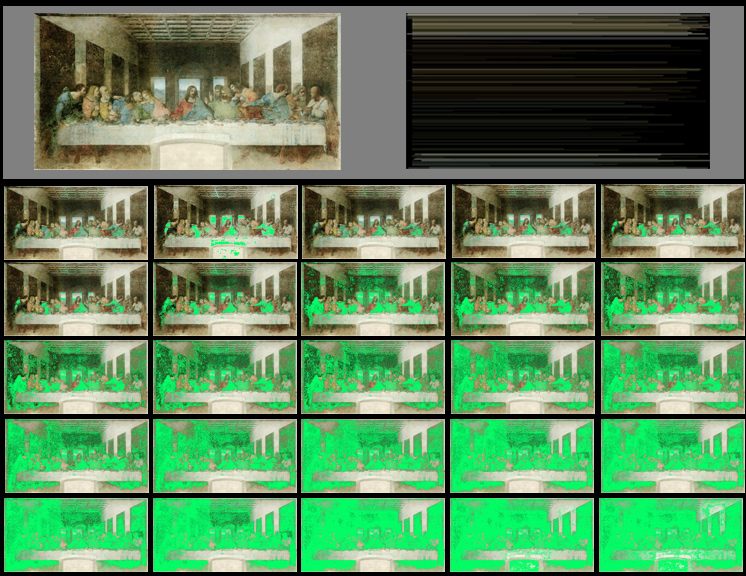
Figure 1 After The Last Supper, Bill Davis (2005)
The image on the top is an array of color, which has been incrementally removed from the thumbnail images below. In comparison to Davinci’s Last Supper, it is datagraphically the same, but visually different. The thumbnail images identify the sequential removal and conversion of color as arranged meaning to color as data array.
In this post-information age, data is transacted more than it is understood. How many readers can list the variety of phone numbers and/or e-mails attached to the names of the people with whom they communicate? How many artists remember the variety of colors they mixed or used to complete a painting? It is as if “having more” means “knowing less.” As an observer and user of digital devices and culture, I believe that most users of digital commerce view having as more important than knowing. In the context of studio art, this process is both fascinating and informing. In the context of pedestrian use, the process is simultaneously overwhelming and unpredictable. As a user and a studio artist, I most identify with the nature of our transaction more than the nature of the communication the transaction may produce. Production has exceeded consumption. The quantity of any landfill will help one better understand the quality of this position. No reader of this journal can surely know the catalog of everything they own and/or have discarded. In digression, virtuality protects us from material waste. “Virtuality is the cultural perception that material objects are interpenetrated by information patterns.”1 I believe it is this perception that best illustrates the conditions under which society interfaces with technology (or humanity interfaces with inhumanity). It is the pattern that I believe is as valuable, if not more, than the materiality or the object it communicates.
Color and language are methods for communication and the work accompanying this essay extracts them from communication. By alphabetizing iconographic documents, one may measure language as a priority for written communication much in the same way one may measure color for visual communication. By parsing the visible spectrum of color in a digital file, one may better understand the nature of an image as a digit rather than an image as an image. I am employing the same strategy that traditional darkroom and alternative process-oriented photographic artists create when their process is part of the finished piece. The electronic image made digital is processed differently than the chemical image made analogue. For example, the 90 degree angle is the signature “brush stroke” of the pixel. Is not the pica-liter sized ink jet dot mechanically analogous to the “expressive” rendering of a painting or darkroom print? Does “ink as jet” at all compare to paint or stroke as gesture? Clearly, the digital process mirrors the medium and the medium makes the message. The square RGB pixel is another way of making an image with a message and my work regards medium over message. As the work extracts language from communicative meaning, it additionally seeks to separate image from connotation (see Figure 1 After The Last Supper). I am shifting representation to re-presentation by sorting the same information into reconfigured sequences (see Figure 2 After The U.S. Constitution).
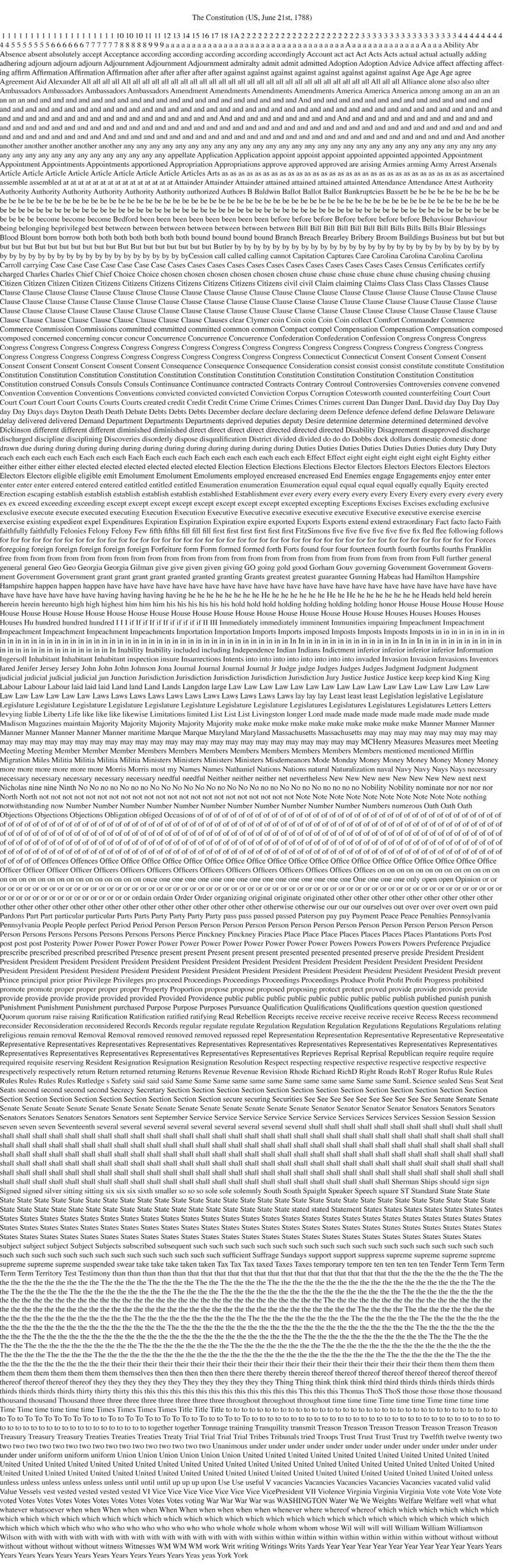
Figure 2 After The U.S. Constitution, (alphabetically ordered)
As technology, art, and media leave users with more questions than answers, it seems only natural and wiser to emphasize observation over definition. To that measure, language like definition is trying to catch up with newly developed media, but that is like trying to walk faster than one can run. It becomes self-defeating counter-intuition. New products and mediums are invented before the words we have to describe them exist. The mass of communication is not going to wait for its own re-definitions. Sitting still is not part of our negotiation with technology. By the time newly developed media is defined, it is different. If technology is not different, it is less new; if it isn’t new, it is historicized and defined, which further expires it. If it’s not new, it’s not “now.” Technology moves in cycles and replaces itself before it defines itself. The replacement is the definition. If a computer were “man’s best friend” we would criticize it for unwanted or non-normative behavior – ignoring commands, crashing, slowly waking from sleep, etc. But who is training whom? Users know better than to trust computers. Yet they inescapably and faithfully couple with digital devices they can’t trust. Given a choice, most people would walk away from a faithless situation. Yet choice is not a choice and faith is a less than wise strategy in digital culture. Like technology and innovation itself, the message behind communication has little time to mature. As systems of newly developed media subdivide, the signals they employ multiply. As we multiply signals, we further divide attention. The more we multiply a number, the more divisible it becomes. In many ways, mathematical figure and number is the metaphor for cognitive attention and its (life)span.
Computers oppose amnesia. The more pervasive the computer, the more expansive its reach into memory. In order to retrieve memory, we have to first classify it. In order to classify it, we have to fragment it, and fragmentation diffuses continuity. It is this structure that generates my curiosity and studio art (see Figure 3 Slave Ship). Marshall McLuhan stated that, “mechanization of any process is achieved by fragmentation, beginning with the mechanization of writing by movable types.”2 As an end user and participant of computational device and culture, I am most driven and fascinated by the solution and continuity society seeks in its dilution of the fragmented effect technology creates. We seek continuity and structure because technology does not and may likely never help us achieve it. Digital culture communicates by fractional, discontinuous methods. Static and corruption become part of our conversation.
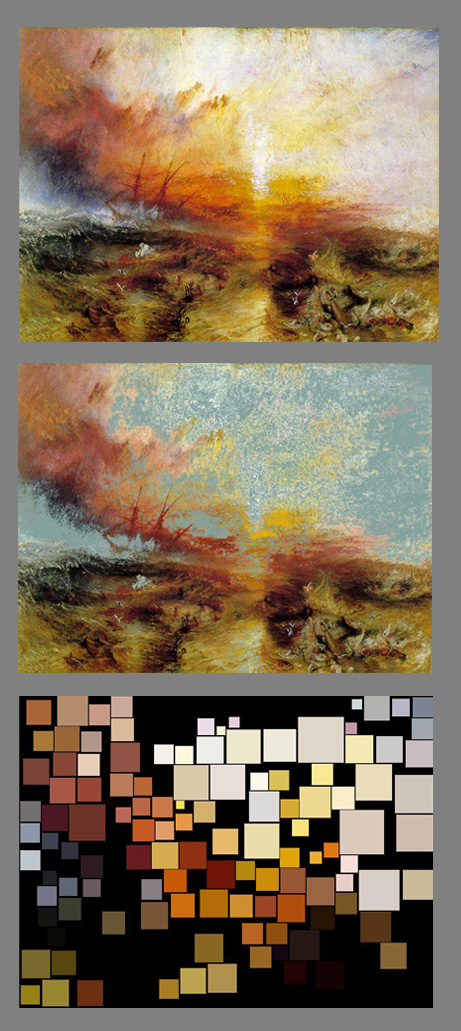
Figure 3 After The Slave Ship, Bill Davis (2005). The bottom image contains the discarded color missing from the top image, which originated from William Turner’s Slave Ship painting.
As connectivity and bandwidth expand, this slowly shifting paradigm will evolve our present condition. Yet if we don’t invest in our past, we will pay for our future. To understand the future is to glance in the rearview mirror. Users are more concerned with what lies ahead than what they leave behind. The greater the investment in the future, the greater the footprint of past activity becomes. While understanding data as information is important, the production of data has exceeded process. Volume has replaced feedback and navigation cedes to speed. Data as transaction has defeated data as information. This does not render information as useless, but it does render information as secondary to transaction. Go exceeds flow. Users and producers are sequencing frontiers that may someday self-dissolve because the promise of their art may be unsupported by future technologies. If the technologies we employ today aren’t there tomorrow, how then do we share the message of a medium that no longer exists? No medium, no message. Think VHS, cassette, wax album, film camera, slide projectors, reel-to-reel film, photographic black and white paper, etc. Marshall McLuhan’s now famous quote “the message is the medium,” is greatly compromised by the absence of medium.
For example, many black and white photographers no longer have the option to communicate through the nuance of the black and white print because many of the products on which they relied no longer exist. This is a dangerous pattern that recalls a less recent one – art versus the history of art. Was there art before art history? Did they simultaneously emerge? If history can support art, then we can have art because we can remember art. And we remember art by recording art. It is a simple equation that has now become more complex because memory is now competitive and proprietary. Memory is for sale. Buy it. Sell it. Trade it. Clone it, or in the worst scenario, lose it. Never before have we had the elastic opportunities to do so much with memory.
In closing, it is the algorithmic formula for recording image, sound, and text as datagraphic memory that informs my work and my critique of digital culture. Memory is no longer Kodak’s moment. Books are no longer information’s victory. Composition is no longer the sole champion of audio’s performance. As we yield to the digit, the cache of our present investment in future promise forms a catalogue of our intellectual capital, visual heritage, and collective experience – as pure digital rendering. Our data is our history is our data; and this is the condition, which has captured my intuition, creativity, and attention.
Experience reminds us to remember. Computers remind us to package memory. This essay and the work herein is my attempt to show what that package would look like as arrayed, distilled, and opened – past (and) present.
Footnotes
- N. Katherine Hayles, “The Condition of Virtuality,” The Digital Dialectic: New Essays on New Media, ed. Peter Lunenfeld (Cambridge: MIT Press, 1999), 88.
- Marshall McLuhan, Understanding Media: The Extensions of Man (London: Sphere Books, 1969 [1964]), p. 371.
Works Citied
Davis, Bill. After The Last Supper, 2006.
Davis, Bill. After The Slave Ship, 2006.
Davis, Bill. After The U.S. Constitution, 2006.
Hayles, N. Katherine. “The Condition of Virtuality,” The Digital Dialectic: New Essays on New Media, ed. Peter Lunenfeld. Cambridge: MIT Press, 1999.
McLuhan, Marshall. Understanding Media: The Extensions of Man. London: Sphere Books, 1969 [1964].