
V4N2: Mix/Remix as Epistemology: The Implications of the Metamedium, Digital Media
By Jamie O’Neil | July 18, 2013
“In particular, I want to show that definitions of truth are derived, at least in part, from the character of the media of communication through which information is conveyed.”
Neil Postman, Media as Epistemology 1985
When Postman, a skeptic of media education, published these words over twenty years ago, his analysis was focused on one media at a time. With the advent of “multimedia” came a deeper consideration of the pros and cons of each media, and how mixed-media presentations combine to achieve the optimum communicative result. Today, the term “multimedia” feels quaint, recalling the bygone days of CD-ROM’s. Today, instead of mixed-media, the medium is the mix.
The terms mixing and remixing denote a basic process of digital media on many different levels, from the technological convergence of different media, to the cutting, looping, editing, merging, and superimposing of multiple sources within the same media. My interest is how the process of mixing is analogous to thinking, and how digital technology (which enables more robust combinations of texts/images/sounds) facilitates our pursuit of knowledge. Yet the degree to which we “think by mixing” is a contentious topic in light of the traditional view of originality: whereas it is acceptable to “mix” from different source texts in traditional academic writing (with proper references, of course), it is problematical to remix a term paper.
Teachers, students, artists, and practitioners of digital media usually focus on an “operational” knowledge, that is, the technical steps and techniques needed to make a digital object. Yet there is a cycle by which every first year class that comes to college will already command, generally, a better operational knowledge than the proceeding group. Today, all college students were born after the Macintosh, and increasingly more of them arrive on campus already knowing how to make web sites and digital videos (a few began making digital media in their pre-teen years). The effect of this cycle, which will continue, is that it pushes the college-level study of digital media into more interesting epistemological terrain than the purely “operational.” In college programs, Digital Media has mixed well with cultural, communicational, educational, and sociological studies; not to mention fine arts, and this interdisciplinary-mixing has been Digital Media’s greatest contribution to the traditional disciplines of knowledge.
Technology, “giveth and technology taketh away,” as Neil Postman pointed out, both enables and drastically undermines the serious pursuit of normative standards for “true” knowledge–a pursuit known as epistemology. Postman and the media-ecology movement in general were willing to take McLuhan’s most serious message, seriously. This is the aspect of McLuhan that is often criticized for being too techno-deterministic; namely, that media alter what we perceive and ultimately, how we think. Beginning with his analysis of Gutenberg, McLuhan set out to uncover the thought-patterns or “effects” of media. Granted that in today’s hyper-saturated media environment, a heavily deterministic theory of media is perhaps too limiting; many of McLuhan’s prophetic theorizations have manifested in the students of the mix generation, and thus, he is the initial “track” in this exploration of mix/remix as epistemology.
Another major “figuration” who shaped the way we learn with digital media is Alan Kay. Both Kay and Postman can be seen as remixers of McLuhan, yet they arrive at two very different epistemological outcomes. Whereas Postman seeks a more passive approach through the ideal mix of media with reading and writing, Kay envisions a day when we will teach object oriented programming to kids (actively). In an essay co-authored with Adele Goldberg in 1977 entitled “Personal Dynamic Media,” Kay posits the computer as an active “metamedium.” This idea, which is found in traces of Manovich’s theory, considers the computer of today as a mix of media, as opposed to a single medium in itself. Kay’s emphasis on the “active” metamedium translates to a new power in our ability to mix media in order to create new ones. One need only explore the current activity in domains such as physical computing and VJ culture to begin to fathom the proliferation of new digital media confronting us presently.
Mixing is the “active” process at work in most kinds of convergence. Used here as connotative of an implosive-force that has supplanted pure innovation, “convergence” is a scale-independent concept that applies to many levels and domains. Today the forces of thought and creativity are mixing through knowledge networks. In his study of convergence, Henry Jenkins provides numerous examples, and draws upon Pierre Lévy’s notion of “collective intelligence.” Knowledge-convergence and the power of networked collaboration, is a kind of “hybrid-energy” (an expression devised by McLuhan, and embodied in all the famous mixes of time; from automobile-headlights to camera-phones to Deleuze-Guattari assemblages). My goal in this paper is to describe the ways in which mixing/remixing (terms that appear in nearly every discussion of convergence these days) are, in fact a “mode” of knowledge. Mixing is a concept on par with “montage” (as used in film studies). Deleuze, who hypothesized the most profound plateaus for cinematic montage (editing) as a form of thinking, invoked Godard’s comment; “mixing ousts montage”10 in his chapter entitled “Thought and Cinema.” Whereas the word “interval” became a key term that enabled a common aesthetic framework for early Russian filmmakers (Kuleshov, Vertov, Eisenstein, etc.), 11 “mix/remix” may someday have the same utility for digital media artists.
Today it is through arrangement, combination, juxtaposition, hybridization, networking, spatial/temporal montage, and a careful attention to aesthetic levels and thresholds that the perfect mix is made, both in our minds and in our digital material. Yet as a form of thought-montage, mixing and remixing are always at risk of missing an important detail, for they potentially fade down our faculties in critical thinking and traditional, transcendental modes of “originality.” The key question is whether mixing/remixing can be connected to, or how it can be used as, a means by which we come to acquire “knowledge.” Mixing/remixing is a process that is intuitively understood by students and practitioners of digital media; in this paper, I will consider it as an important concept that serves as a bridge to numerous discourses relating to epistemology.
Intro: Blog-Thinking
“Imagine having your own self-contained knowledge manipulator in a portable package…”
—Alan Kay, Personal Dynamic Media (1977)12
A group of my students were working on a blog project for my “Digital Culture” course. They had identified a social network in which they felt confident that they would be accepted, and they planned, like virtual Margaret Meads, to study and report back to the class on their findings within the group. The blog itself was a large mix of links to news and information, to pictures, videos, and, of course, other blogs about the topic; and the students explained to me how this was good blog design. In fact the entire design was a remix of a web page template, and they had done barely any writing or designing (in the traditional sense) to construct it. Furthermore, although the blog itself was moderately successful, their critical analysis of it, academically speaking, was not. The students experienced difficulty transitioning their intuitive knowledge of how to build a successful blog, into a mode of critical analysis and theoretical speculation on its effect on the social network. Considering that these students were proficient remixers, could there be a connection to the difficulty they experienced in transmuting their intuitive, operational knowledge of digital media (the construction of the blog project) into an interesting critical statement?
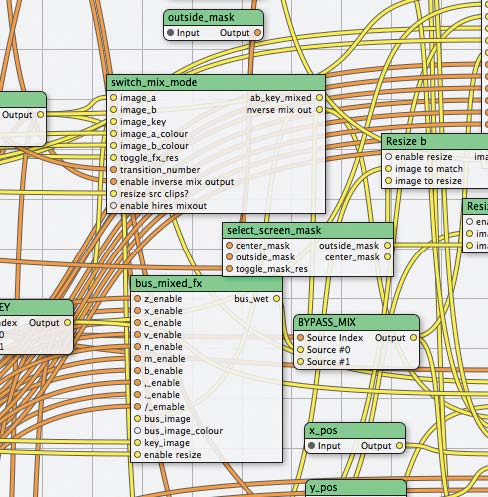
Figure 1 Screenshot of a complex mix in Quartz Composer13
On the opposite end of the spectrum, I worked with a student exploring the operation of a new software application, Quartz Composer. In fact, in our poking around, we gained most of our knowledge through blogs.
Quartz Composer acts like a virtual patch-bay of sorts, allowing one to create complex interactive video environments by mixing different patches. Furthermore, this particular student had no difficulty transmuting his mixing of bits of code (that either of us understood structurally) into some very interesting critical/theoretical/artistic statements. Of course, in every group, there is a range of students, and there are many different stages of development in a student’s progression, but even on the graduate and doctoral level there are certainly instances of students whose “hands-on” digital aptitude is either in or out of correlation with their academic knowledge of their medium.
While I was completing my last paper, an analysis of the remix aesthetic,14 I was alerted to a blog posting by the director of the comparative media studies program at MIT, Henry Jenkins. The post was entitled “Learning by Remixing” and in it Jenkins begins by citing a study that leads him to conclude that over half of American teens who use the Internet should actually be categorized as “media creators;”15 nineteen percent of this group were appropriating, repurposing, remixing, and re-posting media that they found on the web. The premise of my paper was confirmed and reiterated by Jenkins.
Despite the pervasiveness of these cultural practices, school arts and creative writing programs often remain hostile to overt signs of repurposed content, emphasizing the ideal of the autonomous artist. Yet, in emphasizing totally “original work,” schools sacrifice the opportunity to help kids think more deeply about the ethical and legal implications of repurposing existing media content16
The projects Jenkins cited at MIT utilize remixing as a means for pre-college students to reflect upon the effects of media. Although these goals are fitting for critical or comparative media studies, as I examined them, they struck me as a surface-level approach to remixing, rather than an investigation of mixing/remixing as a process that is fundamental to creativity and thinking in digital media. Pondering the potential outcomes of these projects, I could only think of how they might be used in building student efficacy or interest in an otherwise boring subject. Essentially all of Jenkins’ examples in “Learning by Remixing” were “edutainment.”
The value of learning by remixing, especially in the college-level study of digital media, needs to be more than a way for students to “think more deeply about the ethical and legal implications of repurposing existing media content,” or an introductory teaching method for hands-on digital skills, or even a step towards empowering students to become critics of the mass media that is manipulating them. In my experience with the blog project in my Digital Culture course, I felt that for my students, it needed to be more than an easy way out of writing another term paper. Yet on the other hand, I have seen many positive moments of mixing/remixing as well (as with the abovementioned Quartz Composer project) where a student was able to transmute an operational knowledge into an interesting critical statement. The potential for mixing/remixing is in line with an ideal like Jean Luc Godard’s concept of the “video-essay” in “Histoire(s) du Cinema” (Figure 2 below).
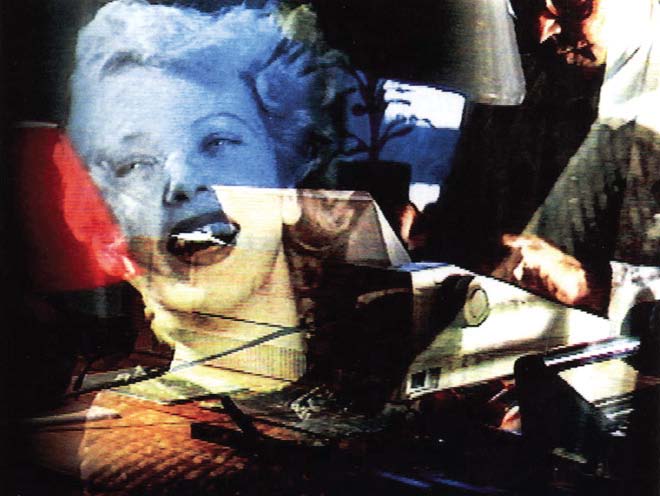
Figure 2 Still from Godard’s “Histoire(s) du Cinema” 17
What are the formalities involved in separating the introductory or nascent levels of mixing/remixing (e.g., “blog-thinking” or “edutainment”) from the kind of thought that, in the tradition of art, transmutes, through a manipulation of form and content, a static representation into a thought-invention? Remixing is an act of “processualizing” media. It transforms the passive-distribution media into an active-creative media. A. N. Whitehead, who is often cited by McLuhan when he confronts epistemological issues, promoted a model of knowledge that allowed for dynamic processes, growth and development of systems, and constant movement of thought in the act of discovery. In my own undergraduate studies, my teachers of theater “shaped” my physical body and voice through a process of exercises based on the methods of Stanislavski and Grotowski. I mention this anecdote as an image for Whitehead’s idea of “education” which he postulated as an interface of imagination and knowledge, a relation between a body of imagination (in the students) and a body of knowledge (in the educational establishment). In order for this action-reaction to take place, an arrangement of concepts are introduced in time, in such a way that the student and teacher mutually move from familiar to unfamiliar ground, and instead of reciting something by rote, we discover something new through this interface. The “new” is thinking itself. The body of knowledge that is familiar to students of digital media is mixing/remixing—how we create a reaction that leads to higher plateaus of thought is our challenge as teachers of digital media.
Verse: Arranging Media Epistemologists
in the electronic age, data classification yields to pattern recognition…classification is too fragmentary…in typical situations of “information overload,” men resort to the study of configurations…”
–Marshall McLuhan, Understanding Media, 196418
In re-reading Marshall McLuhan in the context of my current situation (as a teacher of digital media), I have noticed in his writing, his deep concern with how we think and learn; and whether or not the future of the educational establishment will or will not be a force that contributes to “knowledge” in society. McLuhan communicated in a style that was revolutionary for his time, long before the creative neologisms of Deleuze and Guattari or the modern day musical-neurological studies of Daniel Levitin (all of whom I will invoke later in this paper). The abovementioned famous quotation of McLuhan’s sets the stage for an environment of great speed and transformation. I see in my students a fascination and high-aptitude for “pattern-recognition.”
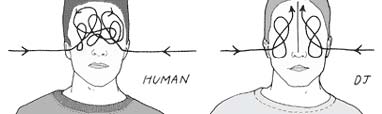
Figure 3 Image of Human vs. DJ pattern recognition19
Figure 3 illustrates the mindset of the student of the mix generation.20 The cacophonous, often overwhelming, barrage of channels, leading to the state of information-overload; is re-organized into a harmonious, symmetrical pattern. McLuhan asserts that only through a heightened ability to “see” the pattern will we survive. He posits the artist and, in a less justified way, the “student of media” as the hero who develops the needed perception and knowledge to see patterns. “The artist,” writes McLuhan, “is the man in any field, scientific or humanistic, who grasps the implications of his actions and of new knowledge in his own time.”21 In this passage, it is important to not misinterpret McLuhan’s use of the term “artist;” McLuhan does not endeavor to understand the consequences of art in the same way as postmodern-contemporaries do (as a force in politics, identity, relationships, economics etc.). To poke holes in McLuhan’s theory of the artist is to place him out of his own time and not to read him carefully enough (for his first example of an artist in Understanding Media is a scientist, Werner Heisenberg). The key point being that McLuhan is telling us that there is a strong connection between the way we use our five-senses and our aptitude for acquiring knowledge. “The artist can correct the sense ratios before the blow of new technology has numbed conscious procedures.”22 This heavily deterministic theory, which was considered very suspicious by his critics23 (much of the criticism was coming from the domains of cognitive and social science), is the most viable cause that one can find in his writing that led to his being unfairly shunned by his academic community.24
The student of the mix generation is the child of McLuhan’s prophecy. Support of this can be found in the imaginative theories of Deleuze and Guattari (that followed, but did not specifically reference McLuhan) and present day neurological research into the human senses; but before I proceed to make these connections, I will describe the image of the child McLuhan prophesied.
Working with digital media requires a mix of many perceptual faculties; the most fundamental are the cinematic and musical thought-processes. Mixing/Remixing can be simply understood as a hybrid-process of film editing and playing music. With mixing/remixing, there is a simultaneous activity in the acts of databasing/editing, arranging/composing, performing/recording, and a co-joining of temporal/spatial montage. There is also a rapid increase in the speed, and even a total bypassing of the stages, by which the Mixer/Remixer moves from the model (or map) to the final product. Furthermore, the “final” may be inherently processual/emergent, an example being how the DJ uses dual-turntables to create different combinations of musical elements in every performance. All of these conceptualities can be set aside, however, if one endeavors to observe the empirical fact of a crowded college digital media lab, full of students working on their digital projects. With white headphones inserted into their ears, there is a creative trance that the students of the mix generation enter into via the computer medium/environment. This realm echoes the space of “happenings” that McLuhan encouraged in his own time in a search for a sensory path to knowledge, not to mention his lesser-known experiments with audio-montage.25 The GUI/spatial montage formalism of this environment26 is the “familiar” ground of the student of digital media. The sensory-info-aesthetics have a flow, a co-presence/convergence between creative and communicational windows, a material of flickering plasma, a movement of mouse and bits, etc.. This is the starting place for an “interface of knowledge” that is formed through the interaction of students and teachers of digital media.
Long after the McLuhan explosion, Félix Guattari, who was a sharp critic of the classic psychoanalitic and social scientific methods (and lesser known for his interest in theater and media),27 wrote an essay called “The Production of Subjectivity.”28 Guattari constructs a very McLuhanesque picture of the human psyche as determined and programmed by the dominant ethical and social forces in the surrounding medium/environment. Yet, instead of calling for more scientific proof of this occurrence, Guattari said: “My perspective involves shifting the human and social sciences from scientific paradigms towards ethico-aesthetic paradigms.”29 Considering our present day scientific battles with the media, the President, tribal/religious factions, etc., one can see how an epistemology based on scientific “proof” has clearly been undermined by the mix of increasingly polarized, mediated viewpoints.
Guattari echoes McLuhan in describing the epistemological context of our present-day digital media students; it is an ethico-aesthetic paradigm,30 in which samplings of digital bytes are mixed/remixed and networked into aesthetic agglomerations aimed at overcoming the confines of a personal, subjective mode of thought. Guattari’s idea was probably inspired by the theories of his collaborator, Gilles Deleuze who wrote a pair of very well known books on cinema released in 198331 and 8532. But these books were not about cinema per se. Deleuze, the philosopher, expressed via his study of cinema, “a new line of approach to a number of important problems of modern thought: the undecidability of truth and falsity…the relation between brain and body,”33 i.e., a range of epistemological issues. Without delving into the details, phraseology, and complex reasoning of the books, I would like to draw upon one of their most elementary points, derived from a quotation of Deleuze’s chapter entitled “Thought and Cinema.”
It’s as if the cinema were telling us…you can’t escape the shock which arouses the thinker in you…Worse still, the spiritual automaton was becoming the dummy of every kind of propaganda: the art of the masses was already showing its disquieting face.34
Deleuze envisions cinema as a medium/machine that writes directly onto the viewer’s mind and thus leads to two opposing consequences. The cinema as “spiritual automaton” is the power it has to create a movement-image that sets off a chain reaction of new thoughts, concepts, affects, sensations, etc.. In the above quotation, he includes, with his description of the spiritual automaton, an important precaution; cinema can also be used to turn the viewer into a robot that has been programmed by the forces of propaganda. In this sense, the cinema facilitates the production of subjectivity, and thus when the student Mixer/Remixer says, “I think…,” the teacher must eventually lead them to consider, “Who is really thinking?” Yet in Deleuze and Guattari, the emancipation from this medium-matrix (the postmodern, mediated world) is through an active use of media. This is also what McLuhan was getting at in his preoccupation with the artist as the person who sees patterns, applies new knowledge, and in using media, creates a way out of the matrix-matrix.
The last media epistemologist I would like to consider is a present day neurologist, whose recent book This Is Your Brain on Music is the next logical step in a mix/remix epistemology that proceeds from McLuhan, Deleuze, and Guattari. Mixing and remixing are of course terms that originated in the domain of music, and Daniel J. Levitin’s writing contains many striking “scientific” examples of how materially the sensation of hearing music is dependent upon knowledge of patterns in the brain. Levitin gives some very deterministic examples, such as pitch, which is experienced as something absolute. There is activity in locations of the brain that correspond so exactly to pitches, that a neurologist can tell what pitch has been heard by merely looking at a bran scan of the listener. Other experiences of music are not so deterministic, such as tonal scales, which are learned more like a language, so that a child of six years can recognize illegal notes (notes out of scale) in the same way one recognizes if the syntax of a sentence is incorrect.35 Levitin posits a system in which absolute and relative rules are mixed, cognitive and culturally determined knowledge is mixed, and thinking and sensation are mixed. Levitin’s study is noteworthy in how it exceeds the clichés of McLuhan’s, modern purposive-scientific-reason and Deleuze and Guattari’s postmodern, criticism-of-science. It is fitting that Levitin embodies the hybrid-form of scientist/musician36 as this is the scientist/artist archetype of the mix/remix epistemology. Digital media’s power as a tool of knowledge is its value as a metamedium, a sensory machine/environment where one mixes within and between media; and at times, even ventures to create new media in the automatic activity of desiring to think the new.
Chorus: Grasping the Implications of the Metamedium
“Although thinking goes on in one’s head, external media serve to materialize thoughts and through feedback, to augment the actual paths the thinking follows.”
—Alan Kay, Personal Dynamic Media, 197737
Extending McLuhan leads one to consider—what is entailed in “grasping the implications” or “recognizing the patterns” of our present day, digital medium/environment? In order to do this, I will need to make two important updates to the McLuhan software. First, today, “the medium is the mix.” Second, the medium is the metamedium. What do I mean by this McLuhan Remix?
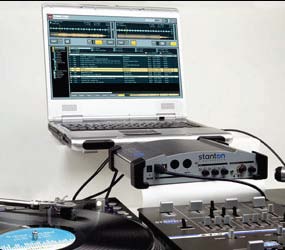
Figure 4 Image of time-coded vinyl disc as control interface for digital audio40
Convergence is a force stronger than innovation. When Edison invented the phonograph he envisioned it as a machine for storing data.38 It became the first medium for distributing recordings of music. When its role was usurped by the Audio CD, it became the primary medium for mixing music (as a dual turntable), but digital home recording equipment acted as a catalytic force in this transition of the phonograph into a medium of the mix.39 This transformation of the phonograph was also affected by the advent of new distribution methods for music—such as MP3 and Napster.
Today the “feel” of vinyl records is employed as a control interface for manipulating digital audio (Figure 4). Nicholas Negroponte told a similar story of the inventor of television, who was introduced to John F. Kennedy as “the man who got you elected.”41 Vladimir Zworykin’s hopes and dreams of the TV medium were never considered once his technology began to mix with American consumer culture.
Beginning with the Sony Portapak as an important medium for the artists of the 1970’s, and then the widespread growth of the home video market, the lens of mass media began to be turned upon itself; with cable television and now YouTube, we have witnessed TV evolve from a mass distribution medium, to a creative medium, to a micro-distribution medium. When McLuhan said “The moment of the meeting of media is a moment of freedom and release from the ordinary trance and numbness imposed by them on our senses,”42 he was aware of the energy of hybrid-media, but today with our proliferation of new hybrids-of-hybrid media, it is not necessary to follow the McLuhanesque teleological development of new hardware. Today it suffices to say that the medium is the mix; i.e., what it is that we mix together and how it is that we mix digital material together in new ways comprise the medium/environment of our time.
We mix on three basic levels; we mix media (convergence), we mix within media (the playlist), and we mix media specifically to create new media (the metamedium). The above examples of the phonograph and TV followed the classic McLuhan-method to understand media as they implode/converge, but today there is a subversive force in the way we mix within media, which can be understood through the phenomenon of the “playlist.” For as an advertisement once declared, “you are your playlist.”43
The playlist is symbolic of the force of the digital database in constructing personal identity. Its effect is influential in promoting the mix/remix epistemology. MySpace, one of the world’s most popular web sites, is a collection of people’s playlists. I am using the term “playlist” in the broader sense than its colloquial (iTunes) usage, because, in my perusal of MySpace profiles, I am struck by how each person’s “space” is really a mix of songs, videos, pictures, and lists of their interests. This “space” is teaching them how to categorize themselves by their combinations; i.e., the page arrangement of their “content.” Their thinking goes like this: when my mix matches yours, there is a probability that we will become “friends.” Social networking studies44 confirm that when age and location correlate with the playlist, there is an even higher probability that MySpacers will become “friends” because “friends,” after all, are people with the same mix.
This ‘blog-thinking’ is the nascent phase of our first-year students. Through “blog-thinking” a student can compare and contrast, group together, and appropriately categorize sets from the playlist. The next step is to begin to transmute this functional knowledge via the habit-learned processes of digital media, into a type of thinking that can analyze and synthesize a playlist into a multiplicity of possible outcomes. This is precisely the great boon of digital media—a technology that enables more robust, complex and intricate combinations of media.
In 1977 Alan Kay (another scientist/musician hybrid) envisioned a future for the computer that was very different from the equation-running information systems of his era. We can hear McLuhan45 echoed in this passage by Kay:
the computer, viewed as a medium itself, can be all other media if the embedding and viewing methods are sufficiently well provided. Moreover, this new “metamedium” is active—it can respond to queries and experiments—so that the messages may involve the learner in a two-way conversation.46
Inside the spatial-montage of our Graphic User Interface, there is a co-presence of multiple media.47 Right now, I’m sitting in a library typing into my little dynamic-book, but all I need to do is move my mouse down below this white window and click on a button to begin editing video (in Final Cut Pro), or playing music (by typing my computer keys in Ableton Live), or distributing my video and audio via networks, or finally I could begin creating a new hybrid medium/environment using tools such as Quartz Composer or Modul8. This Dyna-turned-Powerbook48 is no longer a single medium, but rather, through digitization, it is capable of “simulating” many media.
Nicolas Negroponte’s phrase “bits are bits” means that there is an equivalence between bits that ignores the quality of their content.49 Bits are the generic building blocks of anything digital, thus bits of audio are the same as bits of video, text, imagery, etc.,—and bits of course can be shared through networks. Due to the mutability and movement of bits, the metamedium is an environment where information is shared, altered, and then re-shared. Bits have also allowed for both the machinery and the content of old media to become simulated in the metamedium.50 Yet for Kay, the ultimate medium is object-oriented programming languages,51 although even programming has become drastically changed by the mix/remix epistemology. Today it is common for a student (or professional) to cut and paste HTML, CSS, and Java while constructing a web page, and this can be accomplished without much understanding of the overarching programming principles at play (tags, variables, etc.), yet this lack of structural knowledge does not inhibit the creation of an “original” page made up from the source code of previous pages. Thus, we can portray object-oriented programming as a process of mixing/remixing akin to mixing images or sounds.52
Considering mixing/remixing as epistemology leads to a completely new conception of what it means to “know” something, both as an original-subjective-belief and/or as a factual object. In a previous paper, I explored how the aesthetic of remixing has seriously altered the conventional view that creativity is always correlated with originality.53 As with the present paper, there are two sides to this spectrum, the “myspace” of the incoming college student who intuitively mixes and mashes aesthetic elements and, dialectically, the tradition of appropriation that raises remix to the level of fine art. In this paper I have tried to broaden my theorizing from the domain of aesthetics to epistemology to show the possibility that exists in using the processes of mix/remix (that is familiar to students of digital media) as a means to activate and enliven a more robust multiplicity of knowledge. Like the library I am sitting in right now, knowledge has long been collected and categorized in the surround-environment of college. The mix/remix epistemology is knowledge—becoming.
Soon after students of the mix-generation have graduated, the most important remix of their lives will take place. They will attempt to overlay the track of their newfound societal or corporate identity over whomever they were when they put on their cap and gown. I hope that this new template will be taken on actively, as something mutable, rather than a static/passive representation. Perhaps through a re-arrangement of attitudes, a co-presence of multiple images, a harmonious development, a critical superimposition, a trance, a flow, or an equilibrium-seeking vector—a knowledge of mixing/remixing—they will transition from this present day medium/environment into a new future; and perhaps it will have a better groove.
Footnotes
- Neil Postman, Amusing Ourselves to Death (New York: Viking Penguin Inc. 1985), 17.
- By “operational” knowledge” I mean, a practical, knowing how to do something, as opposed to a theoretical reasoning, critical analysis, or synthesis of a knowledge process.
- Neil Postman, “Five Things We Need to Know About Technological Change” in Computers in Society 2006/2007, 13th ed., ed. Paul De Palma (Dubuque: McGraw-Hill Contemporary Learning Series, 2006).
- Alan Kay and Adele Goldberg, “Personal Dynamic Media,” Computer 10(3):31–41. March 1977, in The New Media Reader, ed. Noah Wardrip-Fruin and Nick Montfort (Cambridge: MIT Press, 2003).
- “the property that is most important from the point of view of media history is that computer metamedium is simultaneously a set of different media and a system for generating new media tools and new types of media.” Lev Manovich, “Alan Kay’s Universal Media Machine,” media-N 02, no. 03(2006) Paper can be found at: http://www.newmediacaucus.org/media-n/current_table.htm
- “Physical computing” is a term that refers to the activity involved in controlling computers with non-computer devices, such as sensors or analog electronic components. An example is given in this paper of a vinyl-record player hooked up to a computer. Many other examples can be found at: http://createdigitalmusic.com/tag/physical-computing/
- “VJ Culture” refers to a broad range of artistic production that depends upon the mixing of streams of video in real-time scenarios, typically alongside a DJ who mixes the music, but the application of this technology has expanded into the realms of performance and installation. More info: http://www.mappingfestival.com/mapping2006/index.html
- Henry Jenkins, Convergence Culture (New York: New York University Press, 2006).
- “Montage is in thought ‘the intellectual process’ itself…” Gilles Deleuze, Cinema 2: The Time Image. (Minneapolis: The University of Minnesota Press, 2001), 158.
- Ibid. 181.
- Lev Manovich’s notion of “Spatial Montage and Macrocinema” extends montage theory into the realm of the computer GUI, he is also keenly aware of the montage styles of early Russian filmmakers such as Vertov. For more info see: Lev Manovich, The Language of New Media (Cambridge: MIT Press, 2001).
- Alan Kay and Adele Goldberg, “Personal Dynamic Media,” Computer 10, no. 3 (March 1977): 31–41., in The New Media Reader, ed. Noah Wardrip-Fruin and Nick Montfort (Cambridge: MIT Press, 2003)
- Screenshot: Quartonian VJ Mixer by Roger Bolton. For more info: http://www.eskatonia.net/qcblog/
- Jamie O’Neil, “The Remix Aesthetic: Originality Mixed and Mashed Up” media-N (2006 v.02, n. 03) Paper can be found at: http://www.newmediacaucus.org/media-n/current_table.htm
- Henry Jenkins, “Learning by Remixing.” http://www.pbs.org/mediashift/2006/07/learning_by_remixing.html
- Ibid.
- Image source: http://www.singularpress.com/blog/books/5277.html
- Marshall McLuhan, Understanding Media (New York: McGraw-Hill, 1965), vii.
- Image source: DJhistory.com. http://www.djhistory.com/. (February 3, 2007).
- Although generational labels are dubious, I use this term to describe the current generation of college students, sometimes called the “MTV generation” or “Generation Y.”
- Marshall McLuhan, Understanding Media (New York: McGraw-Hill, 1965), 65.
- Ibid.
- In 1965 Tom Wolfe asserted that the place where McLuhan was most vulnerable was in his dependency on a theory of a balance of the senses, he wrote; “As yet there is no apparatus for measuring just how intensely the human mind is attuned to this or that sense.” Tom Wolf, “The New Life Out There”, in McLuhan Hot and Cool (New York: The Dial Press, 1967) Presently, it may be worth reconsidering this debate in light of present-day neurological studies.
- More information on this topic can be found in the documentary McLuhan’s Wake (Montreal: Primitive Entertainment/National Film Board of Canada, 2003).
- In the late 1960’s McLuhan released an audio LP version of The Medium is the Massage which used a pastiche of voices, sound effects and multi-track overlays of McLuhan’s own recitations of famous aphorisms from his books.
- Here I am alluding to Lev Manovich’s theories in The Language of New Media (Cambridge: MIT Press, 2001).
- Guattari’s notion of the “post-media era” is one in which mass media “disconnect themselves from segrative capitalist values and give free reign to…a revolution in intelligence, sensitivity and creativity…” Félix Guatarri, Soft Subversions, (New York: Semiotext(e), 1996) 124.
- Félix Guattari, Chaosmosis, trans. Paul Bains and Julian Pefanis, (Indiana: Indiana University Press, 1995).
- Ibid.
- In the 1990’s Guattari noticed a new societal emphasis on ethical or aesthetic justifications of knowledge (as opposed to philosophical, scientific or political modes).
- Gilles Deleuze, Cinema 1: The Movement Image trans. Hugh Tomlinson and Barbara Habberjam (The University of Minnesota Press, 2001).
- Gilles Deleuze, Cinema 2: The Time Image trans. Hugh Tomlinson and Robert Galeta (Minneapolis: The University of Minnesota Press, 2001).
- This quotation is from the translators’ introduction. Gilles Deleuze, Cinema 2: the time image, trans. Hugh Tomlinson and Robert Galeta (Minneapolis: University of Minnesota Press, 1989)
- Ibid., 156.
- Daniel, J. Levitin, This Is Your Brain on Music, (New York: Penguin Group, 2006), 20-29.
- In his introduction, entitled “I Love Music and I Love Science—Why Would I Want to Mix the Two?” Levitin details his career as a professional musician, producer and sound engineer. Daniel, J. Levitin, This Is Your Brain on Music, (New York: Penguin Group, 2006).
- Alan Kay and Adele Goldberg, “Personal Dynamic Media,” Computer 10, no. 3 (March 1977): 31–41, in The New Media Reader, ed. Noah Wardrip-Fruin and Nick Montfort (Cambridge: MIT Press, 2003).
- McLuhan includes provides a very interesting account of Edison’s plans for the phonograph, as an audio database that people could call into via telephone, and as a medical device for recording the screams of sufferers of mental illness. See: Marshall McLuhan, Understanding Media, (New York: McGraw-Hill, 1964)
- Erik Hawkins, The Complete Guide To Remixing, (Boston: Berklee Press, 2004) 3-S.
- This is an example of “physical computing,” albeit from the commercial rather than artistic domain. The vinyl record contains time-code data that controls audio files inside the computer. The manufacturer, Stanton declares “Get the feel of vinyl with the convenience of digital technology.” Source: “What Is FinalScratch” http://www.stantondj.com/v2/fs/whatisfs.asp (February 3, 2007)
- Nicholas Negroponte, Being Digital (New York: Alfred A . Knopf, Inc. 1995), 9.
- Marshall McLuhan, Understanding Media (New York: McGraw-Hill, 1965), 55.
- See E. Benson, “You Are What You Listen To.” American Psychological Association Journal Online, 34, no. 7 (July/August 2003), http://www.apa.org/monitor/julaug03/listen.html (February 3, 2007) for relevant information on this topic.
- Ravi Kumar, et al., “Structure and Evolution of Blogspace” in Computers in Society 2006/2007, 13th ed., ed. Paul De Palma (Dubuque: McGraw-Hill Contemporary Learning Series, 2006).
- Kay is explicit about the influence of McLuhan in: Alan Kay, “User Interface: A Personal View”, in Multimedia: From Wagner to Virtual Reality, ed. Randall Packer and Ken Jordan (New York: W.W. Norton, 2001).
- Alan Kay and Adele Goldberg, “Personal Dynamic Media,” Computer 10, no. 3 (March 1977):31–41, in The New Media Reader, ed. Noah Wardrip-Fruin and Nick Montfort (Cambridge: MIT Press, 2003).
- For more information see: Lev Manovich, “Alan Kay’s Universal Media Machine,” media-N 2, no. 3 (2006) http://www.newmediacaucus.org/media-n/current_table.htm. (February 3, 2007).
- In Personal Dynamic Media, Kay and Goldberg also posit a future for small, portable computers (what would become laptops) and they are referred to “dynabooks.”
- Nicholas Negroponte, Being Digital (New York: Alfred A . Knopf, Inc. 1995), 9.
- Kay talks of “simulation” and his usage should not be confused with Baudrillard’s use of the same term, which is very different. Kay simply means how the physicality of video editing gear becomes virtual inside a computer. We commonly use the term “B-roll” even though the association with a physical roll of tape has long been lost.
- Kay’s has continued to pursue this goal via the “Squeak” language. See: http://squeakland.org/
- For more information, please see: [iDC] Remix Culture vs. Object-Oriented Culture: A conversation between Lev Manovich and Patrick Lichty, http://mailman.thing.net/pipermail/idc/2006-April/000345.html
- Jamie O’Neil, “The Remix Aesthetic: Originality Mixed and Mashed Up” media-N 02, no. 03 (2006) Paper can be found at: http://www.newmediacaucus.org/media-n/current_table.htm
References
Deleuze, Gilles. Cinema 1: The Movement Image. Originally published, Les Editions de Minuit, 1983. Tomlinson, Hugh and Habberjam, Barbara, trans. The Athlone Press, 1986. Sixth printing. Minneapolis: The University of Minnesota Press, 2001.
Deleuze, Gilles. Cinema 2: The Time Image. Originally published, Les Editions de Minuit, 1985. Tomlinson, Hugh and Galeta, Robert, trans. The Athlone Press, 1989. Sixth printing. Minneapolis: The University of Minnesota Press, 2001.
Guattari, Félix. Chaosmosis: An Ethico-Aesthetic Paradigm. Originally published, Éditions Galilée, 1992. Bains, Paul and Pefanis, Julian, trans. Indiana: Indiana University Press, 1995.
Guattari, Félix. Soft Subversions. New York: Semiotext(e), 1996.
Hawkins, Erik. The Complete Guide to Remixing. Boston: Berklee Press, 2004.
Jenkins, Henry. Convergence Culture. New York: New York University Press, 2006.
Kay, Alan, and Goldberg, Adele. “Personal Dynamic Media,” Computer 10(3):31–41. March 1977. In The New Media Reader. Edited by Wardrip-Fruin, Noah, Montfort, Nick. Cambridge: MIT Press, 2003.
Levitin, Daniel, J. This Is Your Brain on Music: The Science of a Human Obsession. New York: Penguin Group, 2006.
Manovich, Lev. The Language of New Media. Cambridge: MIT Press, 2001.
McLuhan, Marshall. Understanding Media. New York: McGraw-Hill, 1965.
Postman, Neil. Amusing Ourselves to Death. New York: Viking Penguin, 1985.
Postman, Neil. “Five Things We Need to Know About Technological Change.” In Computers in Society 2006/2007, 13th ed. Edited by Paul De Palma. Dubuque: McGraw-Hill Contemporary Learning Series, 2006.