
Big Data and My Big Gut
By Scott Shamp | September 8, 2011
“Locating Satellites.” Nope, it isn’t a B-52s song. It is what my “watch” is telling me. Quotation marks because the one thing that big digital device on my wrist can’t tell me (at least not that I have figured out, yet) is the time of day. Up at 5:30A for my morning run. I drag myself out of the sack early—I have to get rid of this big gut. iPod? Check. Favorite running shirt? Got it. Expensive high tech running shoes? Laced and ready. My new favorite running friend, my Garmin? The huge screen strapped to my wrist reads “Locating Satellites”—over and over and over.
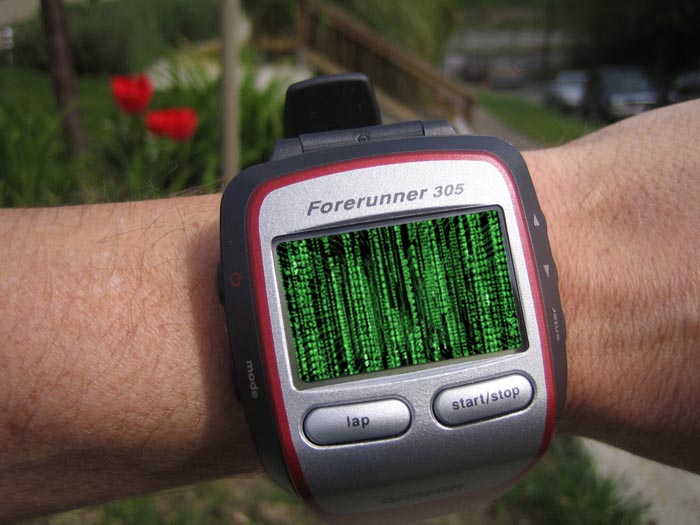 The best birthday gift I have ever gave myself, my Garmin Forerunner 305s makes my exercise darn near fun. Using GPS it tracks my location so it can give distance, pace, even elevation differences when I climb my neighborhood Himalayas. A wireless monitor across my chest signals to the Garmin my respiration and heart rate. With sensors attached to my bike (recently rechristened “Scarlett” after I finally finished “Gone with the Wind”), I can tell how fast, far, and furiously I crank those pedals. And cool on top of cool, when I get back, I cradle my Garmin and it uploads all the data to a Garmin server that will chart my runs on a Bing map—I can even playback my runs and watch my speed and heart rate as I zoom across the map. The world can see my workout and I can compare mine to others. But this morning my Garmin isn’t cooperating. Maybe clouds. Maybe battery. Maybe it is just as unhappy at being uncradled before the crack of dawn as I am. It can’t locate the satellites it needs for GPS and it locks up. “Locating satellites” and it just keeps telling me. Well, then, I am just not going.
The Garmin has gamified my workout. With all that tracking, plotting, and charting, I am getting all kinds of feedback on my performance. But if I am not going to get “points,” why play? Is the feedback as important as the workout—or, since I am stonewalling until the Garmin complies, maybe more. Am I unwittingly teaming up with organizations who want my data? Standing there in the dark waiting for the satellites to zoom into range, I am wondering if my desire for data is creating a true win/win scenario.
Data depositers. We promulgate bits and bytes all the time everywhere. Keep up with it sometime. We scan our Kroger card. Swipe our credit cards at the pump. Bookmark our favorite articles on Delicious. Search on Google. Create playlists on Spotify. Build wish lists on Amazon. Chart our runs with Garmin and Nike plus. And don’t even get me started on what we do on Facebook. But contrary to critic’s contentions, most of us aren’t indiscriminate with our data. Sure each data deposit potentially enriches a company or organization. But it also pays us data dividends—in convenience, savings, entertainment, or just the ability to meet new friends (ok, really impress our existing ones). Sure, bad things can happen when the wrong people make nefarious use of our data. Yeah, I was hacked off when Apple hacked my iPhone locations, but mainly because they weren’t telling me—or cutting me in on the potential pay-off from scraping my whereabouts. More theft of value than violation of privacy. When we deposit data, I think we make a subconscious risk calculation. If the ROD (Return on Data) outweighs the possibility of risk by over 10 to 1, we hand over the data and enjoy the benefits.
And now a new trend is likely to make use of our data even more widespread and potentially enriching. Big Data is the term being applied to “datasets that are beyond the ability of typical software tools to capture, store, manage and analyze” (“Big Data” report from the McKinsey Global Institute). Big Data used to be unwieldy and isolated. Big Data was a big problem because each company had its own data silos and tried to vertically monetize its value for only itself. But new tools and techniques are emerging that will make these huge datasets more manageable. Datasets that were monolithic can now be shared. And that is going to mean big changes. Especially for the industry that used to be called “advertising.”
What if Garmin created data partnerships with other companies sharing (with my permission) my workout data? Now Kroger can tell me how deep into my workout I have to go before I burn off those excess calories in Little Debbie Nutty Bars (delicious!). When I buy my next set of shoes, my local running store could suggest ones with reflective strips since I am running on the road before sun-up. And my bike store could notify me when I might need to think about buying new tires because of the extreme mileage I have been logging. Does it even count as advertising anymore when I am not getting interrupted by info I don’t want or need? Or by sharing this info, are companies demonstrating that they really get me? And, most importantly, can Big Data help me lose my big gut?
Next semester I am even teaching a graduate seminar on the implications of Big Data.