
V8N4: Creating Standards for Digital Media Conservation
By Glenn Wharton | February 27, 2013
iDMAa: Looking over the past decade, what stands out to you personally as the most fundamental development or challenge in the world of art conservation with regards to digital art and technology?
GW: I would say that everything about conserving digital art is fundamentally challenging given that digital technologies depend on hardware and software that go obsolescent. Our field is built around the traditional conservation object that moves through time. We’re trained as conservators to understand materials and technologies, whether they are paintings or sculpture or prints and drawings… we learn how individual objects are produced and how they deteriorate over time. The conservation of digital collections required a complete re-thinking of what the conservation object is. It may be a file that’s dependent on software and hardware rather than a physical object… if the artwork changes radically in order to survive through display with new technologies, then we have to understand how the artist wants the public to experience their work in order to make conservation decisions.
iDMAa: So how has this need to think about conservation from multiple perspectives and competing agendas… what is it about the challenges of this that makes you like your job?
GW: I find it fascinating because I moved into this area mid-career. I already had many years of thinking about conservation from repairing sculpture and archeological materials. Now I’ve been presented with the idea of conserving digital objects. It’s been fascinating on the one hand to be faced with new technologies that evolve day by day. On the other hand, going back to the values and the theory that conservation is based on and trying to apply those values and that theory to new realms of art production fascinates me.
iDMAa: How much time would you say you spend or how often are you working on updating your technological skills and your knowledge of digital media?
GW: It’s constant. A lot of my work is defined by the telephone or an email that comes in from a curator about a work that is entering the collection at MOMA which is based on new technology. Before I can answer their question, I often have to go online to learn about the technology then think through its conservation implications.
iDMAa: So a lot of it has to be self-taught then, right?
GW: Oh, absolutely. It’s based on years of education and experience but also knowing a good network of people that I can communicate with as well. That’s really important.
iDMAa: When you’re reaching out to people about needing to deal with a new technology, do you ever find that they turn to you for advice on how technology can be improved for your goals?
GW: Yes, I would say there’s a lot of interaction back and forth because I’m also based at the university —I’m faculty at NYU—I’m in touch with people in the Computer Science Department, faculty in the Courant Institute of Mathematics, and also faculty in the Moving Image Archiving Preservation Department.
iDMAa: Is there anything, looking back over all the different skills you’ve learned for your career over the years, is there some aspect of digital technology or art conservation that you wish you had been more a part of?
GW: Given what I’m faced with today, I wish I had spent more time in the basement playing video games. I don’t know if this has been announced officially, but our Architecture and Design Department has just started collecting video games… commercial video games. We are in the midst of contacting game companies and asking them if we could acquire their early works that represent important design and technology innovations.
iDMAa: That’s really amazing. That’s going to be remarkable.
GW: It’s important for the museum, and fascinating for me because it is launching me into a whole new arena of interactive technologies… working with designers and software engineers. But in terms of education, of course I wish I had a degree in digital art conservation, but unfortunately there is no degree. I think all of us in this field feel like we are inventing it as we go. And yet, as I mentioned, we are building on generations of practitioners and scholars who have created a strong foundation in the field of museum conservation. We have a strong sense of professional ethics to base our decisions on.
iDMAa: Would you say that digital media art conservation right now… you mentioned that there’s really no degree in it. Do you anticipate that there will be at some 53 point in the future? Or that it might be a concentration within art conservation?
GW: I sure hope so. And I’m still asking myself where these students are going to come from that will fill future positions in museums. Right now the traditional art conservation programs are only beginning to teach conservation of media art, whereas the moving image/archiving/preservation programs are teaching the technology but they’re not bringing in art conservation theory and philosophy. Then, of course, there are many programs in media studies, computer science, and related fields that teach parts of the puzzle. I think it’s going to be a combination of all of the above. I’m not sure which kind of program will evolve to start producing the students we need at museums.
iDMAa: It draws from so many different disciplines, potentially. That’s really fascinating, I could imagine there are a lot of potential students who don’t even know of this as a viable career option for them.
GW: Sure, and I work with a lot of professors and their students in different areas. For instance, the undergraduate computer-science students at New York University are fascinated with the problem of having to interpret old code because some of these programming languages are going extinct. They never thought of it before as a problem. Media archiving students are interested in the problems we have with fine art because they may be taught to preserve library and archive collections full of old audio and videotapes, but in conservation, each artwork’s preservation is dependent on how the artist wants the public to experience it. We can’t mass treat these things. We have to go back individually and ask, what is it?, and what does the artist want it to be? The students from these various fields are fascinated by our problems once they hear about them.
iDMAa: Given that each potential conservation effort is so unique and so specific to not only the technology that might have been used, but as you were saying, the artists’ intentions and the artists’ preferred mode of exhibition so to speak… what are the general best practices and principles that guide you?
GW: Some of the basic values in our field, such as honoring the integrity of the art object, honoring the authenticity of the art object, and documenting everything we learn and do to an object, carry over to digital collections. A premium is always assigned to understanding the artists’ intentions. Traditionally we would think of aesthetic intentions. Do they want the surface to be shiny? Do they want the color to be bright? Exactly what shade of color do they want? Now it may be whether the artist wants the work to be interactive or to draw from the Internet as an exhibit. Or is that not important? So capturing that intentionality takes on board many new questions when it comes to art that lives from one technology to another in order to survive.
iDMAa: Yes, very much so. It strikes me that now what is happening with so many of these digital media pieces is the multitude of voices at work and how you’re dealing with the perspective of not just the artist but people who handle the art, the curators, the goals of the exhibition space or museum. Do you think the field of art conservation has begun to come up with (or do you have) a matrix that you use now that whenever a new piece emerges you’re capturing or recording the various collaborative voices that go into the artwork being perceived.
GW: I would say the conservation and museum practice in general has always been collaborative. There’s always been the artist, whether they’re alive or not, the curators, the exhibition designers, the preparators, the conservators, and the art installers. The team is still there, but to some extent the roles have changed with contemporary art in general but with media and digital art in specific. The questions are different now. With media art we need to ask: what kind of exhibition equipment should we use? Should the film projector be visible or not visible? With installation art we have to ask what the light level should be? What should the wall and floor surface treatment be? Should there be benches in the room? We’re asking all these questions based on the art itself. The collaborative model has always been in existence, but the collaborators are changing. Now I’m not only interviewing the artist, I’m interviewing the programmer that the artist might have used. We talk about the program language, and the dependencies of the digital files, the software, and the operating system… for instance, we are creating a trusted digital depository for the collections on a server that’s backed up. It’s not just putting a file on the server and running a check on it. We may receive a computer from the artist, and there may be all kinds of digital assets on it. We have to figure out what should we copy onto our server 54 to preserve the work. This may require collaborating with computer scientists and our IT staff as well.
iDMAa: It’s interesting because it strikes me that a lot of what the future might hold is this tension between the need to follow a set of “best practices,” and to try to honor the intentions of the artist… and also to almost have improvisational skills at the same time… the ability to account for the fact that things will change so drastically in the future in ways that we can’t even anticipate that you need to often be able to think as you go. How do you teach your students to deal with that tension of preserving something intact and also accounting for the unknown?
GW: With new art forms, I always strive to re-enforce the basic values of conservation and practice of documentation with my students. Above all, an ethical approach to research and decision-making is what I try to teach. But of course there are specific skills and knowledge that need to be transferred, even as these skills and knowledge are rapidly changing. For instance I now teach methods in interviewing artists. Interviews, as we know from social sciences, are very complex interactions. As the interviewer you are framing the universe. By asking the questions, you are, to some extent, framing what the answers will be. That’s really tricky… you have enough information to stimulate a conversation, but you want the artist to be able to express themselves in their own terms. I like to think of them as guided conversations. The information we obtain from interviews with artists and their associates build documentation that will allow future decision-makers to make decisions even though we don’t know what their questions are going to be. We’re trying to provide them with basic information in order for them to make new types of decisions based on new technologies that will evolve.
iDMAa: So in an interesting sort of way, you’re also practicing conservation of the process of conserving, which could be invaluable. I can’t imagine how invaluable that would be fifty years from now for somebody to be able to look at the process that you used and be able to adapt that to the questions that they’re creating. It’s a massive undertaking!
GW: In our field, we’ve always relied heavily on documentation or at least focused on documentation in everything we do. When we perform research and document what we learn, we not only document the decisions that we make, we record our justification for those decisions so that people in the future will know why we decided what we did.
iDMAa: It’s a rather painstaking endeavor to put it mildly!
GW: Time consuming!
iDMAa: Yes, and it’s very complex!
GW: With this form of art, there’s a lack of fixity. With an art object (a sculpture or a painting), there’s a “thing.” With digital art, there’s no “thing” at the base. It has become clear to me that artists don’t always know what their intent is or don’t know what their decisions would be in one situation or another <http://plato.stanford.edu/ entries/beardsley-aesthetics/#5>. We’re trying to jointly map out not only what the work is but also what it can be in different situations. That is a collaborative process.
iDMAa: And how do you do that in the case of an artist that is no longer with us that has created something? How do you try to find what their intent may have been?
GW: We work very closely with curators and art historians, but with an artist who has recently passed we may go to their family, their estate or people that they worked with. We do a lot of that… interviewing people that were associated with artists—even the artists’ galleries, to learn what their processes were, and what their thoughts would be for conservation.
iDMAa: You need a lot of students, I would imagine, who have to be somewhat psychologically savvy in such situations.
GW: It takes the right kind of person to do this work because you need to not only be comfortable with technology and materials, but also, be interested in research, documentation and have good people skills. To understand and conserve digital art, you need to draw from many different fields.
iDMAa: Very much so, it strikes me that you need to know some ethnographic skills… it’s almost, to a certain degree, like anthropology as well… kind of preserving a cultural moment.
GW: We talk about archeological investigations of contemporary art. By that we mean using the archeological process of digging down to excavate the technologies and 55 artists’ concerns. Much of my work is ethnographic in that I insert myself into other peoples’ worlds, and through experience and documentation I obtain a better understanding of social and technical systems.
iDMAa: Your background is in archeology to a degree, right?
GW: Yes. I worked in many different areas within the field of conservation and I suppose that that’s been helpful to allow me to be broad-minded when I approach digital art. Originally I started out as an archeological conservator and worked for sixteen seasons in the field, primarily in Turkey. I do think a lot about that. I think that with archeological conservation, you’re interested in the information that an object contains, whereas in fine arts, it’s more about the aesthetics. For the archeological object, we are concerned with context (meaning the archeological context) . Where that clay pot was found may be as important as the clay pot itself. What was around it? What were the other artifacts associated with it? What were the soil conditions? What kind of residue is left in the pot? The conservator takes all this into account, because what you’re trying to learn is about ancient civilization. It’s not just about the beautiful pot. So, transposing that to conservation of the digital object, we have to think about context. It’s not just the object but all of the dependencies within the system which includes the code, the software, the other digital objects, the operating system, the hardware, and of course the artist’s concern for public experience of the work.
iDMAa: It’s really kind of fascinating because I think digital art and digital media in particular, so many people, unless they really think through these kinds of questions you’re posing… there’s a sense that anything digital is transitory and that it’s almost disposable in an interesting sort of way. It really requires a mind shift to thinking about the object or the art piece as if it will be in fact a relic one day.
GW: YIt is very difficult, because that is the mindset of the software industry. When we approach a software company or even game companies, they didn’t keep anything! It’s all about new versions and new products… 56 it’s very hard for them to understand why we wouldn’t want to exhibit the latest version of a game as opposed to the original hardware and software used to play Pac-Man (the original version that first gained wide recognition.) What we may want to display is the sound and the screen size and the texture and even the keyboard that the player used. It’s obvious to me as a conservator but I realize that when I talk to people in the industry… they aren’t there. They don’t get it, without a lot of dialog.
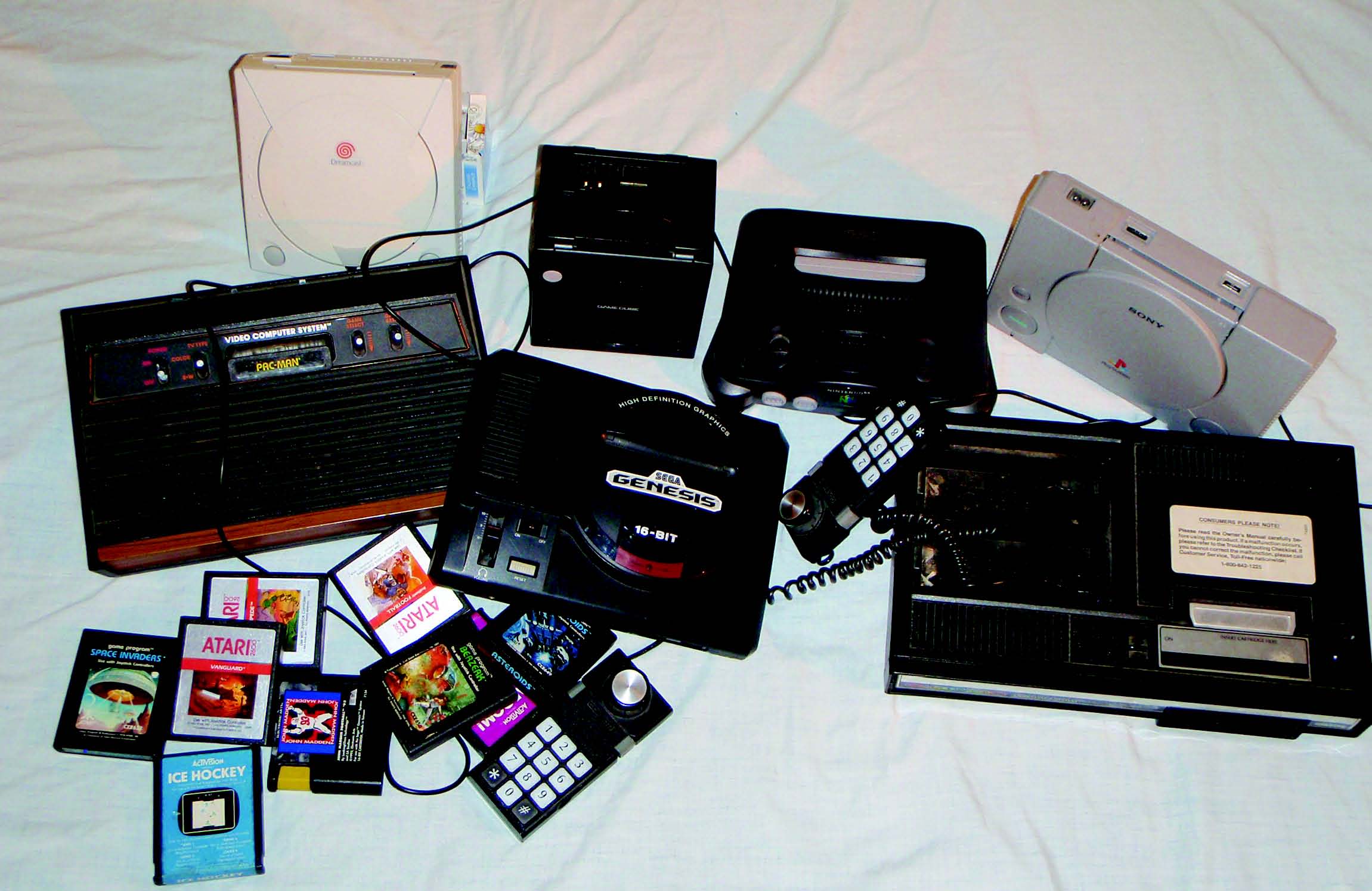
iDMAa: Do you think with this new endeavor of video games in particular that you’ll find yourselves as an institution reaching out to private collectors… the people who like to keep the old machines?
GW: Yes, and there’s a whole community of emulators that are keeping some of these games alive. We’ll be in contact with them… as well as with collectors. Sure, there are whole social worlds around games, just as all other digital media, and yes, we’ll be reaching out to those worlds.
iDMAa: Those are often very different kind of cultures you’re dealing with, at that point in time.
GW: Very different, and they’re rapidly changing. Museum concerns are foreign territory to them
iDMAa: It strikes me that when thinking of preserving video games, in particular, the older ones from the 1970s and 80s, how does that work for the institution in terms of space? Some of these older game systems were rather large.
GW: Space is less of a consideration than use. We’re really grappling with the idea of how to exhibit games. Because MOMA often has over 20,000 visitors a day, we can’t hand everyone a Gameboy. There are just practical considerations here. Where a smaller gallery or museum might be able to provide someone with a more authentic experience, we’re going to have to filter that experience just because of the practicality of having so many visitors.
iDMAa: You can’t exactly replicate living rooms and family rooms and bedrooms.
GW: That’s right. Do we display it in a white cube context, where everything is sterile, and the visitor just sees a screen? Do they get to use an interactive tool? Or do we try to simulate that original environment? And if so how far do we go? These are curatorial and exhibition design questions that in the end will have to be made by the museum… how to interpret these games.
iDMAa: Again, the collaborative nature…
GW: Yes, right. That is why we work very closely not only with the artist or the programmers and designers, but with internal staff to decide how to display these things, how much to communicate… there’s always discussion about how much information should be on the wall label. Do we want people to read paragraphs of text or do we want them to experience the art without extensive filtering? How much information to put online? What kind of interactive technologies can we use for museum education… for people to experience the work? Should there be QR codes on the wall label that take people to websites through their smart phones, or does that further remove them from the actual museum experience?
iDMAa: It’s a tremendous amount to have to try to work through, and to work through ethically.
GW: Yes, and usually there’s no right or wrong. We just have to make our decisions and as I said we try to document those decisions so that people in the future will know what we did and why.
iDMAa: Yes, the rationale being very important. I just have two more questions for you that are… one specific and one broad so maybe I’ll start with the specific one: What would you advise to students at the undergraduate level who are pursuing art history or something like software design who are interested in the skill of conservation? What sorts of subjects should they be studying?
GW: As an undergraduate who wants to go into media 57 art conservation, I think they would be best served by getting a well rounded education in Art History, Media Studies, Moving Image Technologies, Information Management, and Computer Science. If they’re going to enter a conservation graduate program, they’re also going to have to get some Chemistry, just because that’s the way the conservation programs are set up. I do think that the art conservation graduate programs in the future will start training media conservators. Through these programs they will gain an understanding of the theory and ethics that guide museum practice. Having a conservation mind set and a strong sense of professional ethics to address new problems is critical. A student would be well advised to go to the conservation programs’ websites at New York University, the State University College at Buffalo, and the University of Delaware to find out what the requirements are so they can prepare for them as an undergraduate. Another route is to prepare for a career as a moving image or software archivist, then segue into a career as an art conservator. The Moving Image Archive Preservation program at New York University is beginning to produce archivists who later become digital media conservators.
iDMAa: To see if they’re thinking in that direction, yes?
GW: Yes—the skills and knowledge draw from so many disciplines that an undergraduate should carefully map out the courses they need to take. Many applicants to conservation programs need to build on their undergraduate coursework with additional classes in community college and gain experience by volunteering at a museum.
iDMAa: And what aspects of digital media conservation are you most excited to explore in the next ten years? What do you think will be the up-and-coming things to explore?
GW: What is captivating my imagination right now is how to develop a secure and managed repository for digital collections. As I said, its not just putting the files on the server, but its developing a database that will extract technical information from the files themselves so we can then manage and prepare for people that will come along in the future who have to emulate or somehow modify these works. That’s a large part of my work and my research right now… working with technical advisors from a lot of different fields in order to develop this system. But in terms of technology, I’d say the most demanding and therefore the most engaging areas of my current research are video games, interactive and networked technologies, and the technical documentation of code. Much of this knowledge is standard in the computer industry, but it is new to museums. For instance we have to think about code as the core essence of some artworks. Knowing that the languages the code is written in will be extinct in the future, we are starting to go through and provide technical documentation of the code so that a future programmer can come in to recompile it for new operating systems. If they don’t know the language that its written in, the text that we provide will help them interpret the code. Those are the areas I’m most captivated by now.
iDMAa: There’s so much to study it’s really an amazing area of future growth and conservation that people probably didn’t even think about 20–30 years ago.
GW: I sure didn’t! No one did because the technology didn’t exist… and it is changing daily.
iDMAa: That’s the most frustrating and fascinating part, at the same time. GW: It keeps me continually engaged. What more could one ask for?
Article Authors

Glenn Wharton
Dr. Glenn Wharton is the time-based media conservator at the Museum of Modern Art in New York <http:// www.moma.org/explore/collection/media>. In his work with audio, video, performance, and electronic media, he engages with artists and colleagues across many professions to insure future preservation of the collection. Dr. Wharton is also a research scholar in museum studies at New York University, where he teaches graduate courses on conservation and the museum life of contemporary art. His most recent book is titled The Painted King: Art Activism, and Authenticity in Hawai’i <http://www.uhpress.hawaii.edu/p-8559-9780824836122.aspx>, in which he tells the story of a community’s involvement with its sculpture of King Kamehameha I. His current research is on authorship and artwork identity in an age of collaborative production. Dr. Wharton received his master’s degree in Conservation from the State University College of New York, and his Ph.D. from the Institute of Archaeology, University College London.